








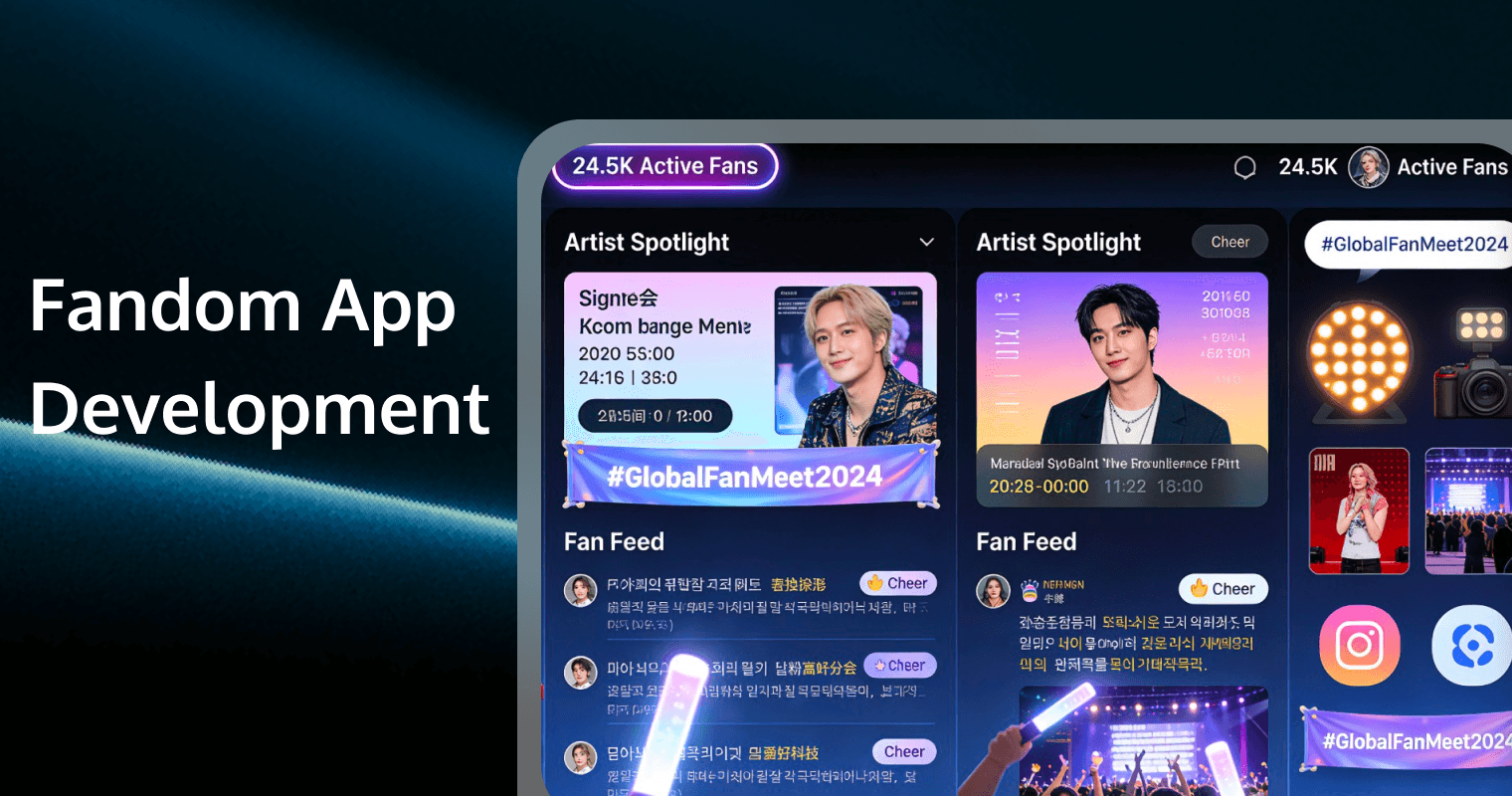
 In the digital age, a "fandom" is no longer just a group of people who like the same TV show or video game. It is a living, breathing ecosystem of creators, curators, and superfans who demand instant connection. While the legacy Fandom app (formerly Wikia) pioneered the wiki-style aggregation of information, the market has shifted. Today's users—from K-pop stans to MMORPG guilds—are migrating away from static pages toward dynamic, real-time experiences.
For developers, community managers, and brands, this represents a massive opportunity. The era of the "static info dump" is over. The era of the interactive fandom app has begun.
This comprehensive guide will walk you through everything you need to know about the modern fandom app landscape: what defines them, why the giants are vulnerable, and how you can build a platform that fosters genuine connection using cutting-edge real-time technology.
The State of Fandom Apps in 2025: More Than Just Wikis
To understand where the market is going, we must first analyze where it stands. For over a decade, the dominant model for a fandom app was an encyclopedia. You went to an app to look up a character's stats or an episode guide.
However, 2025 has cemented a new truth: Information is a commodity; connection is the product.
The Shift from Consumption to Contribution
Modern fandom apps are not read-only. They are write-heavy, interaction-first platforms. Apps like Weverse and Discord have overtaken traditional forums because they prioritize immediacy.
- Legacy Model (Web 2.0): Read an article, leave a comment at the bottom, wait 24 hours for a reply.
- Modern Model (Web 3.0 & RTC): Watch a live stream of the creator, join a voice chat room with 50 other fans, and co-create fan fiction in real-time Chat.
If you are planning to launch or upgrade a fandom app, your primary KPI (Key Performance Indicator) is no longer "Page Views." It is "Concurrent Users" and "Time Spent in Voice/Video."
Anatomy of a Successful Fandom App (Features that Matter)
What differentiates a generic social network from a dedicated fandom app? It is the specialized toolset designed to elevate the specific obsession of the community. A successful app must integrate these core pillars:
1. Deep Lore Repositories (The Wiki Layer)
Even though connection is key, knowledge remains the foundation. Your app must offer structured, searchable databases.
- Example: A Pokémon fandom app needs a Pokédex. A Marvel app needs a character relationship map.
- Implementation: Use structured data and allow community moderation (wiki-style) but present it in mobile-native formats (cards, carousels) rather than long text blocks.
2. Real-Time Chat and Discussion
Static forums are too slow. Your app needs robust Chat capabilities.
- Global Chat: General channels for hype and news.
- Topic Threads: Nested conversations to keep lore discussions organized.
- Spoiler Tags: Essential features that blur text until clicked, protecting users from leaks.
3. Multimedia Galleries
Fandoms run on fan art, edits, and memes. Your app must support high-resolution image uploads, GIF integration, and short-form video hosting without aggressive compression that ruins the art.
4. Event Calendars & Countdowns
Fandoms live by schedules—episode releases, concert dates, game patches. A dynamic calendar feature that converts time zones automatically for global users is a non-negotiable feature for reducing friction.
User Psychology: Why Fans Crave Real-Time Connection
Why do fans abandon polished official apps for chaotic Discord servers? The answer lies in the psychology of synchronicity.
The "Watch Party" Effect
Human beings amplify their emotions when they experience them simultaneously with others. Watching a season finale alone is entertainment; watching it while spamming a live Chat with 1,000 other screaming fans is an event.
Identity and Roleplay
In a fandom app, users often adopt a persona. Features that allow for deep profile customization—badges, avatars, user flair, and reputation systems—are crucial. They validate the user's status within the tribe.
- Gamification: Reward top contributors not just with points, but with visibility (e.g., "Lore Master" badges that give their Chat messages a distinct color).
Safe Spaces vs. Gatekeeping
Fandoms can be toxic. A superior app provides advanced moderation tools. Users want to feel safe from trolls but also want to protect their community's culture. Granular privacy settings (e.g., "Only allow Chat requests from users with Level 5+ reputation") empower users to curate their own experience.
Learning from the Giants: Weverse, Amino, and Fandom.com
To outclass the competition, you must deconstruct their strategies.
Fandom.com (The Incumbent)
- Strengths: Unrivaled SEO dominance, massive content library.
- Weaknesses: Extreme ad density (video pop-ups, banner takeovers) ruins the mobile experience. The app often feels like a wrapper for a desktop website.
- Lesson: Prioritize UX over aggressive ad placements. Native mobile performance is your competitive advantage.
Weverse (The K-Pop Titan)
- Strengths: Direct artist-to-fan interaction. It feels exclusive.
- Weaknesses: Can feel insulated; hard for new fans to navigate without knowing the culture.
- Lesson: Facilitate "parasocial" closeness. Even if the actual creator isn't there, give fans tools to feel close to the source material.
Amino (The Community Builder)
- Strengths: Highly customizable micro-communities. Strong Chat interface.
- Weaknesses: UI can be cluttered; performance issues with heavy media.
- Lesson: Modularity is key. Let community leaders toggle features on/off so a horror fandom app doesn't look identical to a cozy gaming app.
The Monetization Matrix: Turning Passion into Revenue
Fandoms have high disposable income for their passions. Avoid the "display ads everywhere" trap. Instead, use value-added monetization.
Digital Goods & Gifting
Allow users to purchase stickers, profile frames, or reaction animations to use in Chat. This is the primary revenue driver for apps like Twitch and TikTok.
VIP Access / Subscriptions
Offer a "Pro" tier that removes ads and grants access to exclusive Voice Chat Rooms or early access to content.
Marketplace Fees
If your fandom involves trading (e.g., trading cards, cosplay gear), build a marketplace and take a small transaction fee. This adds utility to your app beyond just social interaction.
Technical Architecture of a Scalable Fandom App
Building a fandom app requires a backend that can handle "burst traffic." When a new trailer drops, traffic can spike 10,000% in seconds.
The Stack
- Frontend: React Native or Flutter for cross-platform mobile dominance.
- Backend: Node.js or Go for handling concurrent Chat connections.
- Database: NoSQL (MongoDB/Cassandra) for unstructured message logs; Redis for caching real-time leaderboards.
The Scalability Challenge
Handling 10 users in a Chat is easy. Handling 100,000 concurrent users during a live watch party requires edge computing and specialized Real-Time Communication (RTC) infrastructure. Do not attempt to build the raw socket layers from scratch—you will face latency issues that kill engagement.
Enhancing Fandom Apps with Real-Time Communication
The differentiator for the next generation of fandom apps is Tencent RTC.
While text Chat is the baseline, the most engaged communities are moving to audio and video. Integrating these features allows your app to host virtual conventions, fan meets, and live reaction events natively, keeping users inside your ecosystem rather than forcing them to Zoom or Discord.
Why Tencent RTC?
For a global fandom app, latency is the enemy. Tencent RTC offers an enterprise-grade global network that ensures low latency, even if your users are connecting from opposite sides of the world (e.g., a K-pop fan in Brazil connecting with a community in Seoul).
Recommended Integrations
1. Voice Chat Room
Create "Clubhouse-style" audio stages where community leaders can host discussions, theories, or quizzes while the audience listens and requests to speak.
- Solution: Use Tencent RTC Voice Chat Room solution. It supports massive audiences with crystal clear audio and role management (host, speaker, listener).
2. Live Streaming & Watch Parties
Enable fans to stream themselves playing a game, drawing fan art, or reacting to a new episode.
- Solution: Tencent RTC Live Streaming allows for high-concurrency broadcasting. You can integrate "Co-hosting" features where two fans can stream together split-screen.
3. In-App Video Calls
Allow friends within the fandom to have private video calls without exchanging phone numbers, preserving privacy.
- Solution: Tencent RTC Video Call SDK provides 1-on-1 or group video calls with beauty filters—a highly popular feature in social apps.
4. Conversational AI & Moderation
Managing a fandom is hard work. You can deploy AI bots to handle basic queries or moderate toxic language in the Chat.
- Solution: Integrate Tencent RTC Conversational AI to create interactive character bots (e.g., a bot that roleplays as a character from the fandom) to engage users when the Chat is quiet.
5. Chat
Beyond video, the backbone of your app is text.
- Solution: Tencent RTC Chat SDK (formerly IM) handles millions of concurrent messages, supports rich media (images, snippets), and includes essential community features like muting, banning, and group management out of the box.
By leveraging these SDKs, you reduce development time from months to weeks and ensure your app can handle the viral spikes inherent to fandom culture.
Future Trends in Fan Engagement
As you build, keep an eye on the horizon.
- Interoperability: Fandom apps that allow assets (like NFT badges) to move between platforms.
- Immersive Spaces: 3D lobbies where avatars can walk around (Metaverse-lite), powered by RTC spatial audio.
- AI Co-Creation: Tools that help fans generate fan fiction or art inside the app using ethical AI models.
Conclusion
The market for "Fandom apps" is vast and underserved. While Fandom.com holds the SEO crown for information, it has left the door open for apps that master interaction. By focusing on real-time connection, leveraging powerful infrastructure like Tencent RTC, and respecting the unique culture of your specific community, you can build a digital home that fans never want to leave.
Don't just build a database. Build a destination.
Frequently Asked Questions
Q1: How do I prevent toxic behavior in my fandom app's live chat?
A: Toxicity can kill a community. You can use Tencent RTC's Chat SDK, which includes built-in content moderation capabilities. It allows you to set up keyword filtering, mute abusive users instantly, and even integrate AI moderation tools to detect harassment in real-time before it appears in the Chat.
Q2: Can I host a live concert or massive watch party in my app?
A: Yes. Using Tencent RTC Live Streaming, you can support ultra-low latency broadcasts for millions of concurrent viewers. This technology is designed for high-concurrency scenarios, ensuring that fans in different countries see the content at the same time, enabling synchronized reactions.
Q3: How can I add voice features without ruining the app's battery life or performance?
A: Audio processing is complex, but Tencent RTC Voice Chat Room SDK is optimized for mobile performance. It handles noise cancellation, echo suppression, and bandwidth management efficiently, allowing users to stay in voice rooms for hours without draining their device or experiencing lag.
Q4: My fandom is global. How do I ensure video calls work between users in the US and Asia?
A: Latency is a major challenge for global apps. Tencent RTC operates on a global acceleration network with nodes worldwide. This ensures that a Video Call or Conference between international users is routed through the fastest available path, minimizing jitter and lag regardless of physical distance.
Q5: Is it difficult to add an AI character bot to chat with fans?
A: Not with the right tools. You can leverage Tencent RTC Conversational AI to integrate intelligent agents into your Chat. These APIs allow you to build bots that can understand context and reply in character, providing 24/7 engagement for your community even when human moderators are offline.