









 In the rapidly evolving landscape of the creator economy, the Idol group chat room has emerged as more than just a messaging tool—it is the digital lifeline of modern fandom. From K-pop giants engaging with millions of fans on Weverse and Bubble to niche VTubers cultivating intimate communities on Discord and private servers, the way idols and fans communicate has fundamentally shifted.
For fans, these chat rooms offer a sense of intimacy and belonging. For agencies and developers, they represent a complex technical challenge balancing massive concurrency, user safety, and real-time engagement.
This comprehensive guide explores the mechanics, psychology, and technology behind successful idol group chat rooms, offering a blueprint for understanding and building the next generation of fandom platforms.
What Are Idol Group Chat Rooms?
An Idol group chat room is a specialized digital space designed to facilitate communication between a public figure (the "Idol") and their community. Unlike standard messaging apps, these platforms are engineered to handle asymmetrical relationships—where one person speaks to thousands—while maintaining the illusion of a personal, one-on-one conversation.
The Evolution of Fandom Communication
- The Fan Cafe Era: Early engagement was asynchronous. Idols posted on bulletin boards (Daum Cafe), and fans commented. Interaction was slow and public.
- The Live Stream Era: Platforms like VLive introduced real-time interaction, but communication was limited to a scrolling waterfall of text chat alongside video.
- The Private Messenger Era: Today's dominant model (e.g., Bubble, Phoning) simulates a private messenger interface. The idol sends a message, and it appears on the fan's phone as if it were a direct text. When the fan replies, it enters a filtered queue visible to the idol.
Types of Idol Chat Environments
- Broadcast Chat (1-to-Many): The idol sends a message to all subscribers. Fans reply, but other fans cannot see those replies. This creates a "private" feel.
- Open Group Chat (Many-to-Many): A traditional chat room where fans talk amongst themselves. Idols may occasionally "raid" or join these rooms anonymously (e.g., KakaoTalk Open Chats) to surprise fans.
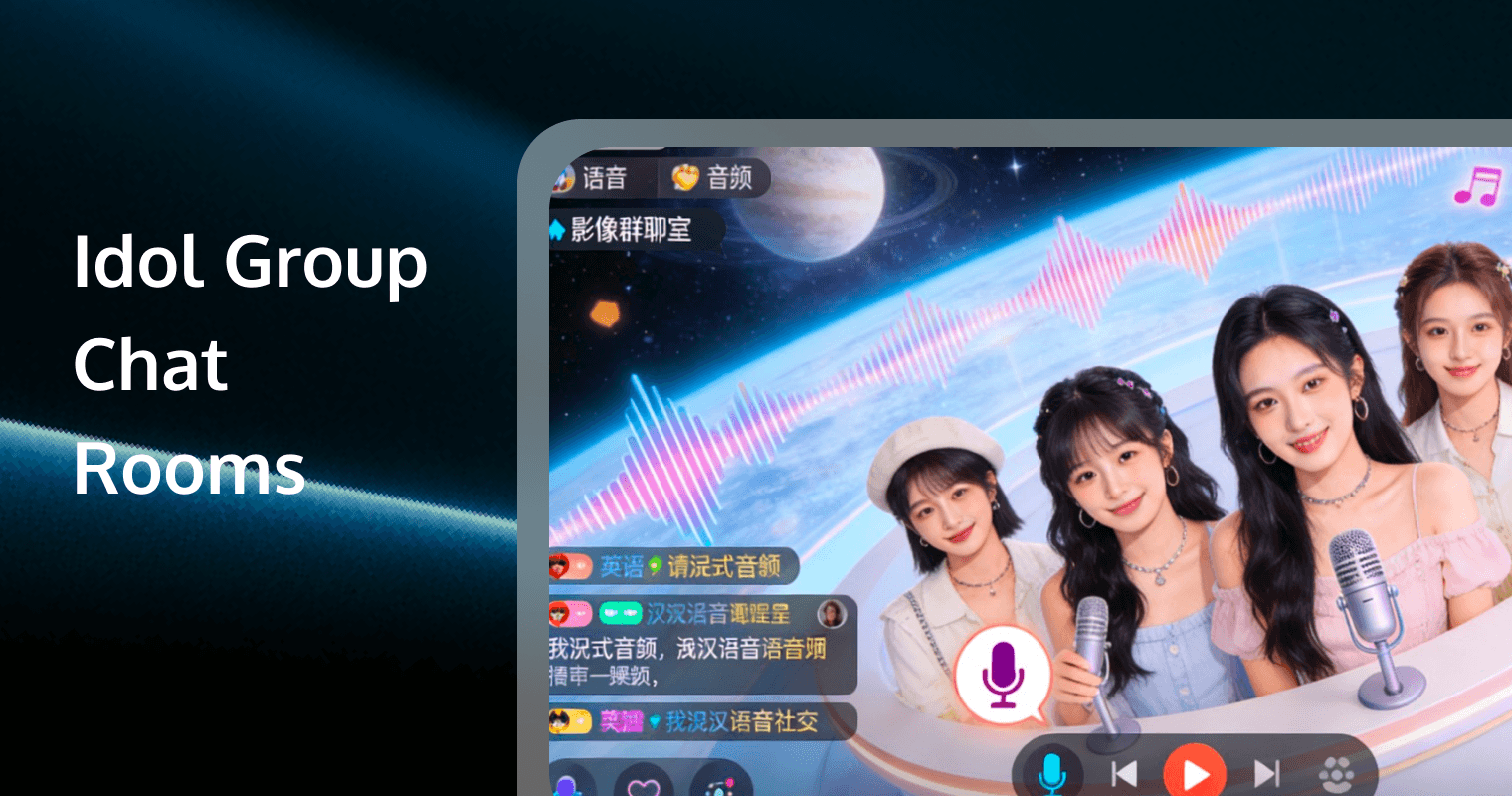
- Voice & Avatar Chat: Emerging platforms utilize avatars or live audio rooms where the idol acts as a host/DJ, inviting select fans to "stage" or simply reacting to the chat flow verbally.
The Psychology of Parasocial Interaction in Chat
To understand why the idol group chat room is such a powerful retention tool, one must understand the psychology of parasocial relationships—one-sided relationships where one party extends emotional energy, interest, and time, and the other party, the persona, is completely unaware of the other's existence (or handles it in aggregate).
The "Y/N" Effect (Your Name)
Modern idol chat apps use dynamic variables. When an idol types {user_name}, the app automatically replaces it with the specific fan's nickname locally on their device.
- Idol types: "Good morning, {user_name}! Did you sleep well?"
- Fan sees: "Good morning, Sarah! Did you sleep well?"
This simple technical feature significantly deepens the emotional bond, making the mass broadcast feel uniquely personal.
The Fear of Missing Out (FOMO)
Unlike static social media posts, chat messages feel ephemeral. The real-time notification—"BTS's Jungkook is typing..."—triggers an immediate dopamine response. Fans join the chat room instantly to catch the idol "online," creating unparalleled daily active user (DAU) statistics compared to passive feeds like Instagram.
Anatomy of a Successful Idol Chat App
If you are a product manager, developer, or community builder looking to create an engagement platform for influencers or idols, these are the non-negotiable features.
1. The "Private" Interface (UI/UX)
The user interface must mimic standard chat apps (like WhatsApp, iMessage, or KakaoTalk). The familiarity reduces cognitive load and enhances the feeling of intimacy.
- Key Design Element: The idol's messages should be distinct (e.g., yellow bubbles) vs. the user's messages (grey bubbles).
- Read Receipts: A "1" or "Read" indicator that appears when the idol opens the app gives fans a sense of validation, even if the idol hasn't replied to them specifically.
2. Tiered Subscription Models
Monetization is often integrated directly into chat access.
- Single Ticket: Access to one member's chat.
- Group Bundle: Discounted access to the full group.
- Loyalty Features: Fans who have subscribed for more consecutive days often get increased character limits for their replies, incentivizing long-term retention.
3. Integrated Translation
Idol fandoms are global. A successful idol group chat room must have built-in translation APIs. When an idol sends a message in Korean or Japanese, the app should offer an "Auto-Translate" toggle that converts the text to the user's system language (English, Spanish, Thai, etc.) instantly.
4. Multimedia Support
Text is rarely enough. The chat must support:
- Voice Notes: Audio messages from the idol (highly valued by fans).
- Exclusive Photos: Images that cannot be saved or screenshotted (using DRM or watermark technology) to maintain exclusivity.
- Live Status: Indicators showing when the idol is currently typing or recording audio.
Technical Challenges in High-Scale Fandom Chats
Building an idol group chat room is deceptively difficult from a technical perspective. When a popular idol sends a single message, it can trigger a "thundering herd" problem.
The Concurrency Spike
Imagine an idol has 1 million subscribers. When they send "Hello," the server must:
- Deliver 1 million push notifications instantly.
- Handle 1 million simultaneous app opens (socket connections).
- Process 500,000+ incoming replies within the next 60 seconds.
Most standard backend architectures will crash under this load. It requires robust WebSocket management, horizontal scaling, and message queue optimization (e.g., Kafka or Redis) to ensure the chat remains fluid.
Global Latency
Fans are located worldwide. If the chat server is hosted solely in Seoul, a fan in Brazil might experience a 3-second delay, ruining the "real-time" illusion. Using a Content Delivery Network (CDN) and edge computing for message routing is essential to keep latency under 200ms globally.
Safety, Moderation, and Privacy
Safety is the single most critical aspect of an idol group chat room. Without it, the platform becomes a liability.
Protecting the Idol (Inbound Filtering)
Idols should never see unfiltered raw messages from the internet.
- Forbidden Word Lists: An extensive, constantly updated database of slurs, sexual harassment, and malicious keywords.
- Spam Throttling: Limiting fans to 3 replies per idol message prevents flooding.
- AI Sentiment Analysis: Modern apps use AI to flag "toxic" sentiment even if no specific banned words are used, hiding these messages from the idol's view.
Protecting the Fans (Outbound Safety)
While rare, idols (or hackers) could theoretically send inappropriate content.
- Delay/Approval Mode: For high-risk situations, a manager might have a 30-second delay window to approve an idol's broadcast before it goes live to millions.
- Data Privacy: ensuring that fans' personal data (phone numbers, real names) is never exposed to the idol or other fans.
How to Manage and Moderate an Idol Fan Community
If you are running a smaller scale idol group chat room (e.g., on Discord or a custom app), manual moderation becomes key.
Establishing "The Vibe"
Community guidelines must be pinned and enforced. In idol culture, "fan wars" (conflicts between fans of different groups) are common. Your rules must explicitly ban bringing up rival groups or controversial topics.
The Role of "Fan Managers"
Official Fan Managers act as the bridge. They monitor the chat room health, relay technical issues to developers, and gather sentiment reports ("The fans are unhappy about the concert ticketing process") to feed back to the agency.
Automated Bots
Use bots to gamify the chat.
- Trivia Bots: Run quizzes about the idol's history.
- Streaming Parties: Bots that coordinate synchronized music listening sessions.
- Welcome Bots: immediate onboarding for new fans joining the room.
Enhancing Fandom Apps with Real-Time Communication
While text-based idol group chat rooms are the standard, the future of engagement lies in rich, real-time audio and video interaction. This is where integrating a robust Real-Time Communication (RTC) solution becomes a competitive advantage.
For developers and agencies building these platforms, Tencent RTC offers a suite of tools specifically optimized for high-concurrency social scenarios.
1. Voice Chat Rooms
Text is limiting. With Tencent RTC, you can integrate Voice Chat Room functionality.
- How it works: The idol enters a "Stage" channel and speaks via high-quality audio. Fans join as listeners (audience). The idol can "invite" a specific fan to come on stage and ask a question live.
- Benefit: This creates a "Radio Show" experience within the app, increasing dwell time and engagement without the high bandwidth cost of video.
2. High-Quality Video Fan Signs
Traditional fan signs (autograph sessions) are now digital.
- Solution: Use Tencent RTC Video Call capabilities to host 1-on-1 video meets.
- Feature: The SDK supports beauty filters (crucial for idols) and ultra-low latency, ensuring the interaction feels natural and lag-free, even if the idol is in Korea and the fan is in France.
3. Global Scalability with Tencent Chat
For the core messaging experience, Tencent Cloud Chat provides the backbone needed for millions of concurrent users.
- Reliability: It handles the "thundering herd" of login spikes when an idol goes live.
- Translation: Built-in translation capabilities allow you to seamlessly translate chat messages, breaking language barriers for global fandoms.
- Moderation: Native support for content filtering helps protect idols from toxicity automatically.
By leveraging Tencent RTC, you move beyond a simple text app and create a multimedia metaverse for fans.
Future Trends: AI Idols and The Metaverse
The idol group chat room is evolving into a virtual world.
- AI Personas: When the real idol is asleep, an AI trained on their speech patterns (authorized by the agency) can continue to interact with fans, offering 24/7 engagement.
- VR Spaces: Chat rooms will become 3D lobbies where fans' avatars hang out, watch concert replays together, and buy digital merchandise.
Conclusion
The idol group chat room has redefined the entertainment industry, turning passive consumption into active, daily conversation. Whether you are analyzing the phenomenon or building the next great fandom platform, success requires a blend of psychological insight—understanding the need for connection—and rigorous technical execution.
From handling massive traffic spikes to ensuring a safe, toxicity-free environment, the infrastructure matters as much as the content. By utilizing powerful tools like Tencent RTC, creators can build immersive, real-time experiences that turn casual listeners into lifelong superfans.
Frequently Asked Questions
Q: How do idol chat apps handle millions of fans trying to message at once?
A: Handling massive concurrency requires a robust Instant Messaging (IM) solution. You can use Tencent Cloud Chat (IM), which is designed to support hundreds of millions of concurrent users and massive message peaks, ensuring the app doesn't crash when an idol sends a notification.
Q: Can I add a feature where the idol hosts a live voice radio show?
A: Yes. By integrating Tencent RTC (Real-Time Communication), specifically the Voice Chat Room solution, you can create a "stage" where the idol speaks and thousands of fans listen, with features to manage speakers and audience interaction seamlessly.
Q: How can I protect the idol from seeing inappropriate messages or harassment?
A: Safety is critical. Tencent Cloud Chat includes built-in content moderation capabilities that allow you to filter sensitive words, block spam, and manage blacklists server-side, ensuring toxic messages are filtered out before they ever reach the idol's screen.
Q: Is it difficult to implement video calls for "Online Fan Signs"?
A: Not with the right SDK. Tencent RTC Video Call offers an easy-to-integrate SDK that supports high-definition video, beauty filters, and low latency, making it perfect for building 1-on-1 fan meeting features within your app.
Q: My fanbase is global. How do I prevent lag for users in different countries?
A: Latency can kill engagement. Tencent RTC utilizes a massive global infrastructure (Global acceleration network) to route traffic efficiently. This ensures that a fan in the US and an idol in Asia can chat or video call with minimal delay and high stability.