










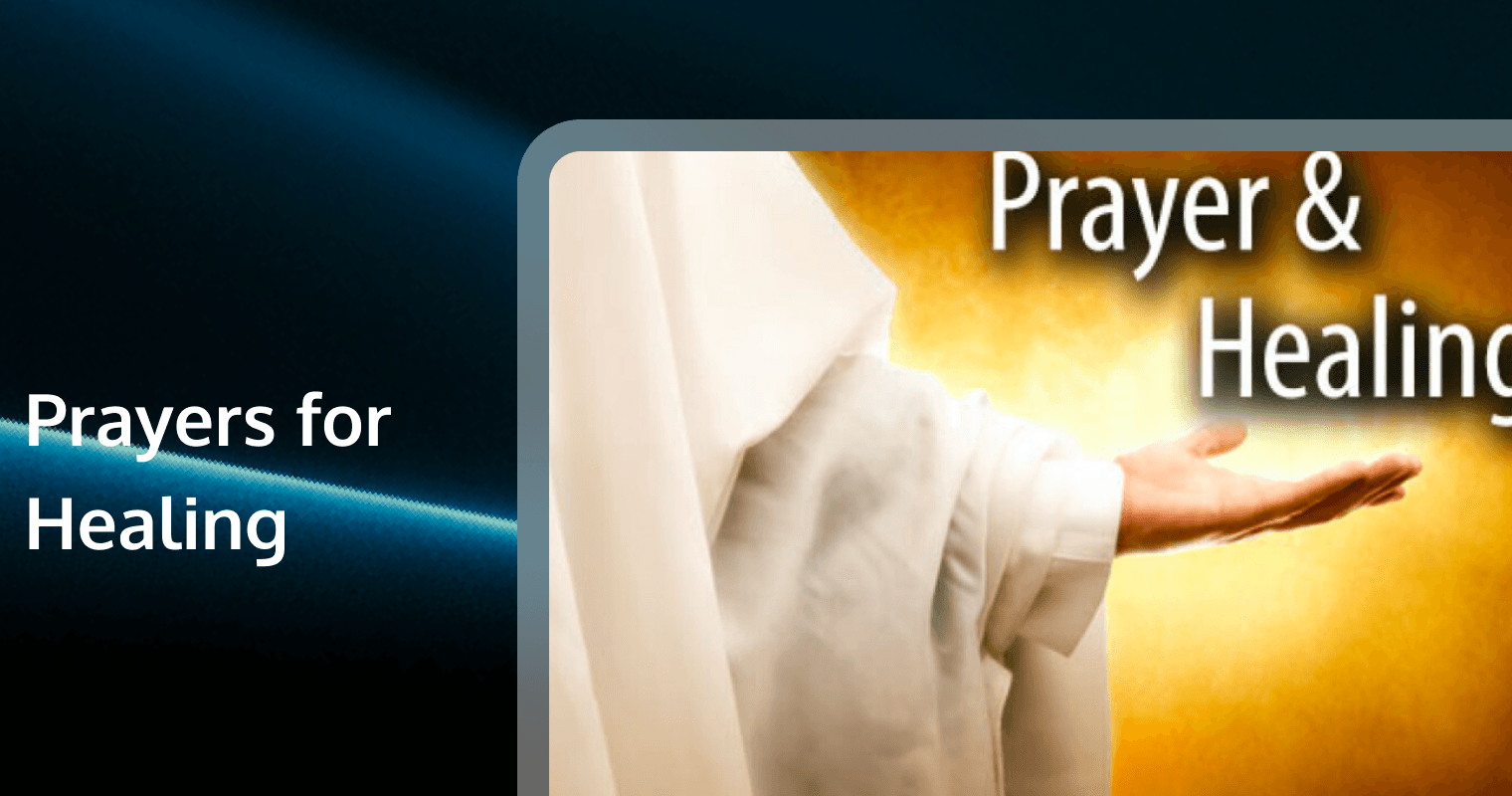
In moments of pain, uncertainty, and physical suffering, the human spirit instinctively seeks a connection with the Divine. “Prayers for healing” is not merely a search term; it is a cry for restoration, a plea for peace, and a bridge between human fragility and omnipotent power. Whether you are seeking relief for a chronic illness, interceding for a sick family member, or looking for emotional mending after trauma, understanding the depth and practice of healing prayer is essential.
This comprehensive guide goes beyond simple recitation. We will explore the theology of healing, practical steps to create a healing atmosphere, specific scripts for various needs, and how modern technology—specifically Real-Time Communication (RTC)—is revolutionizing how communities gather to pray.
1. The Theological Foundation: Why We Pray for Healing
Before we speak the words, we must understand the foundation. Healing in spiritual traditions is rarely just about the cessation of physical symptoms; it is about Shalom—complete wholeness of peace, body, and spirit.
The Three Dimensions of Biblical Healing
Healing is often misunderstood as a vending machine transaction: insert prayer, receive cure. However, a robust spiritual view encompasses three distinct dimensions:
1. Instant Miraculous Intervention: This is the immediate supernatural reversal of disease. While rare, scriptural accounts (like the healing of the leper in Matthew 8) validate this possibility.
2. Process-Oriented Restoration: Most healing is a journey. It involves the gradual alignment of the body’s natural regenerative abilities, often aided by medicine, nutrition, and rest, sanctified by prayer.
3. Ultimate Healing (The Eternal Perspective): Sometimes, physical healing does not occur in this lifetime. The theology of suffering teaches that “ultimate healing” is found in the absence of pain in the afterlife. Understanding this prevents disillusionment when prayers aren’t answered instantly.
Faith and Medicine: Partners, Not Rivals
A common misconception is that relying on doctors demonstrates a lack of faith. This is false. In the book of Sirach (38:1-15), believers are instructed to honor the physician because the Lord created him.
● Concept: Jehovah Rapha (The Lord Who Heals) often works through the hands of a surgeon or the chemistry of medication.
● Action: Pray for the wisdom of your medical team just as fervently as you pray for the miracle itself.
2. Preparing the Atmosphere: How to Pray Effectively
Effectiveness in prayer often correlates with the posture of the heart and the environment we create. You cannot rush into a healing prayer with a chaotic mind.
Step 1: The Posture of Surrender
Begin by acknowledging sovereignty. Anxiety blocks spiritual receptivity.
● technique: The “Open Hands” gesture. Physically sit with your palms facing upward. This signals to your body and mind that you are ready to receive, not just demand.
Step 2: Confession and Clearing Blocks
James 5:16 states, “Confess your sins to each other and pray for each other so that you may be healed.” Unresolved guilt or bitterness can manifest as physical stress (psychosomatic illness).
● Action Item: Spend 5 minutes in silence before asking for healing. Ask yourself: “Is there anyone I need to forgive?”
Step 3: Invoking Scripture
Prayer is not informing God of your problem; it is affirming His promise over your problem.
● Instead of saying: “God, please help, it hurts so bad.”
● Try saying: “Lord, You promised in Psalm 103 that You heal all diseases. I stand on that promise today.”
3. Comprehensive Prayers for Physical Healing
Use these structured prayers as templates. Adapt them to your specific situation.
For Your Own Physical Illness
“Divine Architect of my body, I come to You acknowledging that You knit me together in my mother’s womb. You know every cell, every nerve, and every tissue. Right now, I declare that my body is a temple of Your Spirit. I ask for Your healing power to flow through my bloodstream, correcting what is wrong, soothing inflammation, and destroying infection. I trust Your timing, and I thank You for the strength to endure this season. In Your Holy Name, Amen.”
For a Sick Friend or Family Member
“Merciful Father, I lift up [Name] to You today. They are weak, but You are strong. I stand in the gap for them, believing for their restoration when they cannot pray for themselves. Guide the hands of their caregivers. Grant them deep, restorative sleep. Let them feel Your presence so tangibly that fear is driven out of this hospital room. We claim total recovery over [Name]'s life. Amen.”
For Chronic Pain and Long-Term Conditions
“Lord, this journey has been long, and my strength is failing. For those of us living with chronic pain, we ask for the grace of endurance. We ask for ‘manna for today’—just enough relief to praise You this morning. If complete healing is not for today, grant me a supernatural management of pain so that I can still serve You and love others. Be my comfort in the night watches. Amen.”
4. Prayers for Emotional and Mental Restoration
The scars on the mind are often deeper than those on the body. Prayers for healing must encompass mental health.
A Prayer for Anxiety and Panic
“Prince of Peace, my mind is a storm. My heart races with fear of the unknown. I command my thoughts to be still in the name of love. You have not given me a spirit of fear, but of power, love, and a sound mind. I replace this panic with Your presence. Regulate my breathing, slow my heart, and anchor my soul in the certainty of Your goodness. Amen.”
A Prayer for Depression and Heaviness
“Light of the World, the darkness feels overwhelming right now. I feel numb and disconnected. I ask You to pierce this shadow. Remind me that I am seen, known, and loved. I pray for the chemical balance in my brain to be restored. Send me a sign of hope—a person, a word, or a sunrise—that reminds me life is worth living. I hold onto the hem of Your garment. Amen.”
5. Scriptural Foundations: The Sword of Prayer
Do not pray without ammunition. Memorize these verses to strengthen your intercession.
● Exodus 15:26: “I am the Lord, who heals you.” (The Identity Verse)
● Jeremiah 17:14: “Heal me, Lord, and I will be healed; save me and I will be saved, for you are the one I praise.” (The Petition Verse)
● Isaiah 53:5: “But he was pierced for our transgressions… and by his wounds we are healed.” (The Atonement Verse)
● Psalm 30:2: “Lord my God, I called to you for help, and you healed me.” (The Testimony Verse)
6. How to Structure a Healing Prayer Service
If you are a ministry leader, a chaplain, or a family head, you may need to organize a group prayer time. Structure brings peace.
The 5-Step Liturgy
1. Gathering (Music): Play instrumental music to lower cortisol levels and encourage focus.
2. The Word: Read a short passage (e.g., Mark 5) to build faith.
3. Corporate Confession: A collective moment of silence to clear the air.
4. Laying on of Hands (or Proxies): If physical touch is appropriate and safe, it is powerful. If remote, extending hands toward the camera is the proxy.
5. Thanksgiving: End not with begging, but with thanking God for what He is about to do.
7. The Intersection of Science: Neurotheology
Recent studies in Neurotheology (the neuroscience of belief) confirm that prayer changes the brain.
● Frontal Lobe Activation: Intense prayer activates the frontal lobe (focus and attention) and deactivates the parietal lobe (sense of self/space), creating a sense of oneness with the universe.
● Stress Reduction: Regular prayer lowers blood pressure and heart rate, creating a biological environment conducive to healing.
● The Placebo Effect vs. Faith: While skeptics call it placebo, believers call it the body responding to the authority of the spirit. The result—physiological improvement—is the same.
8. Enhancing Prayers for Healing with Real-Time Communication
In our modern, globally dispersed world, we cannot always be at the bedside of the sick. This is where technology bridges the gap between spiritual intent and physical presence. Tencent RTC (Real-Time Communication) offers the infrastructure needed to create powerful, virtual healing environments.
The Necessity of High-Quality Connections
When praying for someone in a critical condition over a screen, latency, jitter, or poor audio can ruin the solemnity of the moment. You need enterprise-grade reliability.
1. Virtual Prayer Rooms (Video Call)
Using Tencent RTC Video Call, ministries can set up 24/7 “Virtual Prayer Rooms.”
● Benefit: High-definition video (up to 4K) allows the intercessor to see the condition of the sick person, observing physical cues like breathing or skin color, which guides the specific focus of the prayer.
● Feature: Deep noise suppression ensures that hospital background noise (beeping machines) is minimized, focusing audio solely on the voice of the person praying.
2. Live Streaming Healing Services
For churches hosting healing services, Tencent RTC Live Streaming allows thousands to join in real-time with ultra-low latency.
● Scenario: A pastor prays in a studio, and a user in a hospital bed watches on their phone.
● Why Tencent?: With Global Cloud acceleration, the “Amen” said in the studio is heard instantly by the patient, creating a unified spiritual moment despite the distance.
3. Pastoral Counseling & Privacy (Chat & Voice Chat Rooms)
Many people seek healing for sensitive issues (addiction, trauma) and prefer anonymity.
● Voice Chat Room: Create audio-only prayer circles where users can join without turning on their camera, preserving dignity while receiving support.
● Chat SDK: Integrate Tencent RTC Chat capabilities into religious apps. This allows for text-based prayer requests, scripture sharing, and automated “Verse of the Day” bots powered by Conversational AI.
4. Conversational AI for 24/7 Support
Spiritual crises often happen at 3 AM. By integrating Conversational AI with Tencent RTC, ministries can offer an “Always On” prayer partner.
● Application: An AI bot trained on scripture can provide immediate comforting verses via Chat, escalating to a live human Video Call if the system detects severe distress.
Recommendation: For any developer or ministry building a spiritual care platform, Tencent RTC provides the necessary SDKs for Video Call, Voice Chat Room, and Chat to ensure that distance never hinders the power of prayer.
Frequently Asked Questions
Q1: How can I organize a prayer group for a sick friend who lives in another country?
A: You can organize a global prayer group using Tencent RTC’s Video Call solution. It supports multi-user video conferencing with low latency across borders, ensuring that family members from different continents can pray in unison without awkward delays or connection drops.
Q2: Is there a way to create a prayer app where users remain anonymous?
A: Yes. You can utilize Tencent RTC’s Voice Chat Room or Chat SDK. These allow users to join rooms using avatars or audio-only modes, ensuring they can share their burdens and receive prayer without revealing their identity or face.
Q3: How do I handle thousands of prayer requests coming in at once during a live stream?
A: You can integrate Tencent RTC’s Chat SDK alongside your Live Stream. It supports high-concurrency messaging (millions of concurrent users), allowing you to use moderation tools or Conversational AI to categorize requests automatically and display them to the prayer leader.
Q4: Can I add background worship music to my voice prayer app without it sounding terrible?
A: Absolutely. Tencent RTC offers high-fidelity audio processing (spectrum management and echo cancellation). This allows you to mix background music (worship tracks) with voice vocals in a Voice Chat Room without the music drowning out the speech or causing feedback loops.
Q5: What if my elderly congregation struggles with complex video apps?
A: Tencent RTC offers highly customizable UI/UX via their SDKs. You can build a simplified “One-Tap-to-Pray” interface for your application, hiding the complexity of the underlying Video Call technology, making it accessible for seniors seeking healing prayer.