








Owning a vehicle is a liberation, but maintaining it is a responsibility that often confuses even experienced drivers. Is a “Full Service” really necessary every year? What exactly does a mechanic look at when your car is on the lift? And how are electric vehicles changing the landscape of automotive care?
This comprehensive guide explores every facet of the car service industry. From dissecting the technical differences between interim and major services to navigating the new world of digital service logs and remote diagnostics, we provide the deep-dive knowledge necessary to protect your investment and ensure your safety.
What is a Car Service? (Beyond the Basics)
A car service is a series of maintenance procedures carried out at set time intervals or after the vehicle has traveled a certain distance. Unlike a mandatory safety inspection (like the MOT in the UK or state inspections in the US), a car service is a preventative health check for your vehicle.
The Philosophy of Preventative Maintenance
Think of a car service not as a repair session, but as a dental check-up for your machine. The goal is to identify wear and tear before it results in catastrophic failure. A properly serviced engine runs more efficiently, emits fewer pollutants, and is significantly less likely to suffer from the “sludge” buildup that kills motors prematurely.
Service vs. Inspection vs. Repair
It is vital to distinguish between these three concepts:
● Inspection: A legal or safety check (e.g., checking tread depth, lights, emissions). It ensures the car is legal to drive today.
● Service: A maintenance routine (changing fluids, filters, spark plugs). It ensures the car will continue to run for the next year.
● Repair: Fixing a broken component (replacing a snapped belt, fixing a dent). This is reactive, whereas servicing is proactive.
The Hierarchy of Service: Interim vs. Full vs. Major
Not all garage visits are created equal. The automotive industry generally adheres to a three-tiered structure. Understanding this hierarchy prevents you from overpaying for unnecessary work or under-servicing a high-mileage vehicle.
1. Interim Service (The 6-Month Check)
Target Audience: High-mileage drivers (20,000+ miles/year) or vehicles used for heavy towing.
Frequency: Every 6 months or 6,000 miles.
An interim service is a “top-up” to ensure safety between major intervals. It typically focuses on:
● Oil and Filter: The lifeblood of the engine. Even modern synthetic oils degrade with heat and pressure.
● Visual Safety Check: Lights, wipers, and horn.
● Fluid Top-ups: Brake fluid, coolant, and washer fluid.
● Tire Inspection: Pressure and tread depth checks.
What it misses: It does not usually include air filters, spark plugs, or deep brake inspections (removing wheels to check drums/discs internally).
2. Full Service (The Annual Standard)
Target Audience: The average driver.
Frequency: Every 12 months or 12,000 miles.
This is the benchmark for vehicle care. A Full Service includes everything in an Interim Service, plus:
● Air Filter Replacement: Clogged filters suffocate the engine, reducing fuel economy.
● Cabin/Pollen Filter: Crucial for air quality and defogging efficiency.
● Brake Inspection (Wheels Off): Detailed measurement of pad thickness and disc wear.
● Auxiliary Belts: Checking the alternator and power steering belts for cracking.
● Suspension Check: Inspecting shock absorbers, ball joints, and control arms for play.
3. Major Service (The Deep Clean)
Target Audience: Aging vehicles or specific mileage milestones (e.g., 24k, 48k miles).
Frequency: Every 24 months or 24,000 miles.
A Major Service is a comprehensive restoration of fluid integrity and ignition systems. It adds:
● Brake Fluid Change: Brake fluid is hygroscopic (absorbs water). Old fluid can boil under heavy braking, causing failure.
● Spark Plugs (Petrol) / Fuel Filters (Diesel): Essential for combustion efficiency.
● Coolant Flush: Replacing antifreeze to prevent radiator corrosion.
● Transmission/Gearbox Oil Check: Often overlooked but vital for smooth shifting.
The Critical Checklist: What Mechanics Actually Check
When you hand over your keys, the technician follows a rigorous checklist. Knowing this list helps you audit the work performed.
Engine & Under Hood
1. Oil Leaks: Inspecting the sump plug, rocker cover gasket, and oil filter housing.
2. Timing Belt/Chain: Listening for rattles (chain) or checking for fraying (belt). Note: Replacement is a separate, expensive job.
3. Radiator & Hoses: Squeezing hoses to check for brittleness or soft spots indicating internal rot.
4. Battery Health: Using a multimeter or load tester to check cranking amps.
Braking System
● Pad Thickness: Must be above the legal minimum (usually 1.5mm, though mechanics recommend changing at 3mm).
● Disc Condition: Checking for “lipping” (a raised edge) or scoring.
● Calipers: Ensuring the pistons retract freely and are not seized.
● Handbrake: Checking tension and travel (clicks).
Undercarriage & Suspension
● Exhaust System: Checking for rust holes, loose brackets, and the integrity of the catalytic converter.
● Steering Rack: Inspecting gaiters (rubber boots) for splits. A split gaiter lets in grit that destroys the steering rack.
● Wheel Bearings: Spinning the wheel to listen for the tell-tale “drone” or “grind” of a worn bearing.
Electric vs. Hybrid vs. Combustion: The New Servicing Landscape
The most significant “market gap” in traditional advice is the lack of detail on Electric Vehicle (EV) servicing. While EVs have fewer moving parts, they are not maintenance-free.
The EV Service Difference
Internal Combustion Engine (ICE) cars require oil changes and spark plugs. EVs do not. However, EVs place significantly higher stress on other components due to their weight and instant torque.
1. High-Voltage Battery Health
Instead of checking engine compression, technicians check cell voltage deviation. A healthy battery pack should have balanced cells. The service also includes checking the high-voltage cabling (orange cables) for rodent damage or insulation wear.
2. Enhanced Tire Wear
EVs are 20-30% heavier than gas cars. This shreds tires faster. An EV service places a massive emphasis on tire rotation and alignment to prevent premature replacement.
3. Regenerative Braking System
Because EVs use motors to slow down (regen), the physical brake pads are used less often. Paradoxically, this can cause the calipers to seize from lack of use. EV servicing involves cleaning and lubricating brake slide pins to ensure they don’t lock up.
4. Thermal Management
Battery coolant is critical. Unlike engine coolant, which can tolerate some degradation, battery coolant must be pristine to prevent thermal runaway or charging throttling.
DIY Maintenance vs. Professional Service: Where to Draw the Line
In an era of YouTube tutorials, many car owners are tempted to DIY. While noble, there are strict boundaries where safety risks outweigh cost savings.
Safe DIY Tasks
● Fluid Top-ups: Washer fluid, oil top-ups (if you know the correct grade), and coolant (overflow tank only).
● Wiper Blades: Easy to replace and essential for visibility.
● Air Filters: Usually accessible via clips, requiring no tools.
● Bulb Replacement: Accessible headlight and taillight bulbs (though modern LEDs often require sealed unit replacement).
The “Danger Zone” (Pro Only)
● Coil Springs & Struts: These are under immense tension. Removing a strut without a proper spring compressor can result in fatal injury.
● Timing Belts: Get the timing wrong by one tooth, and your pistons will smash into your valves, destroying the engine.
● Hybrid/EV High Voltage: Touching the orange cables without a lockout/tagout procedure and high-voltage gloves can be lethal (400V-800V DC).
● Braking Hydraulics: If you introduce air into the ABS module while bleeding brakes, you may lose all braking power.
The Cost of Neglect: Real-world Consequences of Skipping Intervals
Skipping a service saves $200 today but costs $2,000 tomorrow. Here is the mechanical reality of neglect.
The Oil Sludge Nightmare
Oil contains detergents. Over time, these saturate. Once saturated, carbon deposits settle as “sludge”—a thick, tar-like substance. This blocks oil galleries. The result? Oil starvation to the camshafts and crank bearings, leading to a seized engine requiring a full rebuild.
The Domino Effect of Coolant
Old coolant becomes acidic. It eats away at the head gasket and the water pump impeller. A $100 coolant flush skipped can lead to a $1,500 head gasket failure or a warped cylinder head.
Brake Fade
Brake fluid absorbs moisture from the atmosphere through microscopic pores in the rubber hoses. Water boils at 100°C. Brake fluid boils at 230°C+. If your fluid is 3% water, the boiling point drops drastically. Under hard braking (e.g., a mountain descent), the water boils, creating gas pockets. The pedal goes to the floor, and you have no brakes.
Digital Service Records and Warranty Compliance
The days of the stamped paper logbook in the glovebox are fading. Manufacturers like BMW, Audi, and Mazda have moved to Digital Service Records (DSR).
Why DSR Matters
1. Resale Value: A car with a verified digital history is worth up to 20% more. Paper books can be forged; digital entries are verified by authorized repairers.
2. Warranty Claims: If your engine fails under warranty, the manufacturer will demand proof of service. DSR provides an immutable timeline. If you miss a service by 1,000 miles, they may void your claim.
3. Independent Access: By law (in regions like the EU/UK under Block Exemption Regulations), independent garages can update these digital records, provided they pay for access. Ensure your independent mechanic uploads the data, or your history will appear blank.
The Future of Auto Care: Remote Diagnostics and Telematics
Car service is moving from “Scheduled” to “Predictive.”
Telematics and Connected Cars
Modern vehicles transmit data to the manufacturer. Your car can now “book itself in.” Sensors detect that the oil viscosity has dropped below a threshold or that a brake pad wear sensor has triggered.
Over-the-Air (OTA) Updates
Tesla popularized this, but Ford, GM, and VW are following. “Servicing” now includes software patches that improve battery range, adjust throttle mapping, or fix infotainment bugs—all done while the car sits in your driveway.
Enhancing Car Service with Real-Time Communication
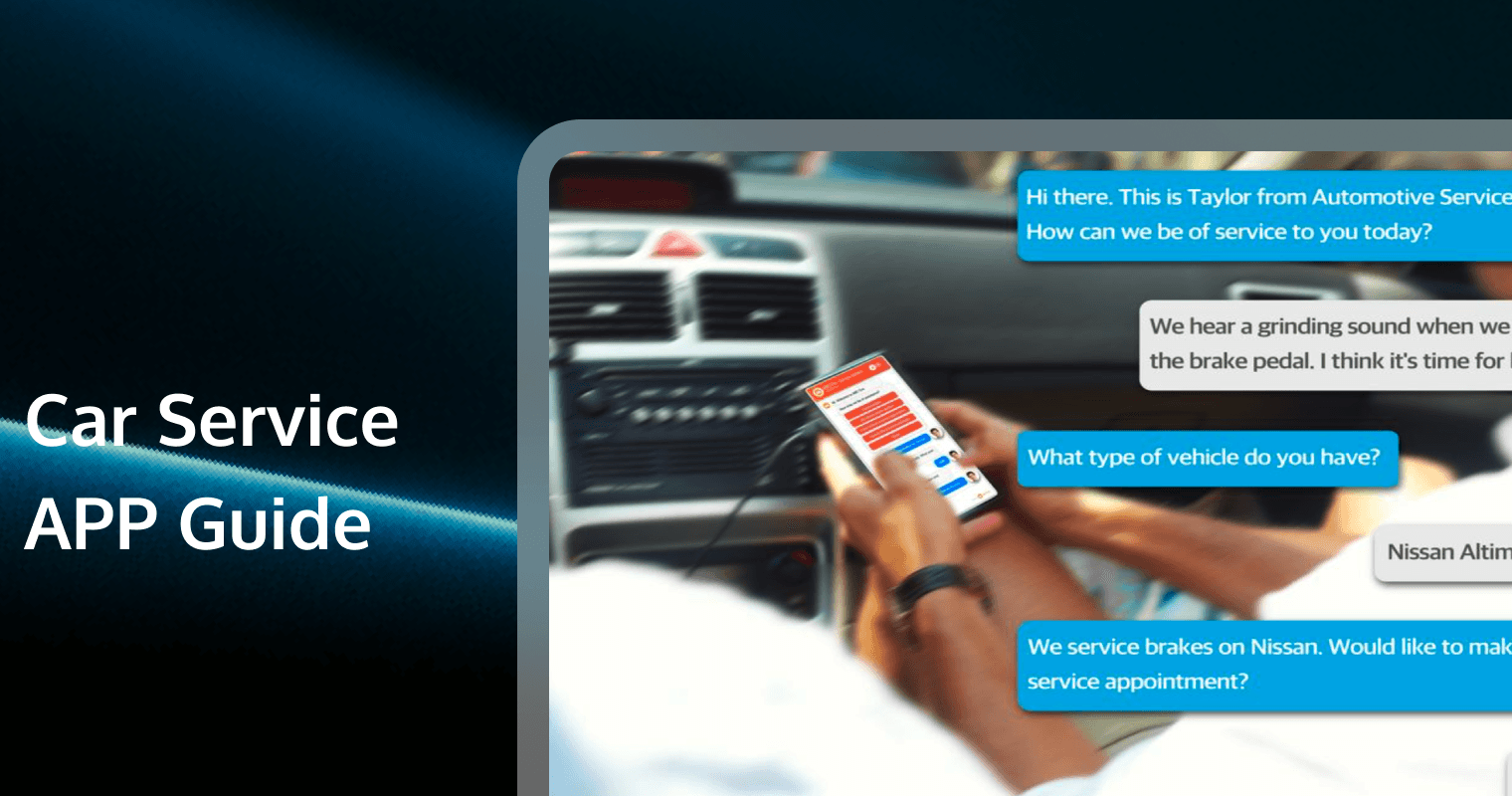
The friction in the traditional car service model is communication. The customer drops the car off, leaves, and waits anxiously for a phone call. The mechanic finds a surprise issue, calls the customer, gets voicemail, and work stops. This inefficiency is being solved by Real-Time Communication (RTC) technology.
Mechanics and service centers are adopting advanced communication tools to build trust and speed up approval times. This is where Tencent RTC solutions shine.
1. Video Health Checks (VHC) via Video Call
Imagine a mechanic finds a leaking shock absorber. Instead of trying to explain it over the phone to a non-technical owner, they use Tencent RTC’s Video Call capabilities.
● Scenario: The mechanic initiates a high-quality video stream.
● Benefit: The customer sees the leak live on their phone screen. “See this oil dripping here? That’s why your ride is bumpy.”
● Result: Instant trust. The customer approves the repair immediately because they saw the proof.
2. Instant Approval via In-App Chat
Phone calls are intrusive. Tencent RTC’s Chat SDK allows service centers to integrate secure messaging into their branded apps.
● Workflow: The service advisor sends a quote for new tires via Chat.
● Features: They can attach photos of the bald tires and a PDF of the quote.
● Action: The customer replies “Go ahead” instantly from their meeting, without needing to answer a voice call.
3. Remote Expert Consultation
For complex diagnostics (especially on new EVs), a junior mechanic might need help. Using Tencent RTC’s Conference or Live Streaming features, the local mechanic can stream the engine bay data to a Master Technician at a regional HQ. The expert can annotate the video stream in real-time, guiding the mechanic’s hand to the correct test point.
Recommended Technology: Tencent RTC
For automotive software developers and service center chains looking to modernize, Tencent RTC offers the robust infrastructure needed for these features:
● Low Latency: Critical for live interactions between mechanic and customer.
● High-Definition Video: Necessary to see fine details like hairline cracks in a belt.
● Global Coverage: Ensuring the connection holds even if the customer is traveling.
By integrating Tencent RTC (Video, Chat, and Conferencing), service centers transform from “black boxes” into transparent, trust-driven partners.
Frequently Asked Questions
Q: How do I know if my mechanic is actually doing the work they charge for?
A: Transparency is key. You should look for garages that use Tencent RTC’s Video Call technology to provide “Video Health Checks.” This allows the mechanic to film the old parts being removed and the new parts being installed, livestreaming or sending a recorded video directly to your phone so you have visual proof of the service.
Q: I have a question about a dashboard warning light, but I can’t drive to the shop. What should I do?
A: Many modern service apps now offer remote consultations. You can use a platform powered by Tencent RTC’s Chat or Voice Chat Room to describe the issue or send a photo of the dashboard light to a technician. They can advise if it’s safe to drive or if you need a tow, without you leaving your home.
Q: Can I get a second opinion on a repair quote without visiting another garage?
A: Yes. If your garage uses digital tools, ask them to send the video evidence of the fault. You can then share this video (facilitated by Tencent RTC’s high-quality media transmission) with another expert via a consulting app to verify if the repair is genuinely needed.
Q: How can service centers improve their customer support for non-urgent queries?
A: Service centers can deploy Conversational AI integrated with Tencent RTC’s Chat SDK. This allows an AI bot to handle routine queries like “What is the price of an oil change?” or “Book a slot for Tuesday,” freeing up human advisors to handle complex video consultations for repairs.
Q: Is it possible to watch my car being serviced in real-time?
A: While rare, high-end performance shops are beginning to offer this. Using Tencent RTC’s Live Streaming capabilities, a shop can set up a secure camera feed in the bay. Owners of luxury or classic cars can log in and watch the delicate work being performed on their prized vehicle in real-time, ensuring total peace of mind.