









In the last decade, the landscape of Islamic education has undergone a seismic shift. The traditional Maktab (neighborhood Quran school), while still vital, is no longer the sole avenue for religious literacy. Online Quran classes have evolved from rudimentary Skype calls into sophisticated, structured digital academies that rival—and often exceed—the quality of in-person instruction.
However, this rapid growth has created a marketplace crowded with options, ranging from highly accredited institutions to informal, unregulated tutoring. For parents, students, and EdTech developers, the challenge is no longer finding a class, but defining quality.
This comprehensive guide explores the ecosystem of online Quranic education. We will dissect the curriculum requirements for true mastery, the technical specifications necessary for accurate Tajweed, and how next-generation technology is solving the age-old problem of "virtual distance."
The Digital Shift: Why Online Quran Education is Outpacing Tradition
The migration to online learning is not merely a matter of convenience; it is a matter of access to expertise. In many Western countries or remote areas, finding a Qari (expert reciter) with a connected chain of transmission (Sanad) back to the Prophet (PBUH) is geographically impossible. Online platforms dissolve these borders.
Access to Global Expertise
In a local setting, you are limited to the teachers available within a 10-mile radius. Online, your pool of tutors expands to the entire globe. You can select a tutor based on:
Specialization: Finding a specialist in Qira'at* (styles of recitation) like Warsh or Hafs.
● Language: Tutors who speak fluent English, Urdu, French, or Malay, ensuring no communication barriers.
Certification: Verifying Ijazah* (authorization to teach) from prestigious institutions like Al-Azhar University or the Islamic University of Madinah.
The Efficiency of One-on-One Focus
Traditional Madrassas often operate with a student-teacher ratio of 20:1. In a one-hour session, a student might only recite to the teacher for 3 to 5 minutes. The rest of the time is spent waiting.
Online Quran classes typically operate on a 1:1 basis. If you book a 30-minute slot, you receive 30 minutes of dedicated attention. This intensity accelerates the learning curve significantly. A student who might take 3 years to finish the Noorani Qaida in a group setting often completes it in 6 months online due to this hyper-focused attention.
Data-Driven Progress Tracking
Modern platforms utilize Learning Management Systems (LMS) to track progress granularly. Unlike the traditional paper logbook, digital systems can record:
● Number of mistakes per page.
● Attendance streaks.
● Memorization retention rates (using spaced repetition algorithms).
● Audio recordings of past recitations to demonstrate improvement over time.
Anatomy of a Perfect Curriculum: From Noorani Qaida to Ijazah
To outclass the competition, one must understand that "learning Quran" is not a monolith. It is a structured ladder of sciences. A high-quality online Quran class must offer a clear, tiered curriculum. If an academy cannot present you with a syllabus, walk away.
Level 1: The Foundation (Noorani Qaida / Makharidj)
This is the bedrock. It is not just about learning the Arabic alphabet; it is about learning the sounds of the alphabet as they pertain to the Quran.
The Throat Letters: Mastering the difference between Ha (ح) and Ha* (ه).
The Heavy Letters: Pronouncing Sad (ص), Dad (ض), Ta (ط), and Zha* (ظ) with full mouth resonance.
● Connecting Letters: Understanding how shapes morph when connected.
Standard Duration: 3 to 6 months.
Level 2: Nazra (Reading Fluency)
Once the letters are mastered, the student begins reading the Quran directly, usually starting with the 30th Juz (Amma Para). The goal here is visual recognition speed and fluency without hesitation.
● Eye-Training: Training the eye to recognize the next word while the tongue is pronouncing the current one.
● Breath Control: Learning where to pause (Waqf) without altering the meaning.
Level 3: Theoretical and Practical Tajweed
This is where many online classes fail. They may correct mistakes, but they don't teach the rules. A student must understand the Why.
● Noon Sakinah & Tanween: The rules of Izhar, Idgham, Iqlab, and Ikhfa.
● Mudd (Elongation): Knowing exactly how long to stretch a vowel (2, 4, or 6 counts).
Sifaat (Attributes): The intrinsic characteristics of letters, such as Hams (whisper) or Qalqalah* (echo).
Level 4: Hifz (Memorization)
This requires a different strategy entirely. It involves:
● New Lesson (Sabaq): Memorizing fresh verses.
● Recent Review (Sabaq Para): Reviewing the last 1-2 Juz.
● Old Review (Manzil): Cycling through the entire memorized portion to prevent attrition.
The Science of Recitation: Why Audio Quality Matters More Than You Think
In secular subjects like Math or English, a slight audio glitch is an annoyance. In Online Quran classes, audio fidelity is the difference between a correct and incorrect recitation.
The Frequency of Tajweed
Many Quranic sounds rely on high-frequency definition.
The Whistle of Seen/Sad: The sibilance in these letters resides in the 4kHz-8kHz range. Low-quality VoIP (Voice over IP) often compresses this range, making Seen sound like Thaa*.
The Breath of Hams: Letters like Ta and Kaaf* release a burst of air. If the audio codec uses aggressive noise cancellation, it might interpret this breath as "background noise" and cut it out, leading the teacher to think the student missed the attribute.
Latency and Interruption
Recitation is rhythmic. If there is a 500ms delay (latency), the teacher cannot stop the student at the exact moment of a mistake. By the time the teacher speaks, the student is two verses ahead. This breaks the flow and frustrates the learning process. Low latency (<200ms) is non-negotiable for effective Quranic instruction.
How to Evaluate an Academy: Beyond the Sales Pitch
When researching "Online Quran classes," do not rely on the homepage testimonials alone. Use this audit checklist to vet potential academies.
1. The "Trial Class" Stress Test
Almost all academies offer a free trial. Use this to test their infrastructure, not just the teacher.
● Check the Platform: Are they using a generic Skype link, or a dedicated classroom portal?
● Test the Latency: Ask a question and time the response. Is there an awkward silence?
● Screen Sharing: Does the text blur when the teacher scrolls? High-resolution screen sharing is vital for reading complex calligraphic scripts.
2. Teacher Screening Protocol
Ask the administration:
● "What is your vetting process?"
● "Do you conduct background checks?"
● "Does the teacher have an Ijazah? Can I see a copy?"
● "Are the teachers trained in online pedagogy?" (Teaching to a camera is different from teaching in a room).
3. Sustainability and Flexibility
● Rescheduling Policy: How many hours in advance must you cancel to avoid a fee?
● Makeup Classes: Do they offer makeup credits for technical outages?
● Payment Security: Do they use secure gateways (Stripe/PayPal) or ask for direct bank transfers? (Always prefer the former).
Setting Up Your "Home Madrasa": Hardware and Environment
Success in online learning is 50% instruction and 50% environment. You cannot expect a child to focus on the word of Allah while sitting on a couch with the TV on in the background.
The Hardware Stack
1. Headset with Mic: Do not use the built-in laptop microphone. It picks up echo and room noise. Invest in a USB headset with a noise-canceling boom mic (e.g., Logitech H-series or Jabra).
2. Hardwired Connection: WiFi fluctuates. For the stability required for continuous recitation, use an Ethernet cable if possible.
3. Large Screen: Do not let children learn on a smartphone. The script is too small, causing eye strain. A tablet (iPad/Android) or a Laptop (13"+) is the minimum requirement.
The Spiritual Atmosphere
Create a dedicated "Quran Corner" in your home.
Dress Code: Encourage students to dress as if they were going to the Mosque. Wearing a Thobe or Hijab* helps shift the mindset from "home mode" to "worship mode."
● Wudu (Ablution): Make it a rule to be in a state of Wudu before touching the device used for the Quran class.
Lighting: Ensure the face is well-lit so the teacher can see lip movements (critical for correcting Makharij*).
Overcoming the "Virtual Barrier": Engagement and Discipline Strategies
The biggest weakness of online classes is the lack of physical presence. A teacher cannot gently tap a student's shoulder to regain attention.
Gamification
Parents and teachers must collaborate to gamify the experience.
● Visual Trackers: Print a "Surah Map" and color in sections as they are memorized.
● Digital Badges: Some LMS platforms award badges for attendance streaks or completing a Juz.
The "Hybrid" Approach
Online learning does not have to be isolating.
● Group Review: Once a week, gather siblings or friends to recite what they learned online to each other in person.
● Public Recitation: Encourage the child to recite a Surah at the dinner table or during family prayer times to build confidence outside the virtual classroom.
Safety and Privacy: Protecting Your Child in a Digital Classroom
While online classes are generally safe, inviting a stranger (even a teacher) into your home digitally requires precautions.
● Public Areas: The computer should be in a living room or open area, never in a closed bedroom.
● Recording Policy: Ask the academy if sessions are recorded. If so, where are they stored? Who has access? Recordings are great for review but must be secured to protect child privacy.
● Chat Monitoring: Ensure the communication platform restricts Chat to academic purposes. Some platforms allow parents to receive transcripts of all Chat logs.
Enhancing Online Quran Classes with Real-Time Communication
The future of "Online Quran classes" lies in the technology that powers them. As we move beyond basic video conferencing, specialized Real-Time Communication (RTC) solutions are transforming the experience.
For EdTech developers building the next generation of Quranic platforms, or academies looking to upgrade their tech stack, Tencent RTC offers a superior infrastructure tailored for this exact use case.
Why General Video Tools Fall Short
Generic meeting tools often prioritize smooth video over accurate audio, or they suffer from high latency during peak hours. In Quranic education, where the elongation of a vowel by one second changes the meaning of a word, precision is paramount.
The Tencent RTC Advantage
Tencent RTC provides a suite of tools that directly address the pain points of online Quran tuition:
High-Fidelity Audio: Tencent RTC's audio processing supports full-band audio (48kHz sampling rate). This captures the full spectrum of the human voice, ensuring that the subtle high-frequency sounds of Tajweed (like the whisper of Ha or the whistle of Sad*) are transmitted with crystal clarity.
● AI Noise Suppression: Quran classes often happen in busy households. Tencent's AI-driven noise reduction can silence a vacuum cleaner or crying baby in the background while keeping the reciter's voice distinct and natural.
● Global Low Latency: With a global network of nodes, Tencent RTC ensures that a student in New York and a teacher in Cairo can interact with less than 200ms latency. This allows for "Real-Time Correction"—the teacher can stop a mistake the instant it happens, rather than after the verse is finished.
● Interactive Whiteboard Integration: Beyond simple screen sharing, Tencent RTC supports interactive whiteboards. A teacher can circle a specific letter in a different color on the student's screen to highlight a Tajweed rule visually.
Recommended Products
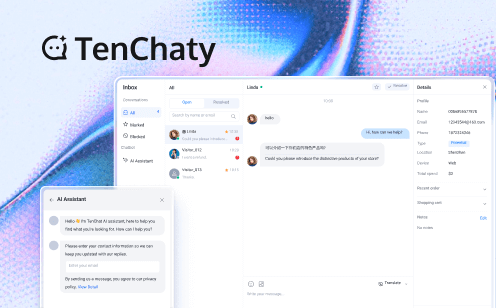
● Video Call: For the core 1-on-1 student-teacher experience with HD video and superior audio.
● Conference: For group classes (Halaqah) where multiple students recite in turns.
● Chat (IM): For sending homework assignments, feedback notes, and scheduling updates securely.
By integrating Tencent RTC, academies can move from being "just another Skype tutor" to a professional, high-performance educational institution.
Frequently Asked Questions
Q: My internet connection is unstable. Can I still take Online Quran classes?
A: Yes, but the platform matters. You should look for academies that use robust technology like Tencent RTC's Video Call SDK. It is designed to handle packet loss and network jitter gracefully, ensuring the audio remains clear even if the video quality has to drop temporarily to maintain the connection.
Q: How can I ensure my child's privacy during 1-on-1 sessions?
A: Choose platforms that prioritize security. Solutions built with Tencent RTC offer enterprise-grade encryption for both audio and video streams. Additionally, you can use Tencent RTC's Chat features to keep all communication within the app, avoiding the need to share personal WhatsApp or phone numbers with tutors.
Q: Is it possible to have group Quran classes online effectively?
A: Absolutely. While 1-on-1 is common, group motivation is powerful. Platforms utilizing Tencent RTC's Conference mode can host multiple students without lag. The teacher can "mute all" to explain a rule and then unmute students individually for recitation, managing the classroom dynamic just like a physical school.
Q: Can I build my own Online Quran Academy app?
A: Yes. You don't need to build video infrastructure from scratch. You can use the Tencent RTC Video Call SDK and Chat SDK to rapidly integrate professional-grade video and messaging into your website or mobile app, allowing you to focus on curriculum and teacher vetting rather than backend engineering.
Q: The audio quality on Zoom/Skype makes it hard to hear Tajweed nuances. Is there a fix?
A: The "fix" is often using a platform dedicated to high-quality audio. Tencent RTC supports high-fidelity audio transmission which preserves the "breathiness" and subtle characteristics of Arabic letters. If you are building a platform, enabling Tencent's AI audio enhancement will significantly improve the teaching experience compared to generic VoIP tools.