







 In the landscape of digital engagement, few features capture the human imagination like the Wish Wall. Unlike a standard comment section or a static guestbook, a Wish Wall is a dedicated digital space—often visualized as a starry sky, a lantern festival, or a mosaic of sticky notes—where users collectively post aspirations, dreams, and messages.
Whether you are an event organizer looking to boost attendee interaction, a developer building a social app, or a streamer seeking better community monetization, the Wish Wall is a powerhouse feature.
This comprehensive guide will walk you through everything you need to know: from the psychology of wishing to the technical architecture required to build a real-time, high-scale Wish Wall.
What is a Wish Wall? (Defining the Modern Concept)
Historically, wish walls were physical structures—temple walls in Tokyo, love lock bridges in Paris, or the Western Wall in Jerusalem. People left physical artifacts to symbolize their hopes.
In the digital era, a Wish Wall is a virtual interface that aggregates user-generated content (UGC) in a visually immersive format. It serves three primary functions:
- Emotional Expression: A safe space for users to voice hopes, regrets, or support.
- Community Visualization: Seeing one's wish alongside hundreds of others creates a sense of belonging.
- Interaction Node: Modern wish walls allow users to "like," "bless," or reply to wishes, turning a static board into a dynamic social network.
The Psychology of Wishing: Why It Drives Engagement
To build a successful Wish Wall, you must understand why users engage with them. It goes deeper than just typing text.
1. The "Bottle in the Ocean" Effect
Users often find catharsis in releasing a thought into a semi-anonymous void. Unlike a direct message or a forum post, a wish doesn't necessarily demand a reply—it demands witnessing. This lowers the barrier to entry; users don't need to be witty or controversial, they just need to be sincere.
2. Visual Social Proof
When a user sees a visual representation of the community—thousands of floating lanterns or a dense grid of notes—it triggers strong social proof. "Everyone else is here; I should be too." This is why visual design (discussed later) is critical.
3. Reciprocity and Blessings
Successful wish walls allow other users to interact with a wish. A simple "Light a Candle" button or "Bless this Wish" action provides a dopamine hit to the original poster and a sense of altruism to the interactor. This loop drives retention.
Use Cases Across Industries
Corporate Events & Town Halls
Instead of a boring Q&A box, use a Wish Wall for "Hopes for the Coming Year." It democratizes the conversation, allowing employees to post anonymously.
- Idea: Display the wall on the main stage LED screen before the keynote begins.
Live Streaming & Creators
Streamers can use Wish Walls as a monetization tool.
- Mechanism: A viewer pays $5 to pin a "Super Wish" to the top of the stream overlay for 30 minutes.
- Engagement: The streamer reads the wishes aloud during breaks.
Charity and Fundraising
Donation tickers are standard, but a "Impact Wall" is better.
- Concept: Each donation generates a virtual brick in a wall or a flower in a garden. The visual grows as the donation goal is met.
Weddings & Celebrations
The modern guestbook is a tablet at the entrance where guests record video wishes or type messages that appear instantly on a projector. This creates a real-time feedback loop that encourages more guests to participate.
Designing the Perfect User Experience (UI/UX)
A Wish Wall fails if it looks like a spreadsheet. The UI must be immersive. Here are the top design patterns:
1. The Galaxy / Lantern View
- Visual: Dark background. Wishes appear as glowing stars or floating lanterns.
- Interaction: Users drag the canvas to explore. Clicking a star expands the text.
- Best For: Emotional, sentimental, or anonymous apps.
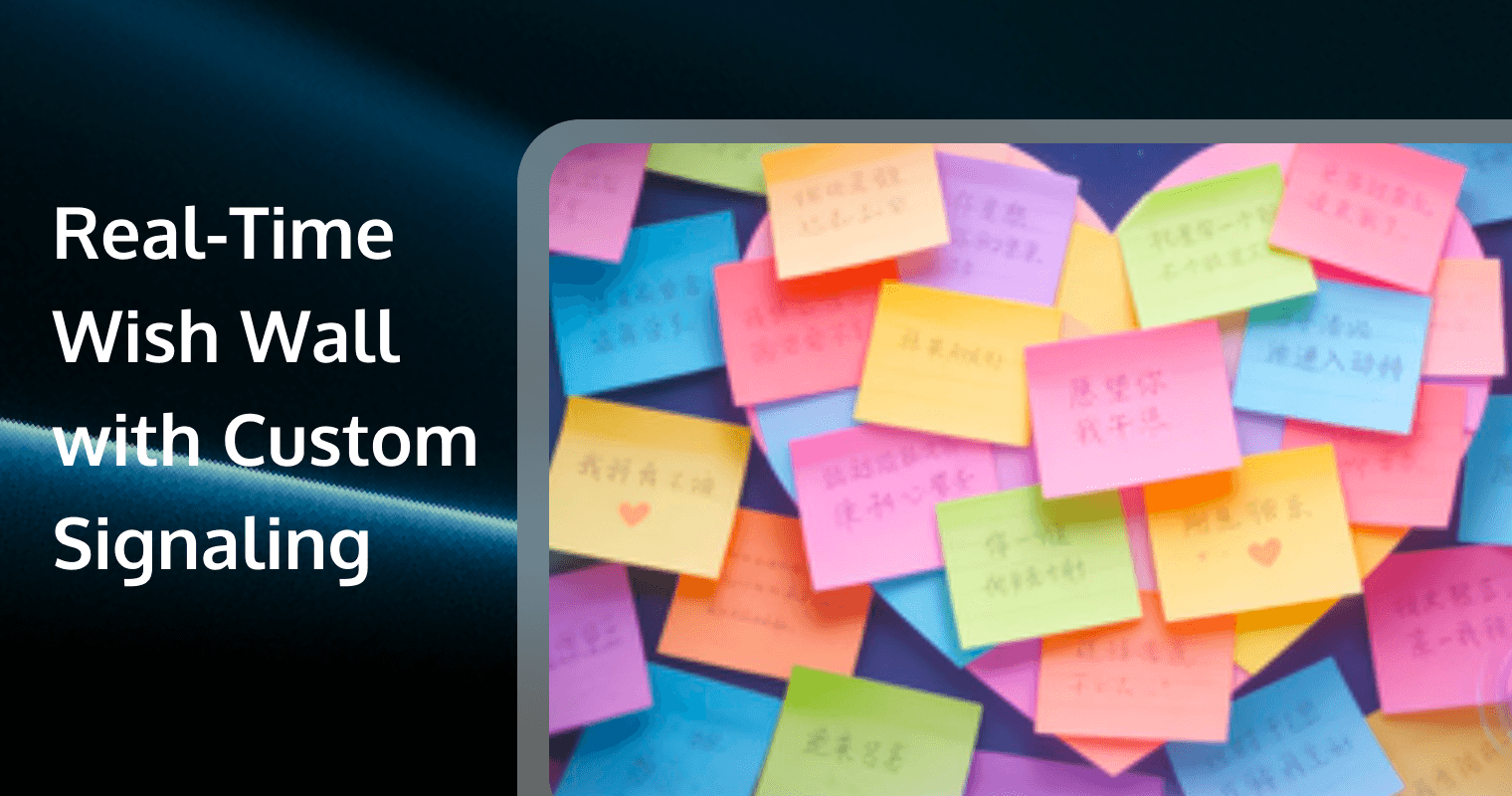
2. The Masonry Grid (Sticky Notes)
- Visual: A chaotic but organized bulletin board. Differing colors for different categories (e.g., "Love", "Career", "Health").
- Interaction: Infinite scroll. High density of information.
- Best For: Corporate events, feedback loops, agile retrospectives.
3. The Stream Ticker
- Visual: A lower-third scrolling marquee or a sidebar overlay.
- Interaction: Fast-paced, ephemeral. Wishes disappear after 60 seconds unless "pinned."
- Best For: Live video streaming, Esports.
UX Best Practices
- Input Friction: Keep it near zero. No account creation should be required for basic viewing.
- Randomization: Don't just show the newest wishes. Shuffle in "Top Rated" or "Old but Gold" wishes to ensure every user feels their content has a lifespan.
- Animation: Movement captures the eye. Even a subtle drift (parallax effect) makes the wall feel "alive."
Technical Architecture: Building for Scale
If you are building a custom Wish Wall, you cannot rely on simple HTTP polling. You need a real-time architecture.
The Backend: WebSocket vs. Polling
- Polling: Checking the server every 5 seconds for new wishes.
- Verdict: Too slow for live events. resource-heavy at scale.
- WebSockets (Recommended): A persistent connection between client and server.
- Verdict: Essential. When User A posts a wish, User B sees it appear instantly without refreshing.
Moderation: The Critical Component
A public wall is a magnet for spam. You need a three-layer defense:
- Profanity Filter (Automated): Block lists for bad words.
- AI Sentiment Analysis: Flag wishes that are negative or aggressive for manual review.
- Human Admin Panel: A dashboard where an event manager can "Approve" wishes before they go live on the big screen.
Gamification and Monetization Strategies
How do you turn a Wish Wall into a revenue generator?
- Premium Skins: Users pay to make their wish note gold, neon, or animated.
- Pinned Wishes: Charge a fee to keep a wish at the top of the board for 24 hours.
- Gifting: Allow users to attach virtual gifts (roses, chocolates) to other people's wishes. The platform takes a % of the transaction.
Enhancing Wish Walls with Real-Time Communication
The next evolution of the Wish Wall is audio and video. Text is powerful, but hearing a voice or seeing a face creates an undeniable emotional connection. To implement this, you need a robust Real-Time Communication (RTC) solution.
Why Add Video and Audio?
- Video Wishes: Instead of typing, a user at a wedding or event records a 15-second video greeting. These play in a grid or pop up when clicked.
- Live Commentary: A streamer can click a wish and instantly pull the wisher into a voice call to discuss it.
- Interactive Chat: Transform the static wish into a dynamic discussion room where users can chat about specific topics.
Recommended Solution: Tencent RTC
For developers looking to integrate these features seamlessly, Tencent RTC (Real-Time Communication) offers the most robust SDKs for high-fidelity audio/video and messaging.
Key Tencent RTC Capabilities for Wish Walls:
Chat:
- Use this to power the underlying data transmission of the wishes themselves. Tencent's Chat handles the WebSockets, offline storage, and massive concurrency (millions of simultaneous users) out of the box.
- Application: Build the "Comment" and "Reaction" features on each wish using the Chat SDK.
- Allow users to record short video clips (15-30s) as wishes. Tencent's cloud storage and playback optimization ensure these load instantly even on mobile data.
- Application: A "Video Wish Wall" for hybrid events where remote attendees upload clips that play on the physical stage screen.
- Create "Prayer Rooms" or "Wish Circles" where users can join a live audio channel to discuss their hopes in real-time.
- Application: Click on a specific wish to enter a temporary voice room with other users interested in that topic.
By leveraging Tencent RTC, you avoid building the complex real-time infrastructure from scratch, ensuring your Wish Wall is low-latency, scalable, and globally accessible.
Frequently Asked Questions
1. How do I prevent inappropriate content from appearing on my live Wish Wall?
Answer: You need a robust content moderation system. Using Tencent RTC's Chat, you can utilize built-in profanity filters and integrate with AI moderation tools to automatically flag or block sensitive keywords and images before they are broadcast to the public view.
2. Can I build a Wish Wall that supports millions of users simultaneously?
Answer: Yes, but standard web servers will crash. You should use a dedicated real-time messaging solution. Tencent RTC provides an enterprise-grade Chat API designed to handle millions of concurrent connections (C10M problem), ensuring your wall doesn't lag even during Super Bowl-level traffic.
3. Is it possible to have a Wish Wall inside a mobile app and a website at the same time?
Answer: Absolutely. This is called a cross-platform implementation. By using Tencent RTC's cross-platform SDKs (supporting iOS, Android, Web, and Flutter), you can share a single database of wishes. A user on an iPhone can post a wish, and a user on a Chrome browser will see it appear instantly.
4. How do I enable users to talk to each other about their wishes?
Answer: You can turn each wish into a micro-community. By integrating Tencent RTC's Voice Chat Room capabilities, you can allow users to click a "Discuss" button on a wish, which opens a floating voice channel where they can offer advice, support, or congratulations in real-time audio.