








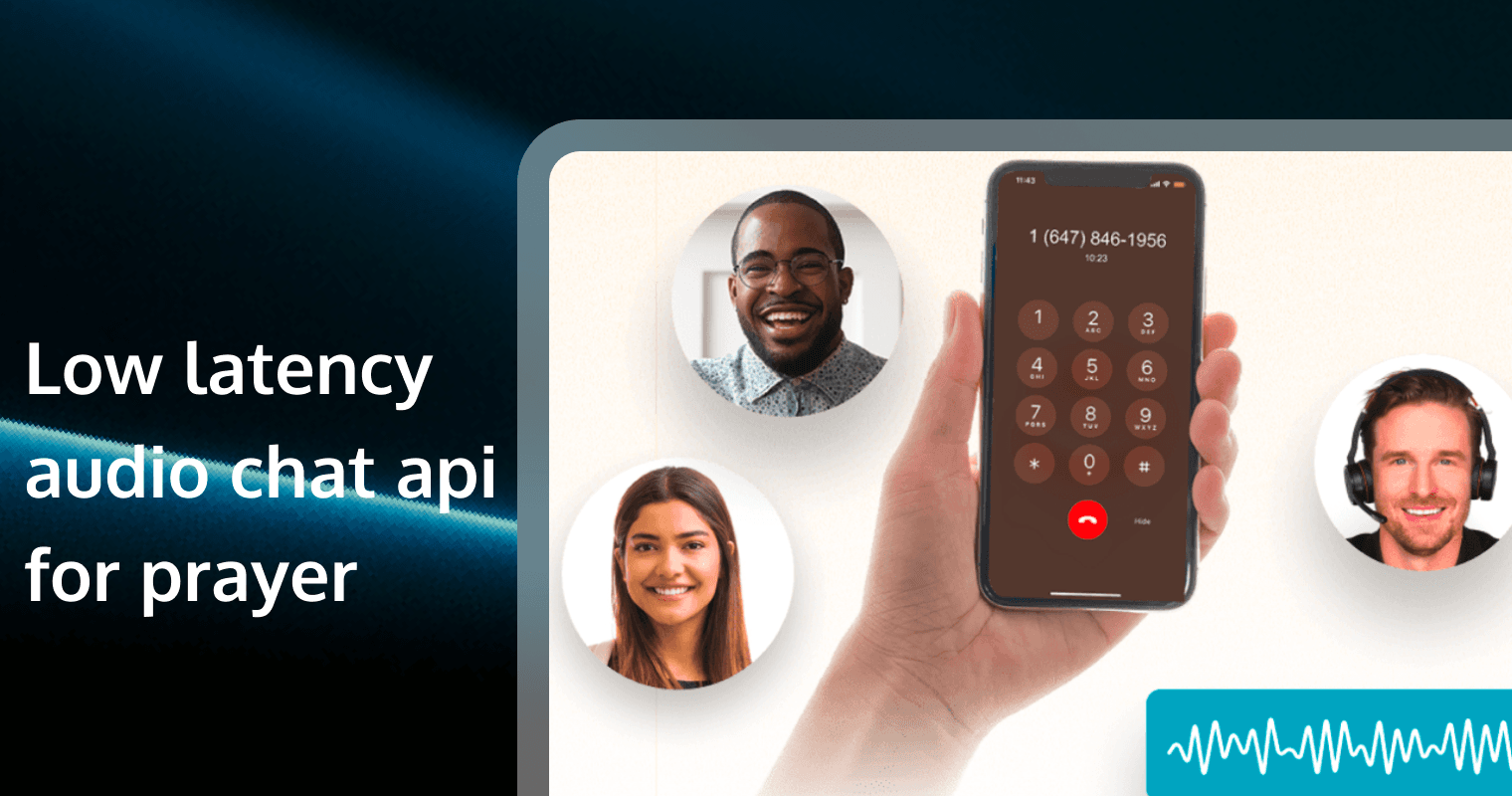
In the realm of Faithtech, the "Last Mile" isn't just about data delivery—it is about spiritual synchronicity. For centuries, prayer and worship have been communal, defined by the rhythmic unity of voices raised in unison. However, as faith communities move online, they encounter a formidable physical barrier: Network Latency.
When a thousand believers attempt to recite a prayer or sing a hymn together over a standard VoIP connection, the result is often a chaotic cacophony of echoes and delays. This guide provides a deep-dive into the technical architecture required to bridge this gap, ensuring that your religious application facilitates a truly unified experience.
1. The Physics of Prayer: Why "Standard" Audio is Not Enough
In a standard business meeting, a 200ms delay is barely noticeable. In a collective prayer or chant, it is a disaster.
The Synchronicity Threshold
The Data: Psychoacoustic studies show that for humans to feel "in sync" during rhythmic speech or song, the latency must stay below 30ms to 50ms. Anything above 150ms breaks the rhythmic bond, leading to what is known as "Acoustic Disarray."
Engagement Impact: Data from top religious apps suggests that a stuttering or asynchronous audio stream leads to a 50% drop in session duration within the first 10 minutes.
Actionable Advice: Do not use standard WebRTC configurations meant for 1-to-1 calling. You need an API that prioritizes Jitter Buffer Control and Global Route Optimization to force the lowest possible path between participants.
2. Global Acceleration: Uniting the Diaspora in Real-Time
Faith knows no borders. A spiritual leader in Rome or Mecca may be leading a session for followers in New York, Jakarta, and Lagos simultaneously.
Overcoming Cross-Continental Lag
The Technology: To solve this, you need a software-defined real-time network (SD-RTN).
Tencent RTC Advantage: Tencent RTC utilizes the RT-ONE™ Network, an industry-leading global overlay that covers 70+ countries and regions. By leveraging over 2,800 nodes, it finds the "shortest path" for a prayer, keeping cross-continental end-to-end latency under 300ms.
The Data: In tests across emerging markets (e.g., Brazil to Indonesia), Tencent RTC reduced audio lag by 40% compared to standard cloud-hosting providers.
3. Resilience in Rural Missions: High-Fidelity Audio on Low Bandwidth
Many religious missions take place in regions with underdeveloped network infrastructure. Here, the challenge isn't just speed; it’s packet loss.
The "Never-Drop" Protocol
The Data: Standard audio streams fail at 15% packet loss. Tencent RTC’s proprietary Forward Error Correction (FEC) and Packet Loss Concealment (PLC) algorithms allow audio to remain intelligible even at 80% packet loss.
Practical Strategy: Implement "Audio-First" priority. If the user's bandwidth drops, the API should automatically degrade video quality to zero while maintaining a high-fidelity 48kHz audio stream to ensure the prayer is never interrupted.
4. Scaling the Congregation: Handling 10,000+ Open Microphones
In a traditional church or mosque, everyone can be heard. In a digital room, 1,000 open mics usually result in a "noise floor" that drowns out the leader.
Intelligent Audio Mixing
The Solution: Use a "Host-centric" mixing architecture. The API should be configured to identify the "Main Speaker" (the Priest/Imam) and give them 100% bandwidth priority, while intelligently mixing only the top 3–5 most active "response" voices from the congregation.
Actionable Advice: Use Tencent RTC’s TUIkit to create "Role-based Audio." Assign different volume gains to leaders vs. congregants to simulate the natural acoustics of a house of worship.
5. AI Sanctuary: Filtering the World to Hear the Soul
Prayer often happens at home, filled with distractions: barking dogs, crying babies, or humming air conditioners.
AI-Powered Reverence
The Data: Tencent RTC’s AI Noise Reduction engine is trained on over 50 types of environmental noise. It can distinguish between a low-frequency hum and a human chant.
Utility: By utilizing 48kHz Full-Band sampling, the API captures the rich harmonics of choral music or liturgical chanting while scrubbing out the "domestic" noise of the participants' environments.
6. Spatial Audio: Reconstructing the Cathedral
One of the greatest losses in the shift to digital is the loss of "Space." A cathedral has a specific reverb; a small prayer group has an intimate proximity.
Digital Acoustic Architecture
The Innovation: Spatial Audio allows you to place participants in a 360-degree virtual room.
The Experience: When a believer wears headphones, they can "hear" the leader in front of them and the low hum of fellow believers to their left and right.
Actionable Advice: Integrate Tencent RTC’s 3D Spatial Audio API. You can programmatically set the "Reverb Time" to simulate different environments—from a small wooden chapel to a massive stone cathedral.
7. Beyond Audio: Integrating Tencent RTC Chat for Community
Prayer is often accompanied by the sharing of intentions, scripture, or prayer lists.
The Hybrid Experience
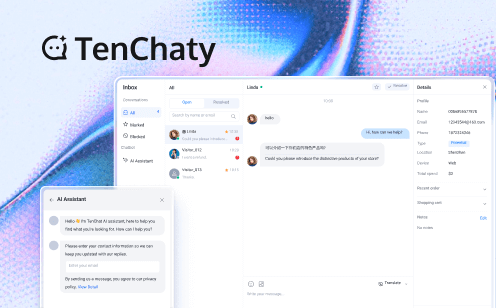
The Integration: While the audio is the soul, the Tencent RTC Chat solution provides the "hands and feet" of the experience. Use the Chat API to allow believers to submit "Prayer Requests" in real-time during the audio session.
Feature Focus: Utilize Pinned Messages for the day’s scripture and Real-time Translation for global ministries. If a leader speaks in Arabic, the Chat API can provide instant English subtitles for the global diaspora.
8. Safety & Moderation: Protecting the Sanctity of the Space
Religious apps are prime targets for "bombing" or harassment. Protecting the community is a moral and technical requirement.
Vigilant Moderation
The Strategy: Implement a "Moderator Dashboard" using Tencent RTC’s management APIs. This allows hosts to "Mute All," "Kick," or "Ban" disruptive users instantly.
Data Protection: Ensure AES-256 encryption is enabled for all audio streams to protect the privacy of private confessions or sensitive spiritual guidance sessions.
9. Accessibility: Bridging the Generational Gap
Many devout believers are elderly and may not be tech-savvy. The barrier to entry must be near zero.
WebRTC and One-Click Entry
The Solution: Use Tencent RTC’s Web SDK. This allows users to join a prayer session directly through a mobile or desktop browser without downloading an app.
The Data: Apps that offer a "Browser-Join" option see a 35% increase in participation among users aged 60+.
10. Cost-Effective Devotion: Scaling Faith with ROI
Religious organizations often operate on tight budgets. You need a solution that scales without a massive upfront investment.
The Pay-As-You-Grow Model
The ROI: By using a specialized API rather than building a custom global server network, platforms can reduce their Total Cost of Ownership (TCO) by 40%.
Advice: Look for providers like Tencent RTC that offer a "Free Tier" (e.g., the first 10,000 minutes free) to allow smaller congregations to start their digital journey without financial risk.
FAQ: Common Questions on Faithtech Audio APIs
Q1: Is the latency really low enough for a choir to sing together?
A: While "perfect" physical synchronicity over the public internet is limited by the speed of light, Tencent RTC’s ultra-low latency mode (under 300ms globally and much lower regionally) combined with Jitter Buffer Optimization makes collective chanting and guided prayer feel seamless to the human ear.
Q2: How does the API handle a transition from 10 to 10,000 users?
A: Tencent RTC is built on a distributed architecture that automatically scales. For collective prayer, we recommend a "Live Audio Room" model where the host is broadcasted with ultra-high fidelity, and the audience can "Raise Hand" to join the mic.
Q3: Can we record the sessions for later?
A: Yes. Tencent RTC supports Cloud Recording. You can record the audio stream and automatically save it as an MP3 or M4A file for your archives or to be used as a podcast for those who missed the live session.
Q4: Does the chat support religious scripts (Right-to-Left)?
A: Absolutely. The Tencent RTC Chat SDK fully supports RTL (Right-to-Left) languages like Arabic and Hebrew, ensuring a localized and respectful experience for all faiths.
Q5: How do we handle privacy for sensitive sessions like confession?
A: We recommend enabling End-to-End Encryption (E2EE) and utilizing our Private Deployment options if your organization requires absolute data sovereignty.
Ready to unite your community in prayer?
Explore the Tencent RTC Audio SDK and start building a more connected, synchronized world of faith today.