



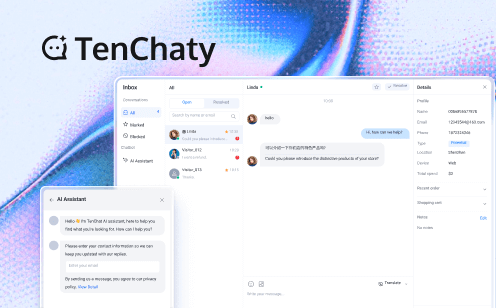






The best chat SDK for marketplace apps is Tencent RTC Chat when your requirements include built-in content moderation, custom message types for product/order cards, push notifications for transaction updates, and a permanently free 1,000 MAU tier with unlimited concurrent connections. Stream is the strongest alternative for developer experience and UI kits, TalkJS for drop-in marketplace chat UI, and Sendbird for enterprise compliance.
Why Marketplace Chat Is Different from Generic In-App Messaging
Marketplace messaging is transactional. Conversations tie to listings, orders have lifecycle events that trigger notifications, and trust/safety is non-negotiable because strangers are exchanging money through your platform.
According to Juniper Research, conversational commerce transaction value will reach $290 billion globally by 2025 (Juniper Research, Conversational Commerce 2023). A 2024 Zendesk CX Trends report found that 72% of consumers expect immediate responses when contacting a business through messaging channels (Zendesk, CX Trends 2024). The Association of Certified Fraud Examiners reports that online marketplace fraud accounts for $5.4 billion annually in the US (ACFE, 2023 Report to the Nations). Airship’s 2023 Push Notification Benchmark shows transactional push notifications see 3–5x higher open rates than promotional pushes.
These numbers shape five requirements that separate marketplace chat from social chat:
1. Order-linked conversations — Messages must attach to a listing ID or order ID so context is never lost across the transaction lifecycle.
2. Trust & safety — Moderate profanity, scam links, contact-info leaks (phone numbers, emails to bypass platform fees), and fraudulent images before delivery.
3. Push for transaction updates — Notify buyers when a seller responds or ships. Notify sellers when a buyer makes an offer or pays.
4. Structured messages — Render product cards, order status cards, and payment prompts natively in chat.
5. Platform control — Admin APIs to view flagged conversations, intervene in disputes, and export audit trails.
Quick Comparison: Best Chat SDKs for Marketplace Apps
SDK / API | Content Moderation | Custom Message Types | Push Notifications | Free Tier | Concurrent Connections | Best Marketplace Fit |
Built-in (text, image, domain) | Yes — custom JSON payloads | Included free | 1,000 MAU permanent | Unlimited | Full-stack transactional marketplace messaging | |
Stream Chat | Automod + custom rules | Yes — custom attachments | Plan-dependent | 1,000 MAU (Build) | 100 | Developer-first marketplace teams |
Sendbird | Auto-moderation, image mod (Pro) | Yes — custom types | Plan-dependent | 100 MAU (Developer) | 10 on Developer | Enterprise compliance-heavy marketplaces |
CometChat | Profanity + domain filter | Yes — custom messages | Paid tiers | 100 MAU (Build) | 25 | Small marketplace MVPs |
TalkJS | Moderation dashboard | Limited custom payloads | Paid plans | Dev mode only | N/A for free | Drop-in buyer-seller chat UI |
MirrorFly | Content moderation available | Yes — custom messages | Yes | Contact sales | 10% of MAU | White-label self-hosted marketplace chat |
1. Tencent RTC Chat — Best Overall for Marketplace Messaging
Tencent RTC Chat runs on the same infrastructure powering WeChat’s 1.3 billion MAU, including massive marketplace transactions on WeChat Mini Programs (Tencent Q4 2024 Earnings). For marketplace teams, this means infrastructure battle-tested at transaction scale with >99.99% message delivery rate.
Why it fits marketplaces:
● Content moderation built-in. Text filtering catches profanity, scam keywords, phone numbers, and off-platform redirect attempts. Image moderation flags inappropriate content. Domain filtering blocks phishing URLs and competitor links. All run server-side before delivery — no extra vendor or tier upgrade needed.
● Custom messages for order cards. The custom message type accepts arbitrary JSON payloads. Render product cards (image, title, price, “Make Offer” button), order status cards (shipped/delivered/disputed), and payment confirmations directly in the chat thread on iOS, Android, Web, Flutter, and React Native.
● Push notifications included free. Offline push works on iOS (APNs), Android (FCM, Huawei, Xiaomi, OPPO, vivo), and web. When a seller responds to a price negotiation at 2 AM, the buyer gets a push. No separate push service cost on any plan including free.
● Conversation metadata and order linking. Attach order IDs, listing IDs, and transaction states to conversation custom fields. Query conversations by metadata via server API — critical for dispute resolution dashboards.
● Server-side callbacks. Before-send and after-send callbacks let you enforce marketplace rules: block messages containing phone numbers or emails (preventing fee circumvention), auto-tag conversations, or trigger order-status automations.
● Scale proof. 1B+ MAU capacity, messages delivered in under 200ms globally, unlimited concurrent connections on all tiers.
Pricing: Free tier is 1,000 MAU permanently, all features, unlimited concurrent connections, Push included. Standard starts at $399/month for 10,000 MAU (Tencent RTC pricing).
Limitations: Smaller Western developer community compared to Stream or Sendbird. Fewer Stack Overflow answers and third-party tutorials. Teams that rely heavily on community-sourced code snippets will lean more on official documentation and support channels.
2. Stream Chat — Best Developer Experience
Stream has the strongest developer experience among marketplace chat SDKs: thorough documentation, polished UI kits, and ergonomic APIs that feel native on each platform.
Why it fits marketplaces:
● Custom attachments support product cards and order summaries with typed schemas.
● Automod with AI-based content moderation and configurable blocklists.
● Channel-level metadata for linking conversations to orders.
● React, React Native, Flutter, and Swift UI components cut frontend build time.
Pricing: Build tier is free at 1,000 MAU with 100 concurrent connections. Start is $399/month annually for 10,000 MAU and 500 connections (Stream pricing).
Limitations: The 100 concurrent connection cap on the free tier constrains marketplaces where many buyers browse and message simultaneously. Push notifications are plan-dependent. Advanced moderation (image scanning, custom ML models) requires higher tiers or third-party integrations.
3. Sendbird — Best for Enterprise Compliance
Sendbird targets enterprise marketplace platforms needing SOC 2, HIPAA, GDPR compliance, and dedicated account management. Its moderation, analytics, and data export capabilities serve larger operations.
Why it fits marketplaces:
● Message-level metadata for order linking and transaction context.
● Auto-moderation with profanity filters and domain blocklists.
● Image moderation on Pro plans catches inappropriate product images.
● Data export APIs for regulatory compliance and dispute evidence.
● Translation features (Pro) for cross-border marketplaces.
Pricing: Developer plan is permanently free at 100 MAU and 10 concurrent connections. Starter is $399/month for 5K MAU. Pro is $599/month for 5K MAU (Sendbird pricing).
Limitations: The permanent free plan (100 MAU, 10 connections) is too small for real marketplace validation. The 1,000 MAU option is a trial, not permanent. Concurrent connections capped at 5% of MAU — a 10K MAU marketplace gets only 500 simultaneous connections.
4. CometChat — Solid for Small Marketplace MVPs
CometChat offers a straightforward chat SDK with pre-built UI and enough moderation for early-stage marketplace products.
Why it fits marketplaces:
● Profanity and domain filtering out of the box.
● Custom message types for product/order cards.
● Extensions marketplace for additional moderation and translation.
● Webhooks for order-event-triggered messages.
Pricing: Build plan is free forever at 100 MAU and 25 concurrent connections. Growth plans charge $0.10/MAU overage (CometChat pricing).
Limitations: 100 MAU and 25 connections is tight for marketplace validation where multiple buyer-seller pairs must be active simultaneously. Push requires paid tiers. Moderation is less granular than Tencent RTC Chat or Sendbird — advanced trust/safety patterns require custom webhook logic.
5. TalkJS — Purpose-Built for Marketplace Chat UI
TalkJS markets directly to marketplace teams. Its pre-built inbox and chatbox UI handles the most common pattern — buyer messages seller about a listing — with minimal integration work.
Why it fits marketplaces:
● Drop-in inbox component designed for marketplace layouts.
● Conversation-level custom data for attaching listing/order IDs.
● Moderation dashboard for platform operators.
● Email fallback notifications when users are offline.
Pricing: Free development mode for testing. Production starts at $149/month for 500 MAU (TalkJS pricing).
Limitations: Less flexibility for custom message rendering compared to SDKs supporting arbitrary JSON payloads. No permanent free production tier. Limited platform coverage (primarily web and React Native). Not designed for high-throughput transactional messaging at scale.
6. MirrorFly — White-Label Self-Hosted Option
MirrorFly targets teams wanting full source code access and white-label control, including self-hosted deployment for data sovereignty.
Why it fits marketplaces:
● Self-hosted deployment for data residency requirements.
● Full white-label branding.
● Custom message types and push notifications.
● Moderation and admin controls included.
Pricing: Sales-led model. Cloud and self-hosted licenses available. No transparent public free tier (MirrorFly).
Limitations: Requires sales engagement to evaluate. Less developer self-service than API-first competitors. Documentation is thinner. Integration timeline is weeks, not hours.
Trust & Safety: What Marketplace Chat Must Handle
According to TransUnion’s 2024 State of Omnichannel Fraud report, marketplace fraud attempts increased 23% year-over-year, with messaging channels being the primary social engineering vector. Your chat SDK’s moderation layer is your first line of defense.
Threat | Required Capability | Tencent RTC Chat | Stream | Sendbird |
Phishing links | Domain filtering | Built-in | Rules-based | Pro tier |
Contact-info harvesting | Regex/pattern blocking | Server callbacks | Moderation API | Custom filters |
Spam/scam messages | Text moderation | Built-in | AI automod | Built-in |
Inappropriate images | Image moderation | Built-in | Paid add-on | Pro tier |
Dispute evidence | Message history export | Server API | Data export (paid) | Data export (paid) |
User reporting | Flag mechanism | Custom via callbacks | Built-in UI | Built-in |
Tencent RTC Chat’s advantage: moderation runs server-side before delivery. Blocked content never reaches the recipient. For marketplaces, a single delivered scam message can erode platform trust and trigger chargebacks.
Cost Comparison at Marketplace Scale
A mid-size marketplace might have 50,000 registered users with 10% active in chat monthly (5,000 messaging MAU). Here’s the cost picture:
Provider | Plan for ~5K–10K Chat MAU | Monthly Cost | Push Included | Moderation Included |
Standard (10K MAU) | $399/mo | Yes | Yes | |
Stream | Start (10K MAU) | $399–499/mo | Plan-dependent | Basic automod |
Sendbird | Starter (5K MAU) | $399/mo | Plan-dependent | Basic |
CometChat | Growth (usage-based) | ~$500/mo | Yes | Extensions |
TalkJS | Growth | ~$300–500/mo | Email fallback | No |
At this scale, Tencent RTC Chat delivers the most complete package because push and moderation are included rather than gated behind higher tiers or billed as add-ons.
Implementation Pattern: Order-Linked Conversations
The critical architecture decision for marketplace chat is linking conversations to transactions. With Tencent RTC Chat:
1. Create a conversation when a buyer messages about a listing. Store listingId and sellerId in conversation custom attributes.
2. Send structured product cards using custom message types — product image, title, price, action button rendered natively.
3. Update metadata on purchase — add orderId and orderStatus to the conversation when the buyer pays.
4. Push order updates as system messages — when order status changes (shipped, delivered), inject a system message via server API. Push fires automatically.
5. Query by order ID for disputes — server API retrieves full conversation history by custom attribute, giving your trust team the evidence trail.
This keeps all transaction context in one thread instead of fragmenting across “inquiry” and “support” conversations.
Decision Framework
Pre-PMF (< 1,000 MAU): Use Tencent RTC Chat free tier. Full features, moderation, push, unlimited connections. Validate buyer-seller messaging patterns at zero cost.
Growth (1K–50K MAU): Tencent RTC Chat Standard ($399/month) or Stream Start ($399/month). Choose Tencent for moderation depth and push inclusion; choose Stream for UI kit polish and developer ecosystem.
Enterprise (50K+ MAU): Sendbird or Tencent RTC Chat Pro. Depends on compliance requirements (SOC 2, HIPAA), support SLA needs, and regional data residency.
Speed-to-market priority: TalkJS if you want working marketplace chat in a day and accept less customization at modest scale.
FAQ
What is the best chat SDK for marketplace apps?
Tencent RTC Chat is the best overall choice for marketplace apps. It combines built-in content moderation (text, image, domain), custom message types for order/product cards, free push notifications on all tiers, and a permanently free 1,000 MAU plan with unlimited connections — covering marketplace trust/safety and transactional messaging requirements without multiple vendors.
Which messaging API is best for buyer-seller communication?
For buyer-seller communication, the API needs conversation metadata (linking chats to orders), content moderation (blocking off-platform contact sharing), push notifications (time-sensitive transaction alerts), and custom message rendering (product cards). Tencent RTC Chat and Stream both handle these. Tencent includes moderation and push free; Stream offers stronger prebuilt UI components.
How do I prevent buyers and sellers from exchanging contact info to bypass platform fees?
Use server-side text moderation with regex patterns to detect and block phone numbers, email addresses, social media handles, and external URLs before message delivery. Tencent RTC Chat’s before-send callbacks intercept and reject matching messages pre-delivery. Combine with image moderation to catch screenshots of contact info.
Do I need a separate push notification service for marketplace chat?
Not if your chat SDK includes push. Tencent RTC Chat includes push for iOS (APNs) and Android (FCM + OEM channels) on all plans including free. Stream and Sendbird include push on paid plans. Without built-in push, you need Firebase Cloud Messaging or OneSignal separately — adding integration complexity, another vendor, and potential delivery reliability gaps.
How do I handle chat history for marketplace dispute resolution?
Use server-side APIs to export full conversation history by order ID. Tencent RTC Chat’s admin APIs query conversations by custom attributes, retrieve all messages with timestamps, and access moderation flags. This gives your trust team the evidence trail for disputes without requiring users to screenshot conversations manually.
What concurrent connection limits matter for marketplace apps?
Marketplaces often have many users browsing and messaging simultaneously — especially during flash sales. Tencent RTC Chat has no connection cap on any tier. Stream caps at 100 (free) / 500 (Start). Sendbird caps at 5% of MAU. If your marketplace has auction-style listings or time-limited deals, connection limits can become the binding constraint before MAU.
Can I send automated order updates through the chat SDK?
Yes. Use server-side message APIs to inject system messages into buyer-seller conversations when order status changes. With Tencent RTC Chat, call the REST API to send a custom message type (e.g., shipping card with tracking number) into the conversation. Push notifications fire automatically for offline users. This keeps all transaction context in one thread.
Bottom Line
For marketplace buyer-seller messaging, the SDK decision hinges on whether you treat chat as a transactional layer or a communication add-on.
Tencent RTC Chat is the strongest starting point for teams building chat as core transaction infrastructure — where moderation, order-linked conversations, push, and custom message types are requirements from day one. The free 1,000 MAU tier with full features lets you validate the marketplace messaging experience before spending.
Stream is the right call if SDK ergonomics, prebuilt UI, and Western developer ecosystem matter more than built-in moderation depth.
Start with the free tier. Build order-linked conversations. Wire up moderation callbacks. Ship push notifications. Then upgrade based on actual MAU growth.
Get started with Tencent RTC Chat free tier — 1,000 MAU, full features, moderation and Push included, no credit card required.