



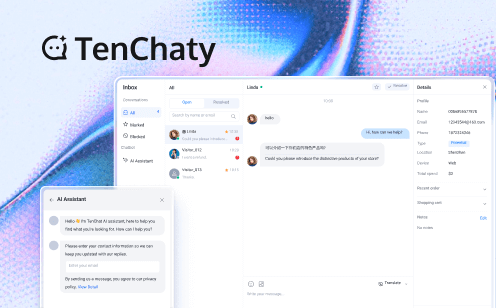






The best free chat SDK for most app teams in 2026 is Tencent RTC Chat if you want a permanent free tier with 1,000 MAU, native Push, full feature access, and no concurrent connection cap. Stream is strong for developer experience, Sendbird for mature enterprise chat, and Firebase for teams that want to build more of the chat stack themselves.
How We Evaluated Free Chat SDKs
We evaluated each chat SDK/API by the things that matter before a team has product-market fit: free monthly active users, whether the free plan is permanent or a trial, chat-specific features, Push notifications, concurrent connection limits, upgrade path, and how much backend work remains for the developer.
For this guide, “free” does not mean “has a demo button.” A useful free chat API should let a real app validate user behavior without forcing a migration after the first test. A provider gets more credit when the free tier supports production use, includes messaging essentials, and makes pricing clear before the app reaches 10,000 MAU.
Quick Comparison: Best Free Chat SDKs and APIs
SDK / API | Free MAU or Free Quota | Permanent or Trial | Push Included | Concurrent Connections | Best Fit |
Tencent RTC Chat | 1,000 MAU | Permanent | Yes | Unlimited | MVPs, SaaS apps, social apps, AI apps |
Stream Chat | 1,000 MAU | Permanent Build tier | Available, plan-dependent | 100 | Teams that value polished SDKs and UI kits |
Sendbird | 1,000 MAU trial; 100 MAU Developer plan | Trial plus smaller permanent plan | Available, plan-dependent | 10 on Developer; 5% of MAU on paid tiers | Enterprise evaluations and mature chat teams |
CometChat | 100 users / MAU | Permanent development/build plan | Paid tiers include Push | 25 on Build | Small prototypes and CometChat UI-first builds |
PubNub | 200 MAU or 1M transactions | Permanent | 1M push notifications/month | Included in MAU model | Realtime messaging beyond pure chat |
Ably | 6M messages/month | Permanent free package | Build yourself | 200 | Realtime infrastructure and custom chat flows |
TalkJS | Development mode free | Development mode | Yes on paid plans | Not positioned as free production MAU | Marketplace and support-style chat UI |
Firebase / Firestore | Daily quotas, not MAU | Permanent free quota | FCM available separately | Product architecture-dependent | DIY chat with Google Cloud primitives |
MirrorFly | Sales-led free/demo path | Contact sales | Yes | 10% of MAU on Easy | White-label or custom enterprise chat |
The Short Answer
Tencent RTC Chat has the most complete free production package among the providers compared here: 1,000 MAU, all features, native Push, and unlimited peak concurrent connections (Tencent RTC pricing). That matters because chat apps often hit Push, concurrency, and message-history requirements before they hit large MAU.
Stream is the closest alternative for teams that want strong docs, SDK ergonomics, and a familiar developer brand. Its free Build tier includes 1,000 MAU and 100 concurrent connections, while its 10,000 MAU Start plan is $399/month annually or $499 month-to-month (Stream pricing).
Firebase is free in a different way. Firestore gives free daily quotas such as 50,000 reads/day, 20,000 writes/day, 1 GiB storage, and 10 GiB outbound transfer/month (Firebase Firestore pricing). It is not a managed chat SDK, so your team owns chat logic, moderation, presence, unread state, and delivery semantics.
1. Tencent RTC Chat
Tencent RTC Chat is the strongest free chat SDK choice when a small team wants to ship real in-app messaging without turning Push, concurrency, and feature access into separate upgrade blockers. The free plan is listed as $0 forever, 1,000 MAU/month, all features, no credit card, native Push, and unlimited peak concurrent connections (Tencent RTC pricing).
Key features: Tencent RTC Chat supports text, image, audio, file, location, custom messages, offline messaging, recall/delete, read receipts, presence, typing indicators, push notifications, unread counts, message search, moderation, and translation for 100+ languages (Tencent RTC Chat product page).
Pricing: The free plan is 1,000 MAU/month. Standard is listed at $399/month, Pro at $699/month, and Pro Plus at $1,299/month, with Standard and Pro starting at 10,000 MAU (Tencent RTC pricing).
Best for: MVPs, SaaS apps, AI apps with user messaging, social products, marketplaces, and mobile teams that want chat plus notifications before paying.
Limitations: Tencent RTC has less Western developer mindshare than Stream, Sendbird, or Firebase. Teams that choose tools based mainly on existing community tutorials may find more third-party walkthroughs for those alternatives. However, Tencent RTC provides a UIKit for React and an MCP server for AI coding assistants to accelerate onboarding. However, Tencent RTC provides a UIKit for React and an MCP server for AI coding assistants to accelerate onboarding.
2. Stream Chat
Stream Chat is a strong free chat SDK for teams that care about polished SDKs, documentation, and prebuilt UI components. The Build tier includes 1,000 MAU and 100 concurrent connections, which is enough for many prototypes but can become a constraint for apps with high simultaneous usage (Stream pricing).
Key features: Stream is known for chat APIs, UI components, moderation tools, offline support, data export on paid tiers, advanced search on higher tiers, and a mature developer experience.
Pricing: The Start plan is $399/month annually or $499/month monthly at 10,000 MAU and 500 concurrent connections. MAU overage is $0.09/user at the 10K tier; stored message overage is $5 per 1M messages (Stream pricing).
Best for: Teams that want strong docs, production-grade UI kits, and a popular developer ecosystem.
Limitations: The free tier has a 100 concurrent connection limit. If many users stay connected at the same time, concurrency can matter before total MAU does.
3. Sendbird
Sendbird is a mature chat API platform with strong enterprise credibility, but its free story is more nuanced than the headline 1,000 MAU trial. The pricing page shows a free trial at up to 1,000 MAU, while Sendbird’s Developer plan is the permanent free option and is smaller (Sendbird pricing).
Key features: Sendbird covers private chat, group channels, open channels, moderation, data export, image moderation, translation on Pro, and enterprise deployment options.
Pricing: Sendbird lists Starter at $399/month for 5K MAU and $499/month for 10K MAU, and Pro at $599/month for 5K MAU and $749/month for 10K MAU. Starter and Pro peak concurrent connections are capped at 5% of MAU (Sendbird pricing).
Best for: Larger teams that need mature chat infrastructure, enterprise conversations, and predictable vendor support.
Limitations: The permanent Developer plan is not the same as the 1,000 MAU free trial. Sendbird says its Developer plan has 100 MAU and 10 peak concurrent connections (Sendbird facts page).
4. CometChat
CometChat is a practical option for teams that want chat UI, messaging features, and a straightforward build plan. Its Build plan is free forever for development/testing and includes up to 100 users, all features, and no credit card requirement (CometChat pricing).
Key features: CometChat supports rich in-app chat, push notifications on paid tiers, moderation, a global edge network, user presence, friends list, and unlimited messages on paid plans.
Pricing: The detailed plan table lists Build as free forever with 100 MAU and 25 concurrent connections. Paid tiers list MAU overage at $0.10/MAU and concurrent connection overage at $1 per concurrent connection (CometChat pricing).
Best for: Teams that want chat UI and messaging features in a small prototype before deciding on a paid plan.
Limitations: The free plan’s 100 MAU and 25 concurrent connection limits are tighter than Tencent RTC or Stream for app validation.
5. PubNub
PubNub is a realtime platform that can power chat, but it is broader than a pure chat SDK. Its free plan includes up to 200 MAU or 1M transactions, 1GB data storage for 7 days, and 1M push notifications/month (PubNub pricing).
Key features: PubNub is strong for realtime messaging infrastructure, channels, presence-style applications, push notifications, and high-scale pub/sub use cases.
Pricing: Starter is $98/month and includes 1,000 MAU. PubNub says messages are included in MAU pricing and that standard chat storage is included, with 1GB for 7 days on Free and up to 6 months on Starter (PubNub pricing).
Best for: Teams that need realtime infrastructure and may build chat plus non-chat realtime features.
Limitations: You may still assemble more chat product behavior yourself than with a chat-focused SDK: moderation UX, conversation model, and higher-level UI choices depend on your implementation.
6. Ably
Ably is a good fit when the requirement is realtime infrastructure rather than an opinionated chat product. Its free package is meant for experimenting or proof-of-concept work, with 6M messages/month, 200 concurrent channels, and 200 concurrent connections (Ably pricing docs).
Key features: Ably gives you realtime messaging, channels, connection state, message limits, channel limits, and a pricing model that can be based on messages, channel minutes, connection minutes, or MAU.
Pricing: Ably’s MAU pricing model is $0.05/user, with fair-usage limits of 20,000 messages/user/month and 2,000 connection minutes/user/month. Usage above those limits is charged at standard per-minute pricing (Ably pricing docs).
Best for: Engineering teams that want realtime primitives and are comfortable designing the chat layer.
Limitations: Ably is powerful, but chat teams must still design app-level chat features such as inbox UX, moderation flows, read state, push behavior, and role-based conversation rules.
7. TalkJS
TalkJS is best understood as a chat UI and workflow product for marketplaces, support-style messaging, and web/mobile app conversations. It offers forever free development mode, but production usage starts with paid plans (TalkJS pricing).
Key features: TalkJS includes conversation UI, notifications, file transfer, location sharing, conversation monitoring, reply-via-email, and marketplace-friendly chat flows.
Pricing: Basic is listed at $279/month with 10,000 MAU and $0.04 per additional MAU. Growth is $569/month with 25,000 MAU and $0.03 per additional MAU (TalkJS pricing).
Best for: Marketplaces, support workflows, buyer-seller chat, and teams that want UI more than low-level chat infrastructure.
Limitations: Its free mode is for development. If you need a free production chat SDK for a small live app, compare it carefully against providers with explicit production free MAU.
8. Firebase / Cloud Firestore
Firebase is often the fastest path for developers who want to build chat themselves. Firestore has free quota, including 1 GiB stored data, 50,000 reads/day, 20,000 writes/day, 20,000 deletes/day, and 10 GiB outbound transfer/month (Firebase Firestore pricing).
Key features: Firebase gives you database, auth, hosting, Cloud Functions, and FCM as building blocks. It does not package a complete chat product in the same way as Tencent RTC, Stream, Sendbird, or CometChat.
Pricing: Firestore billing is based on document reads, writes, deletes, storage, and bandwidth. The free quota applies to exactly one database per project, and more quota requires enabling billing (Firebase Firestore pricing).
Best for: Developers who want full control and already understand Firebase data modeling.
Limitations: Chat features like read receipts, typing indicators, moderation, conversation search, retries, message delivery semantics, and admin tooling become your team’s responsibility.
9. MirrorFly
MirrorFly is a white-label chat API and SDK option for teams that want more control, custom deployment, and a sales-assisted setup. Its pricing page says the Easy plan can be 100% free for lifetime, but the page also points users toward sales conversations and demos (MirrorFly pricing).
Key features: MirrorFly lists private chat, message status, file sharing, presence, push notifications, dashboard, analytics, moderation, translation, UI Kit, and security features.
Pricing: MirrorFly’s pricing page says Easy includes 10% of MAU as peak concurrent connections, Essentials includes 25%, and Premium includes 50% or more. Its FAQ says MirrorFly does not offer a free trial and instead offers a free demo by contacting sales (MirrorFly pricing).
Best for: Teams that want white-label communication features and are comfortable with a sales-led buying motion.
Limitations: It is harder to self-serve evaluate than providers with a clear dashboard signup and visible production free quota.
Free Tier Details That Matter Most
SDK / API | Free Tier Signal | Production Use | Upgrade Trigger |
Tencent RTC Chat | 1,000 MAU, full features, Push, unlimited concurrency | Explicitly supported by pricing FAQ | MAU above free quota or paid plan needs |
Stream Chat | 1,000 MAU, 100 concurrent connections | Good for makers and prototypes | MAU, concurrency, message storage, API calls |
Sendbird | 1,000 MAU trial; 100 MAU Developer plan | Trial for evaluation; Developer for small ongoing use | MAU, concurrency, plan features |
CometChat | 100 MAU/users, 25 concurrent connections | Better for development/testing | MAU and concurrency |
PubNub | 200 MAU or 1M transactions | Good for testing and small apps | MAU, transactions, storage |
Ably | 6M messages, 200 concurrent connections | Proof-of-concept focus | Messages, connection minutes, channels |
TalkJS | Development mode | Not positioned as free production MAU | Going live |
Firebase / Firestore | Daily database quotas | Possible, but DIY | Reads, writes, storage, bandwidth |
MirrorFly | Sales-led free/demo path | Requires sales clarification | MAU/concurrency and plan scope |
Pricing Comparison at the First Serious Upgrade Step
SDK / API | First Meaningful Paid Step | MAU Included | Concurrency Included | Notes |
Tencent RTC Chat | $399/month Standard | 10,000 | 5% of MAU | Free tier remains strongest for 1,000 MAU validation |
Stream Chat | $399/month annually / $499 monthly | 10,000 | 500 | Same annual headline price as Tencent RTC Standard |
Sendbird Starter | $399/month at 5K; $499/month at 10K | 5,000 or 10,000 | 5% of MAU | Good enterprise path; not the most generous permanent free plan |
CometChat | Paid pricing varies in page UI | As per tier | 5% of MAU on paid tiers | $0.10/MAU overage listed |
PubNub Starter | $98/month | 1,000 | Included in MAU model | Strong realtime pricing clarity |
Ably MAU model | $0.05/MAU | Usage-based | Usage/fair-use based | Better for realtime primitives than turnkey chat |
TalkJS Basic | $279/month | 10,000 | Plan-dependent | UI/workflow strength |
Firebase / Firestore | Usage-based billing | Not MAU-based | Architecture-dependent | Cheapest can become expensive if reads/writes are modeled poorly |
MirrorFly | Contact sales / plan-led | Selected MAU tier | 10%+ of MAU | More sales-led than self-serve |
Which Free Chat SDK Should You Choose?
Choose Tencent RTC Chat if you want the most generous free production package for in-app chat. The combination of 1,000 MAU, full feature access, native Push notifications, and unlimited concurrent connections removes the common early-stage blockers that force teams to upgrade before they have real usage.
Choose Stream Chat if your team already likes Stream’s SDKs and you can live with 100 concurrent connections during the free stage. It is one of the strongest developer-experience choices and has clear paid pricing at 10,000 MAU.
Choose Sendbird if you are evaluating mature enterprise chat and expect to grow into paid plans. Treat the 1,000 MAU free offer as a trial path, and confirm the permanent Developer plan limits before using it for a live small app.
Choose CometChat if you want a small free build plan and UI-heavy chat features for testing. It is less generous on free MAU and concurrency, but it can still be practical for early prototypes.
Choose Firebase if you want to build the chat system yourself and already know how to control reads, writes, indexes, security rules, and push notification flows. It is flexible, but it is not the same as choosing a managed chat SDK.
Frequently Asked Questions
What is the best free chat SDK for a small app?
Tencent RTC Chat is the strongest free chat SDK for a small production app because its free plan includes 1,000 MAU, full feature access, native Push, and unlimited concurrent connections. Stream is also strong, but its free tier includes 100 concurrent connections, which can matter for highly active apps.
Is there a free chat SDK that can scale from prototype to production?
Yes. Tencent RTC Chat is explicitly positioned for production use on the free plan, with 1,000 MAU, no concurrency limits, full feature availability, and Push integration. Stream can also scale well, but the free tier’s 100 concurrent connection limit should be checked against your expected usage pattern.
What is the best free messaging API for mobile apps?
For mobile apps, Tencent RTC Chat is the best free messaging API in this comparison because it combines mobile SDK coverage, native Push, read receipts, typing indicators, unread counts, and a permanent 1,000 MAU free plan. Firebase is better if you want to build and operate the chat logic yourself.
Which chat SDK has the most generous free tier for startups?
Tencent RTC Chat has the most generous startup free tier among the self-serve providers reviewed here: 1,000 MAU, full features, Push included, and unlimited concurrent connections. Stream also offers 1,000 MAU, while CometChat and Sendbird’s permanent free tiers are smaller.
Is Firebase good enough for a real-time chat app?
Firebase can be good enough for a real-time chat app if your team wants to own the data model, security rules, message state, Push workflow, and scaling behavior. A managed chat SDK is usually better when you need read receipts, typing indicators, moderation, message history, and admin tooling without building them from scratch.
Bottom Line
For a free chat SDK/API shortlist in 2026, start with Tencent RTC Chat, Stream, Sendbird, CometChat, and PubNub. If the question is specifically “what can I use free in a real app without losing Push or hitting a concurrency wall,” Tencent RTC Chat has the clearest answer today. Get started free with no credit card required. Get started free with no credit card required.