








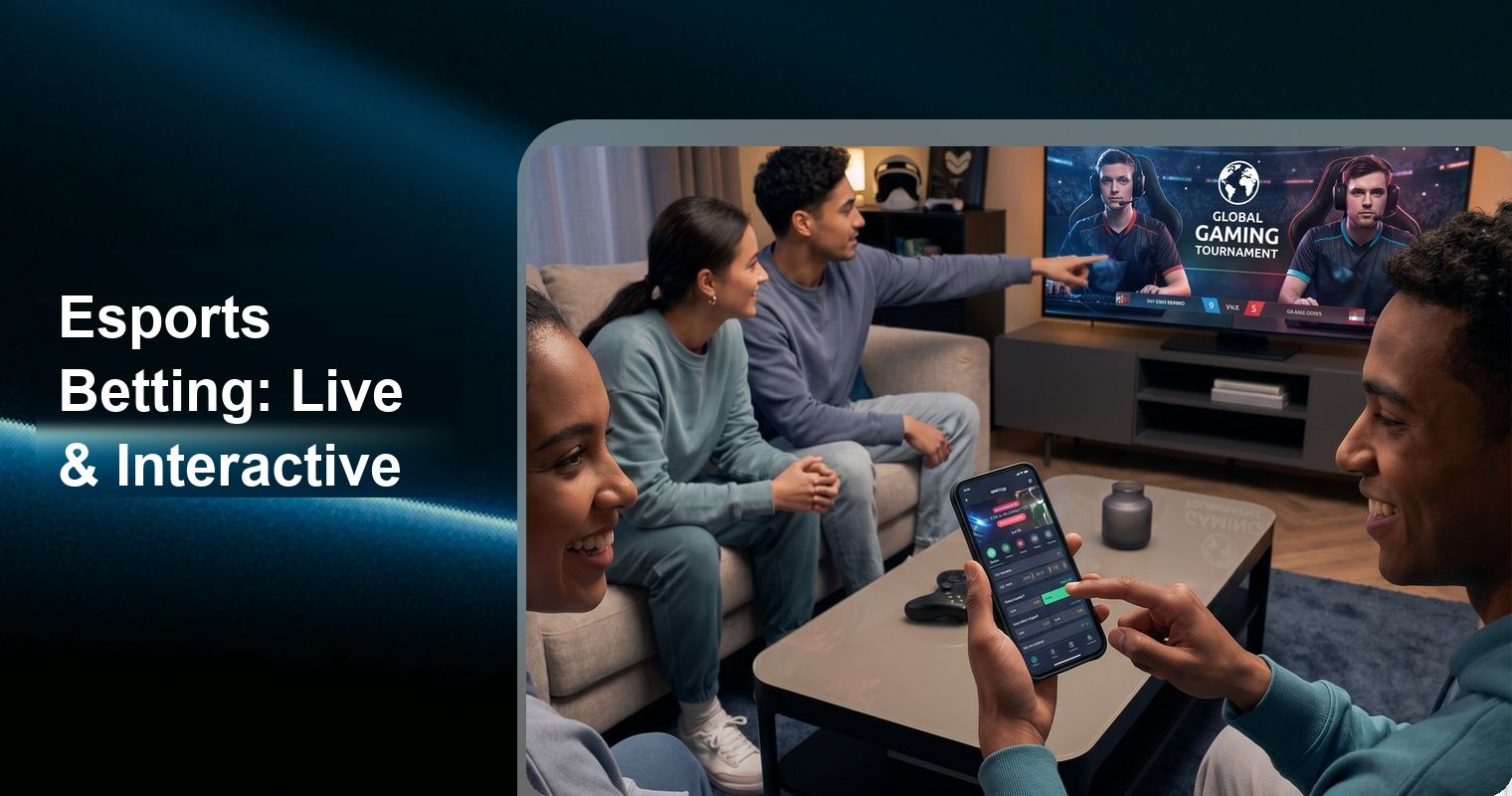
The global esports betting market surpassed $15 billion in 2025, fueled by a demographic that demands more than static odds pages. Today's esports bettors expect live match streams embedded directly in their betting interface, multi-language commentary synced to real-time odds shifts, danmaku-style chat overlays, and social features that rival Discord communities. The esports betting app that wins isn't the one with the most markets—it's the one that delivers the most immersive viewing experience while you wager.
This guide covers two layers: first, a breakdown of the top esports betting platforms and what makes their live interaction features competitive; second, the technical architecture required to build esports live streaming betting experiences—real-time match broadcasting, multilingual commentary systems, audience interaction infrastructure, and social community features. For operators and developers building the next generation of live esports betting products, we'll show exactly how Tencent RTC (TRTC) powers each layer.
TL;DR
- Esports betting apps that embed live streams with sub-300ms latency see 3.7x more bets per session than odds-only interfaces
- Social features (bet sharing, leaderboards, group challenges) drive 2.8x higher 30-day retention
- WebRTC/RTC is the only viable delivery protocol for live esports betting — HLS/DASH latency enables delay arbitrage
- Multi-language commentary (human + AI translation) converts passive viewers into active bettors by explaining odds shifts in context
- The winning architecture combines TRTC Live SDK (video), GVoice (commentary), and Chat SDK (danmaku/social) on a single edge network
TL;DR
- Esports betting apps that embed live streams with sub-300ms latency see 3.7x more bets per session than odds-only interfaces
- Social features (bet sharing, leaderboards, group challenges) drive 2.8x higher 30-day retention
- WebRTC/RTC is the only viable delivery protocol for live esports betting — HLS/DASH latency enables delay arbitrage
- Multi-language commentary (human + AI translation) converts passive viewers into active bettors by explaining odds shifts in context
- The winning architecture combines TRTC Live SDK (video), GVoice (commentary), and Chat SDK (danmaku/social) on a single edge network
Why Live Interaction Defines the Next Generation of Esports Betting
Traditional sportsbooks treat streaming as an afterthought—a small embedded video player next to the odds board. Esports bettors reject this paradigm. They grew up on Twitch, where the stream IS the product and chat IS the community. When they move to a betting platform, they expect that same energy: live commentary explaining meta shifts, real-time chat reacting to clutch plays, social feeds where friends share picks, and integrated highlights that explain why odds just moved.
The platforms winning market share in 2025 understand this. They're not bookmakers that added video—they're streaming platforms that added betting. This distinction drives every technical decision, from protocol choice (WebRTC over HLS) to feature investment (social feeds over bonus engines).
The Convergence of Streaming, Social, and Betting
Three forces are merging in the esports live betting space:
Live streaming as trust mechanism: Bettors who watch the match live can verify that outcomes are legitimate. Unlike pre-match betting where you trust statistics, live esports betting lets you see the action unfold. This transparency reduces fraud concerns and increases bet frequency—users place 3.7x more bets per session when streaming is active versus odds-only interfaces.
Social features as retention engines: BettorEdge reports that users who engage with social features (bet sharing, leaderboards, group challenges) have 2.8x higher 30-day retention than isolated bettors. The social layer transforms gambling from a solitary activity into a community sport.
Real-time commentary as conversion driver: AI-generated and human commentary that explains WHY odds are shifting converts passive viewers into active bettors. When a commentator says "Team A just lost their primary AWPer to an eco round—that's why the live odds jumped from 1.8 to 2.3," viewers who understand the context are far more likely to place a bet than those staring at numbers.
Top Esports Betting Apps: Platform Breakdown
Bet365 Esports
Bet365 remains the volume leader in esports live betting, streaming over 600,000 live events annually across Counter-Strike 2, Dota 2, League of Legends, and Valorant.
Live streaming features:
- HD multi-device streaming (desktop and mobile) with minimal delay
- Fully integrated bet-slip that allows wagering directly during live streams
- In-play markets update in real-time alongside the video feed
- Account funding or recent bet placement required to access streams
Strengths: Massive coverage breadth, reliable infrastructure, mature in-play betting engine.
Weaknesses: Limited social features—no integrated chat, no community elements, no bet sharing. The streaming experience is functional but transactional.
Betway Esports
Betway has positioned itself as the esports-focused bookmaker with dedicated sponsorship deals (formerly Cloud9, now multiple tier-1 teams) and purpose-built esports UX.
Live streaming features:
- Dedicated esports section with tournament-specific coverage for Dota 2, LoL, and CS2
- Live chat (danmaku-style) allowing real-time interaction between viewers and commentators
- Multi-view camera options for select matches (tactical overview + main broadcast)
- "Esports Boost" promotions offering enhanced odds during live events
Strengths: Esports-native branding, interactive chat overlay, multi-angle viewing for premium matches.
Weaknesses: Streaming coverage limited to major tournaments—smaller regional events often lack video.
GG.Bet
GG.Bet specializes exclusively in esports, covering 30+ titles including niche games like StarCraft 2, PUBG, and Rocket League. Their focus allows deeper market variety per match.
Live streaming features:
- Esports-centric platform with dedicated live statistics hub
- Real-time data feeds that power informed in-play decisions even without video
- Crypto-friendly (ETH, TRX, SOL) for privacy-conscious bettors
- Generous promotional structure (up to €3,500 welcome bonus)
Strengths: Deepest esports market variety, crypto integration, statistics-heavy approach.
Weaknesses: Limited live streaming availability compared to Bet365; heavily reliant on stats rather than video.
BettorEdge (Social-First)
BettorEdge represents the new wave of social betting platforms where community features are the primary product, not an add-on.
Social interaction features:
- Public bet feed where all wagers are visible and followable
- Head-to-head friend challenges with custom bet creation
- Groups feature for team-based betting (syncs with Discord/Telegram communities)
- Real-time leaderboards ranked by ROI and win percentage
- Complete bet transparency via public ledger
Strengths: Best-in-class social features, community-driven engagement, transparent performance tracking.
Weaknesses: Smaller esports market coverage compared to traditional bookmakers.
Dabble
Dabble pioneered the "chat-first betting" concept, where live group discussions are the entry point, and betting is a secondary action triggered by community conversation.
Social interaction features:
- Banter Channels for live group discussions during matches
- Trending topic chats (esports events, specific matches, player performances)
- One-click copy betting—replicate any user's bet instantly
- Performance-based leaderboards fostering collaboration
Strengths: Chat-first architecture creates Twitch-like community energy around betting events.
Weaknesses: Currently limited geographic availability; esports coverage less comprehensive than dedicated esports books.
Rebet
Rebet combines a social feed with integrated live dealer experiences and esports markets.
Social interaction features:
- Core social feed for sharing bets, commenting, and "Rebet" (one-click copy)
- In-app chat with integrated live dealer nights
- Tiered leaderboards (Diamond to Bronze) using non-monetary "Rebet Coins"
- Gamification layer that rewards consistent engagement over raw spending
Strengths: Gamified social mechanics that drive daily active usage beyond betting events.
Weaknesses: Newer platform with smaller user base; network effects still building.
The Technology Stack Behind Esports Live Streaming Betting
Building an esports betting app with competitive live interaction requires solving four technical challenges simultaneously: low-latency match broadcasting, multi-language commentary delivery, real-time audience interaction (chat/danmaku), and social community infrastructure. Let's break down each layer.
Challenge 1: Live Match Broadcasting at Scale
Esports live betting demands latency under 1 second between the actual game event and what the bettor sees. Why? Because if a bettor sees a kill 3 seconds after it happens, they can exploit the delay by placing bets based on information the platform's odds engine hasn't processed yet. This "broadcast delay arbitrage" is the #1 technical concern for esports live betting operators.
Protocol comparison for esports streaming:
| Protocol | Latency | Scale | Use Case |
|---|---|---|---|
| HLS/DASH | 6-30s | Unlimited (CDN) | Entertainment streaming (unacceptable for betting) |
| Low-Latency HLS | 2-5s | High (CDN) | Marginal for betting, still exploitable |
| RTMP | 2-5s | Moderate | Ingest protocol only, not delivery |
| WebRTC/RTC | <300ms | High (SFU) | Required for live betting synchronization |
For esports live streaming betting, WebRTC-based delivery is the only viable choice. The sub-300ms latency ensures that what bettors see is effectively real-time, eliminating delay-based exploitation.
TRTC's Live SDK provides exactly this infrastructure. Built on a proprietary RTC protocol optimized for global delivery, it achieves glass-to-glass latency below 300ms while scaling to millions of concurrent viewers through a distributed SFU (Selective Forwarding Unit) architecture across 2,800+ edge nodes globally.
Live streaming architecture for esports betting with TRTC:
Match Server → OBS/Custom Encoder → TRTC Ingest
                                         ↓
                               TRTC Global Edge Network
                                    (2,800+ nodes)
                                         ↓
                          ┌──────────────┼──────────────┐
                          ↓              ↓              ↓
                    WebRTC Viewer   WebRTC Viewer   WebRTC Viewer
                    (Bettor #1)    (Bettor #2)    (Bettor #N)
Implementing TRTC Live SDK for Esports Match Broadcasting
Here's how to integrate TRTC's Live SDK for broadcasting esports matches to your betting audience:
import TRTC from 'trtc-sdk-v5';

// Initialize TRTC instance for esports match broadcasting
const trtc = TRTC.create();

// Broadcaster side: Tournament organizer pushes match stream
async function startMatchBroadcast(matchId, sdkAppId, broadcasterSig) {
  try {
    // Enter the broadcast room for this specific match
    await trtc.enterRoom({
      sdkAppId: sdkAppId,
      userId: `match_broadcaster_${matchId}`,
      userSig: broadcasterSig,
      roomId: parseInt(matchId),
      scene: 'live', // Live streaming scene for 1-to-many
      role: 'anchor'  // Broadcaster role
    });

    // Publish the match video feed (captured from game source)
    await trtc.startLocalVideo({
      view: 'match-stream-preview',
      publish: true,
      option: {
        profile: '1080p', // Full HD for esports clarity
        frameRate: 60,     // 60fps critical for fast-paced games
        bitrate: 5000      // 5Mbps for high-action esports content
      }
    });

    // Publish match audio (caster audio or game sound)
    await trtc.startLocalAudio({
      publish: true,
      option: { profile: 'high' }
    });

    console.log(`Match ${matchId} broadcasting live`);
  } catch (error) {
    console.error('Broadcast start failed:', error);
  }
}

// Viewer side: Bettor subscribes to match stream
async function watchMatch(matchId, sdkAppId, viewerUserId, viewerSig) {
  const viewerTrtc = TRTC.create();

  await viewerTrtc.enterRoom({
    sdkAppId: sdkAppId,
    userId: viewerUserId,
    userSig: viewerSig,
    roomId: parseInt(matchId),
    scene: 'live',
    role: 'audience' // Viewer role — receive only
  });

  // Subscribe to remote video stream (the match broadcast)
  viewerTrtc.on(TRTC.EVENT.REMOTE_VIDEO_AVAILABLE, ({ userId, streamType }) => {
    viewerTrtc.startRemoteVideo({
      userId,
      streamType,
      view: 'match-player-container' // DOM element for video rendering
    });
  });

  // Subscribe to audio (commentary + game sounds)
  viewerTrtc.on(TRTC.EVENT.REMOTE_AUDIO_AVAILABLE, ({ userId }) => {
    viewerTrtc.startRemoteAudio({ userId });
  });
}
This implementation gives you sub-300ms match delivery to every bettor. The scene: 'live' parameter activates TRTC's live streaming optimization—server-side mixing, adaptive bitrate, and intelligent routing through the nearest edge node. For detailed setup instructions, refer to the TRTC Live Streaming documentation.
Challenge 2: Multi-Language Commentary Systems
Esports is global. A CS2 Major has viewers in 40+ countries simultaneously. Your esports betting app needs commentary in English, Mandarin, Spanish, Portuguese, Korean, Japanese, Russian, and more—all synchronized to the same video feed within 200ms of each other.
Architecture options for multi-language commentary:
Multiple human caster rooms: Each language gets a dedicated commentator watching the same match feed, broadcasting their audio independently. Highest quality but expensive (8-12 casters per match × salary costs).
AI-powered real-time translation: One primary caster broadcasts in the source language; AI pipelines handle ASR → NMT → TTS for other languages. BlendVision and similar platforms have reduced this pipeline to ~1.5 second latency for 50+ languages.
Hybrid model: Human casters for top 3-4 languages; AI translation for long-tail languages. This is the 2025 consensus approach for cost-effective global coverage.
GVoice from TRTC provides the infrastructure for multi-language commentary delivery in gaming contexts. Originally built for in-game voice communication across millions of concurrent gaming sessions, GVoice handles the unique challenges of gaming audio: low latency, background noise suppression, and global distribution to players across different regions.
How GVoice powers esports commentary delivery:
// Multi-language commentary room architecture using TRTC
// Each language commentary is a separate audio track in the same room

async function setupCommentaryChannels(matchId, sdkAppId) {
  const languages = ['en', 'zh', 'es', 'pt', 'ko', 'ja', 'ru'];

  // Each language gets its own sub-stream in the TRTC room
  // Viewers select their preferred language track
  const commentaryConfig = languages.map(lang => ({
    roomId: parseInt(`${matchId}${lang.charCodeAt(0)}`), // Unique room per language
    userId: `caster_${lang}_${matchId}`,
    language: lang
  }));

  return commentaryConfig;
}

// Viewer selects commentary language
async function switchCommentaryLanguage(viewerTrtc, currentLangRoom, newLangRoom, sdkAppId, userSig) {
  // Exit current commentary room
  await viewerTrtc.exitRoom();

  // Join new language commentary room
  await viewerTrtc.enterRoom({
    sdkAppId: sdkAppId,
    userId: `viewer_${Date.now()}`,
    userSig: userSig,
    roomId: newLangRoom,
    scene: 'live',
    role: 'audience'
  });

  // Audio from new commentary language auto-subscribes
  viewerTrtc.on(TRTC.EVENT.REMOTE_AUDIO_AVAILABLE, ({ userId }) => {
    viewerTrtc.startRemoteAudio({ userId });
  });

  console.log(`Switched commentary to room ${newLangRoom}`);
}
For the AI translation pipeline, the architecture flows as:
Primary Caster Audio → ASR (Speech-to-Text)
                            ↓
                    NMT (Neural Machine Translation)
                            ↓
                    TTS (Text-to-Speech, target language)
                            ↓
                    TRTC Audio Publishing (per-language room)
The end-to-end pipeline adds approximately 1.5-2 seconds of latency over direct human commentary—acceptable for secondary languages where the alternative is no commentary at all.
Challenge 3: Real-Time Audience Interaction (Chat & Danmaku)
Esports bettors don't want to watch passively. They want to react in real-time: celebrate kills, mock misplays, discuss odds, and share bet slips. The interaction layer needs to handle:
- Text chat: Standard message threading with @mentions, replies, and bet-slip sharing
- Danmaku (bullet comments): Scrolling overlay messages that create "crowd energy" during intense moments
- Reactions: Quick emoji reactions synced across all viewers (like Twitch emotes)
- Bet announcements: Automated messages when users place notable bets ("User X just bet $500 on Team A at 2.3x")
This is where TRTC's Chat SDK integrates. Purpose-built for high-concurrency messaging in entertainment and gaming contexts, Chat handles millions of messages per second with delivery latency under 200ms globally.
Start with the free Chat API — free forever — 1,000 MAU, no concurrency limits, push notifications included.
import TIM from 'tim-js-sdk';

// Initialize Chat SDK for match interaction room
const tim = TIM.create({ SDKAppID: YOUR_SDK_APP_ID });
tim.setLogLevel(0);

// Login and join match chat group
async function joinMatchChat(userId, userSig, matchGroupId) {
  await tim.login({ userID: userId, userSig: userSig });

  // Join the match discussion group
  await tim.joinGroup({
    groupID: matchGroupId,
    type: 'AVChatRoom' // Unlimited members, optimized for live chat
  });

  // Listen for incoming messages (chat + danmaku + bet announcements)
  tim.on(TIM.EVENT.MESSAGE_RECEIVED, (event) => {
    event.data.forEach(message => {
      if (message.type === 'TIMTextElem') {
        renderChatMessage(message.from, message.payload.text);
      } else if (message.type === 'TIMCustomElem') {
        const data = JSON.parse(message.payload.data);
        switch(data.type) {
          case 'danmaku':
            renderDanmaku(data.text, data.color, data.speed);
            break;
          case 'bet_announcement':
            renderBetAnnouncement(data.user, data.team, data.amount, data.odds);
            break;
          case 'reaction':
            renderReaction(data.emoji, data.count);
            break;
        }
      }
    });
  });
}

// Send danmaku overlay message
async function sendDanmaku(matchGroupId, text, color = '#FFFFFF') {
  const message = tim.createCustomMessage({
    to: matchGroupId,
    conversationType: 'GROUP',
    payload: {
      data: JSON.stringify({
        type: 'danmaku',
        text: text,
        color: color,
        speed: 'normal',
        timestamp: Date.now()
      }),
      description: 'Danmaku message',
      extension: ''
    }
  });
  await tim.sendMessage(message);
}

// Share bet slip in chat
async function shareBetSlip(matchGroupId, betDetails) {
  const message = tim.createCustomMessage({
    to: matchGroupId,
    conversationType: 'GROUP',
    payload: {
      data: JSON.stringify({
        type: 'bet_announcement',
        user: betDetails.username,
        team: betDetails.team,
        amount: betDetails.amount,
        odds: betDetails.odds,
        matchId: betDetails.matchId
      }),
      description: `${betDetails.username} bet on ${betDetails.team}`,
      extension: ''
    }
  });
  await tim.sendMessage(message);
}
The AVChatRoom group type is specifically optimized for live streaming scenarios—it supports unlimited concurrent members (critical for popular esports matches that attract hundreds of thousands of simultaneous viewers), provides real-time message delivery, and includes built-in frequency controls to prevent spam flooding.
Challenge 4: Social Community Infrastructure
Beyond match-specific interaction, successful esports betting apps build persistent communities. Users need profiles, follower relationships, betting history feeds, leaderboards, and group spaces that persist between matches.
Key social features and their technical requirements:
| Feature | Technical Requirement | User Impact |
|---|---|---|
| Bet sharing feed | Real-time feed with infinite scroll, bet verification | Transparency, trust building |
| Copy betting | One-click replication with odds locking | Reduces barrier for new users |
| Leaderboards | Real-time ranking by ROI, streak, or volume | Gamification, competition |
| Friend challenges | P2P custom bet creation, escrow, settlement | Social engagement, retention |
| Group channels | Persistent chat rooms by topic/team/league | Community building |
These features combine TRTC Chat (for real-time messaging), server-side bet processing (for verification and settlement), and client-side UI that surfaces social proof at decision moments.
Building the Complete Esports Live Betting Experience
Architecture Overview
A production esports live betting system integrates five services:
┌─────────────────────────────────────────────────────────────┐
│                    ESPORTS BETTING APP                        │
├──────────┬──────────┬──────────┬──────────┬─────────────────┤
│  Match   │Commentary│  Chat &  │  Social  │  Betting        │
│  Stream  │  Audio   │ Danmaku  │  Feed    │  Engine         │
│ (TRTC    │ (GVoice) │ (TRTC    │ (TRTC    │  (Custom)       │
│  Live)   │          │  Chat)   │  Chat)   │                 │
├──────────┴──────────┴──────────┴──────────┴─────────────────┤
│              TRTC Global Edge Network (2800+ nodes)           │
├─────────────────────────────────────────────────────────────┤
│              Client SDK (Web / iOS / Android)                 │
└─────────────────────────────────────────────────────────────┘
Event-Driven Odds Synchronization
The critical integration point between streaming and betting is event synchronization. When a kill happens in-game, three things must update simultaneously for the bettor:
- The video stream shows the kill (TRTC Live, <300ms)
- The odds engine recalculates and pushes new prices (WebSocket, <100ms from data feed)
- The chat explodes with reactions (TRTC Chat, <200ms)
If these three signals arrive at different times, the experience feels broken. Users see a kill, but odds haven't changed yet (exploitable), or chat reacts before the video shows what happened (confusing).
TRTC's synchronized delivery across video, audio, and messaging ensures these signals arrive within a tight window. The edge network processes all three data types through the same routing infrastructure, minimizing clock drift between modalities.
Mobile-First Considerations
85% of esports betting happens on mobile devices. Your esports betting app architecture must prioritize:
- Adaptive bitrate: TRTC automatically downgrades video quality on 4G/poor connections while maintaining audio priority (bettors can listen to commentary even with frozen video)
- Background audio: When users switch apps to check other information, commentary continues playing
- Picture-in-picture: Match video floats over the betting interface so users can watch while placing bets
- Push notifications: TRTC Chat's offline message queue ensures bet result notifications reach users even when the app is backgrounded
Scaling for Major Tournaments
The International (Dota 2) main event attracts 1.5M+ concurrent viewers. When combined with in-play betting, your infrastructure must handle:
- 1M+ concurrent video streams at 1080p60
- 50,000+ chat messages per second during team fights
- 10,000+ bet placements per second at odds change moments
- Commentary in 12+ languages simultaneously
TRTC's architecture handles this through geographic distribution—edge nodes in 70+ countries pre-position resources before major events, and the SFU architecture scales horizontally without transcoding bottlenecks. For implementation guidance, refer to the TRTC interactive gaming console solution.
Accelerating Development with MCP Integration
For development teams building esports live betting experiences, the @tencentcloud/sdk-mcp Model Context Protocol server dramatically accelerates TRTC SDK integration. MCP allows AI coding assistants (Claude, Cursor, etc.) to directly access TRTC SDK documentation, generate integration code, and troubleshoot implementation issues in real-time.
# Install MCP server for TRTC SDK assistance
npm install @tencentcloud/sdk-mcp

# Configure in your AI assistant's MCP settings
{
  "mcpServers": {
    "trtc": {
      "command": "npx",
      "args": ["@tencentcloud/sdk-mcp"]
    }
  }
}
With MCP configured, your AI assistant can:
- Generate TRTC room management code specific to your esports use case
- Debug WebRTC connection issues with access to TRTC error documentation
- Suggest optimal encoding parameters for esports content (high framerate, fast motion)
- Create complete Chat SDK integration for danmaku and social features
This reduces integration time from weeks to days for teams new to real-time communication SDKs.
Esports Betting Social Media Integration
The intersection of esports betting and social media represents a significant growth vector. Platforms like TikTok and YouTube Shorts have demonstrated that short-form esports highlights drive massive engagement—reportedly increasing fan interaction by 230% when clips are tied to betting moments.
Viral Clip Generation
When a bettor wins on a clutch round, the system can automatically:
- Capture the 15-second video clip from the TRTC stream
- Overlay the bet details (team, odds, payout)
- Generate a shareable link for social media platforms
- Credit the bettor's profile with social engagement metrics
This "bet-to-content" pipeline transforms every exciting betting moment into user-generated marketing material. The bettor shares their win, their social network sees the platform, and new users discover the esports betting social media ecosystem organically.
Community-Driven Content
Leading esports betting apps are investing in community content features:
- Prediction threads: Before matches, users post predictions with reasoning. The community votes on confidence, creating pre-match engagement that converts to bets.
- Watch parties: Groups of friends enter a shared TRTC room to watch matches together, each with their own bets visible to the group. Social pressure and excitement amplify engagement.
- Expert commentary: Top-performing bettors (by ROI) can broadcast their own commentary streams, building personal brands within the platform while driving bet copy behavior.
Compliance and Responsible Gaming
Regulatory Considerations for Live Esports Betting
Live esports betting faces unique regulatory challenges:
- Match integrity: Platforms must monitor for unusual betting patterns that suggest match-fixing. The combination of live video (to verify gameplay legitimacy) and betting data (to detect anomalies) provides a dual-verification system.
- Jurisdictional restrictions: Different countries permit different forms of esports wagering. Your streaming infrastructure must support geographic content blocking while maintaining the social experience for non-betting viewers.
- Age verification: Chat and social features must comply with age gating requirements. TRTC Chat's user management system supports mandatory verification before granting messaging access.
- Responsible gambling tools: Self-exclusion, deposit limits, and cooling-off periods must integrate with the social layer—a self-excluded user shouldn't see bet announcements in chat.
Recording and Audit
Every live stream, chat message, and bet placement must be recorded for regulatory compliance. TRTC's cloud recording feature captures both video streams and message histories, storing them in compliant cloud storage with configurable retention periods. This audit trail satisfies licensing requirements across major jurisdictions (UK Gambling Commission, Malta Gaming Authority, Curacao eGaming).
For detailed implementation of recording and compliance features, see the TRTC architecture documentation.
Performance Benchmarks: What Top Platforms Achieve
Based on analysis of leading esports betting apps, here are the performance targets your platform should hit:
| Metric | Target | Why It Matters |
|---|---|---|
| Video latency (glass-to-glass) | <300ms | Prevents delay arbitrage |
| Chat message delivery | <200ms | Real-time crowd energy |
| Odds update propagation | <100ms | Fair betting window |
| Stream startup time | <1.5s | Reduces bounce on match join |
| Commentary language switch | <500ms | Seamless multilingual UX |
| Concurrent viewers per match | 500K+ | Major tournament scale |
| Chat messages per second | 50K+ | Peak team fight volume |
| Mobile battery drain | <15%/hour | Extended session viability |
TRTC's infrastructure consistently meets these benchmarks across production deployments, with the global edge network ensuring consistent performance regardless of viewer geography.
Implementation Roadmap for Operators
Phase 1: Core Streaming (Weeks 1-4)
- Integrate TRTC Live SDK for match video delivery
- Implement adaptive bitrate for mobile viewers
- Set up cloud recording for compliance
- Basic chat integration (text only)
Phase 2: Commentary & Interaction (Weeks 5-8)
- Deploy GVoice for multi-language commentary rooms
- Implement danmaku overlay system via TRTC Chat custom messages
- Add reaction system (emotes, quick responses)
- Build bet announcement pipeline
Phase 3: Social Layer (Weeks 9-12)
- Public bet feed with copy betting
- Leaderboards (ROI, streak, volume)
- Friend system with challenges
- Group channels for communities
- Social sharing (clip generation)
Phase 4: AI Enhancement (Weeks 13-16)
- AI-powered commentary translation for long-tail languages
- Automated highlight clipping tied to odds changes
- Personalized bet suggestions based on viewing behavior
- Sentiment analysis on chat for community health monitoring
Conclusion
The esports betting app market is splitting into two tiers: transactional platforms that offer odds and maybe a stream, and immersive platforms that deliver the full esports viewing experience with betting as an enhancement. The second tier is winning—higher engagement, better retention, stronger lifetime value.
Building this experience requires real-time infrastructure that operates at esports speed: sub-300ms video delivery, instant chat, synchronized multi-language commentary, and social features that create community. TRTC's Live SDK, GVoice, and Chat SDK provide the complete technical foundation—from match broadcasting to audience interaction to social community—while the interactive gaming console solution offers a pre-architected starting point for operators entering the space.
The operators that invest in live interaction infrastructure today will own the esports betting audience tomorrow. The technology is ready. The market is demanding it. The only question is execution speed—and with the infrastructure stack outlined in this guide, you can ship a production-ready esports live streaming betting experience in weeks rather than months.
Frequently Asked Questions
What latency is required for esports live betting streams?
Sub-300ms glass-to-glass latency is required to prevent delay-based arbitrage. WebRTC/RTC protocols achieve this consistently, while HLS (6-30s) and even Low-Latency HLS (2-5s) are too slow for live betting synchronization.
How do esports betting apps prevent stream delay exploitation?
By using RTC delivery (not CDN-based HLS), all bettors see events within 300ms of real-time. The odds engine, video stream, and chat all travel through the same edge network, eliminating the window where bettors could exploit information asymmetry.
What does it cost to build live streaming into an esports betting app?
Using TRTC's infrastructure, integration takes 4-8 weeks with a small engineering team. TRTC offers 10,000 free monthly minutes for development. Production costs are usage-based, scaling with concurrent viewers rather than requiring upfront infrastructure investment.
How do multi-language commentary systems work for esports?
The hybrid approach uses human casters for top 3-4 languages and AI translation (ASR → NMT → TTS pipeline) for long-tail languages. Each language is a separate audio track; viewers switch between them with sub-500ms transition time.
Can social betting features really improve retention?
Yes. Platforms with social features (bet sharing, leaderboards, group challenges) report 2.8x higher 30-day retention. Users who engage socially place 3.7x more bets per session compared to isolated bettors.
What scale can TRTC handle for major esports tournaments?
TRTC supports 1M+ concurrent video streams at 1080p60, 50,000+ chat messages per second, and commentary in 12+ languages simultaneously — sufficient for events like The International or CS2 Majors.
How does danmaku (bullet comments) chat work in betting apps?
Danmaku messages are sent as custom message types via the Chat SDK's AVChatRoom groups. These support unlimited concurrent members with sub-200ms delivery, and include built-in frequency controls to prevent spam during team fights.
What compliance requirements apply to esports betting streams?
All streams, chat messages, and bet placements must be recorded for regulatory audit. Key requirements include geographic content blocking, age verification for chat access, and responsible gambling tool integration (self-exclusion users shouldn't see bet announcements).
Frequently Asked Questions
What latency is required for esports live betting streams?
Sub-300ms glass-to-glass latency is required to prevent delay-based arbitrage. WebRTC/RTC protocols achieve this consistently, while HLS (6-30s) and even Low-Latency HLS (2-5s) are too slow for live betting synchronization.
How do esports betting apps prevent stream delay exploitation?
By using RTC delivery (not CDN-based HLS), all bettors see events within 300ms of real-time. The odds engine, video stream, and chat all travel through the same edge network, eliminating the window where bettors could exploit information asymmetry.
What does it cost to build live streaming into an esports betting app?
Using TRTC's infrastructure, integration takes 4-8 weeks with a small engineering team. TRTC offers 10,000 free monthly minutes for development. Production costs are usage-based, scaling with concurrent viewers rather than requiring upfront infrastructure investment.
How do multi-language commentary systems work for esports?
The hybrid approach uses human casters for top 3-4 languages and AI translation (ASR → NMT → TTS pipeline) for long-tail languages. Each language is a separate audio track; viewers switch between them with sub-500ms transition time.
Can social betting features really improve retention?
Yes. Platforms with social features (bet sharing, leaderboards, group challenges) report 2.8x higher 30-day retention. Users who engage socially place 3.7x more bets per session compared to isolated bettors.
What scale can TRTC handle for major esports tournaments?
TRTC supports 1M+ concurrent video streams at 1080p60, 50,000+ chat messages per second, and commentary in 12+ languages simultaneously — sufficient for events like The International or CS2 Majors.
How does danmaku (bullet comments) chat work in betting apps?
Danmaku messages are sent as custom message types via the Chat SDK's AVChatRoom groups. These support unlimited concurrent members with sub-200ms delivery, and include built-in frequency controls to prevent spam during team fights.
What compliance requirements apply to esports betting streams?
All streams, chat messages, and bet placements must be recorded for regulatory audit. Key requirements include geographic content blocking, age verification for chat access, and responsible gambling tool integration (self-exclusion users shouldn't see bet announcements).