






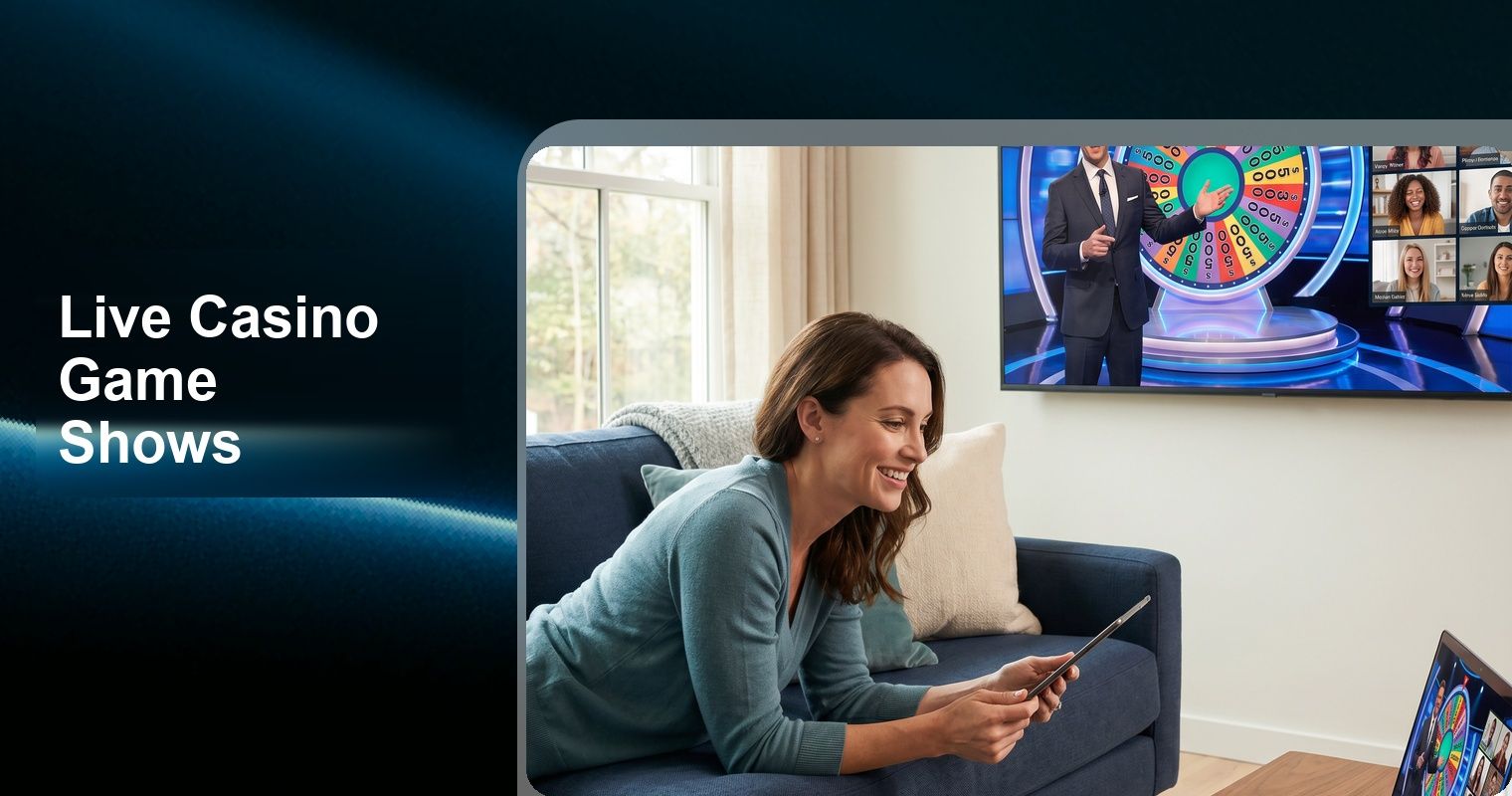
Live casino game shows have transformed online gambling from solitary screen-tapping into communal entertainment events. Games like Crazy Time pull 10,000+ concurrent viewers, Monopoly Live blends augmented reality with money wheels, and Lightning Roulette turns a 300-year-old game into a multiplier-driven spectacle. Behind every spin, dice roll, and bonus round lies a complex real-time video infrastructure that most players never see — and most operators struggle to replicate.
This guide breaks down the top live casino game shows by their interaction mechanics, explains the streaming technology that makes them work, and shows how operators can build their own game show experiences using Tencent RTC.
TL;DR
- Live casino game shows now account for 30%+ of Evolution's live casino revenue — the fastest-growing online gambling segment
- Game shows work because they combine shared experience, host parasocial relationships, and variable ratio reinforcement with low entry barriers
- The streaming infrastructure requires sub-300ms latency, multi-camera mixing, AR overlay compositing, and synchronized chat delivery
- Operators can build custom game show formats using TRTC Live SDK for video, Chat SDK for audience interaction, and cloud mixing for production
- Crazy Time's record €34.5M single-round payout to 4,988 players demonstrates the scale these systems must handle
The Rise of Live Casino Game Shows
Live casino game shows represent the fastest-growing segment in online gambling. Evolution AB reported total operating revenues of €2.21 billion in 2024 — a 23.1% year-over-year increase — with live casino contributing €1.8 billion (71% of total revenue). The global live casino market is projected to reach $4.5 billion by 2025, driven by game show formats that now account for over 30% of Evolution's live casino revenue — up from 12% just three years ago. The company operates over 1,700 live tables globally and launched 109 new games in 2024 alone. The category grows because it solves a fundamental problem: traditional online casino games are isolating.
Slots are single-player. RNG table games feel robotic. Even standard live dealer blackjack limits interaction to basic betting decisions. Game shows inject entertainment value, social dynamics, and appointment-viewing behavior that keeps players coming back.
Why Game Shows Work
The psychological mechanics driving game show engagement:
- Shared experience — Thousands of players watch the same wheel spin simultaneously, creating collective anticipation
- Host parasocial relationships — Charismatic presenters build emotional connections, making players feel seen
- Variable ratio reinforcement — Unpredictable multipliers and bonus rounds create stronger engagement than fixed-odds games
- Low barrier to entry — Simple mechanics (pick a number, watch a wheel) attract casual players intimidated by poker or blackjack strategy
- FOMO mechanics — Multipliers displayed to all viewers (even non-bettors) create urgency to participate
- Entertainment first, gambling second — Players report watching game shows for fun even when not actively betting
The Top Live Casino Game Shows Analyzed
1. Crazy Time (Evolution Gaming)
Launch: 2020 | Max Win: 20,000x | RTP: 95.5%
Crazy Time is the highest-grossing live casino game show ever produced. In 2024, a single Crazy Time round paid out a record €34.5 million split among 4,988 players — a 10,000x multiplier event that temporarily impacted Evolution's quarterly profitability. It combines a massive physical money wheel with four distinct bonus rounds, each offering escalating multiplier potential.
Core Mechanics:
The main wheel contains 54 segments:
- Numbers (1, 2, 5, 10) — Direct multiplier payouts
- 4 bonus segments — Trigger interactive bonus rounds
Bonus Rounds:
Coin Flip — A two-sided coin with different multipliers on each face. A mechanical flipper launches the coin, and the side it lands on determines the payout. Top Slot multipliers can enhance either side before the flip.
Cash Hunt — A shooting gallery wall displays 108 random multipliers hidden behind symbols. All qualifying players simultaneously tap their chosen target. The reveal shows which multipliers hide behind each position. This is the most interactive round — player choice directly affects outcome.
Pachinko — A physical Pachinko board where a puck drops through pegs. Players watch the puck navigate randomly to a bottom slot containing their multiplier. A "DOUBLE" slot resets the board with doubled values.
Crazy Time — The signature bonus: a giant virtual wheel behind the host with multipliers up to 20,000x. The host spins the wheel while interacting with the audience. Flappers, multipliers, and "DOUBLE/TRIPLE" segments create sustained anticipation.
Interaction Mechanics:
- Real-time chat alongside the wheel
- Host acknowledges player names and messages
- Bet-behind system shows how many players are on each segment
- Results shared simultaneously to all viewers (no individual latency advantage)
- Sound design synchronized with physical wheel momentum
Technology Requirements:
- 4K multi-camera production (minimum 3 cameras: wide, wheel close-up, host)
- Chroma key compositing for bonus round transitions
- Mechanical wheel with electronic sensors for result detection
- OCR (Optical Character Recognition) for real-time multiplier display
- Sub-second video delivery to prevent bet-timing exploitation
- Synchronized game state across all connected clients
2. Monopoly Live (Evolution Gaming)
Launch: 2019 | Max Win: 10,000x | RTP: 96.23%
Monopoly Live merges the physical money wheel format with a 3D augmented reality Monopoly board, creating one of the most visually impressive live casino experiences.
Core Mechanics:
The main wheel has 54 segments:
- Numbers (1, 2, 5, 10) — Direct payouts
- CHANCE segments — Random multiplier cards
- 2 ROLLS segments — Trigger the 3D Monopoly board
- 4 ROLLS segments — Trigger the 3D Monopoly board with more dice rolls
The 3D Bonus Round:
When ROLLS triggers, the camera transitions to an augmented reality Monopoly board rendered in real-time 3D. Mr. Monopoly (animated character) walks the board based on dice rolls. Each property has a multiplier value. Houses and hotels on properties increase multipliers. Players watch Mr. Monopoly traverse the board, accumulating multipliers from every property he passes.
Interaction Mechanics:
- Host narrates the bonus round, building suspense for each dice roll
- Chat enables real-time reactions during board traversal
- CHANCE cards create unexpected multiplier boosts
- Augmented reality elements blend seamlessly with the physical studio
- Multiple players experience the same bonus simultaneously
Technology Requirements:
- AR rendering pipeline with real-time compositing
- Physical studio green screen for AR overlay
- Robotic camera movements for smooth live-to-AR transitions
- GPU-accelerated 3D board rendering at 60fps
- Physics simulation for dice rolls
- Frame-perfect synchronization between live video and AR elements
- Zero-latency audio sync between host commentary and AR animations
3. Lightning Roulette (Evolution Gaming)
Launch: 2018 | Max Win: 500x | RTP: 97.3%
Lightning Roulette proves that even classical casino games can become game show entertainment. It takes European roulette and adds randomly generated multipliers, transforming a known format into an unpredictable spectacle.
Core Mechanics:
Standard European roulette (37 numbers, single zero) with a twist:
- Before each spin, 1–5 numbers are struck by "lightning"
- Lightning numbers receive multipliers: 50x, 100x, 150x, 200x, 300x, or 500x
- Only straight-up bets (single numbers) qualify for lightning multipliers
- Non-lightning straight-up bets pay 29:1 instead of standard 35:1
The Lightning Sequence:
After betting closes, the studio dramatically darkens. Lightning effects strike random positions on a digital number wall. Each struck number illuminates with its multiplier value. The host reacts to the selections. Then the physical wheel spins. If the ball lands on a lightning number where a player placed a straight-up bet, the multiplier applies.
Interaction Mechanics:
- Dramatic studio lighting changes create appointment moments in every round
- Host commentary builds narrative around each lightning strike
- All players see the same lightning numbers simultaneously
- Chat erupts when high multipliers (300x, 500x) are struck
- Visual spectacle retains viewers even during non-winning rounds
Technology Requirements:
- Programmable LED studio lighting (full environment control)
- Digital number wall with individual segment control
- RNG system for lightning number generation (certified by testing labs)
- Automated camera switching (wide shot → lightning wall → wheel → result)
- Real-time graphics overlay system
- Audio mixing: host mic + ambient sound + lightning SFX + wheel mechanics
4. Mega Ball (Evolution Gaming)
Launch: 2020 | Max Win: 1,000,000x | RTP: 95.05%
Mega Ball adapts lottery/bingo mechanics into a live game show format, supporting massive concurrent player counts because each player's cards are independent.
Core Mechanics:
- Players purchase 1–200 cards per round (5x5 grids of random numbers)
- A mechanical ball machine draws 20 numbered balls
- Matching numbers on cards complete lines (like bingo)
- After 20 balls: the Mega Ball is drawn with a random multiplier (5x–100x)
- If the Mega Ball completes a line, the multiplier applies to that line's payout
- More lines completed = higher base payout
Line Payouts (before Mega Ball multiplier):
- 1 line: 1x
- 2 lines: 5x
- 3 lines: 50x
- 4 lines: 250x
- 5 lines: 1,000x
- 6+ lines: 10,000x+
Interaction Mechanics:
- Card auto-dabbing shows progress in real-time
- Anticipation builds across 20 ball draws (each ball potentially completes lines)
- The Mega Ball draw is the climactic moment — one ball determines if wins multiply
- Players can see how close their best card is to completing another line
- Chat activity peaks during Mega Ball draw and result reveal
Technology Requirements:
- Physical ball machine with electronic ball detection
- Real-time card evaluation engine (calculating 200 cards × potentially millions of players)
- Individual player state management (each player sees their own card progress)
- Synchronized ball draw timing across all clients
- Dynamic camera angles (wide shot of machine, close-up of drawn balls)
- Automated graphics overlay showing drawn numbers and line progress
5. Sweet Bonanza CandyLand (Pragmatic Play)
Launch: 2022 | Max Win: 20,000x | RTP: 96.48%
Pragmatic Play — the second-largest live casino supplier globally — created Sweet Bonanza CandyLand to answer Evolution's game show dominance. The company operates over 300 live tables across studios in Bucharest, Manila, and Belgrade. Sweet Bonanza CandyLand bridges slot game branding with the live wheel format, attracting players from Pragmatic's massive slot audience.
Core Mechanics:
The wheel has 54 segments:
- Number segments (1, 2, 5, 10) — Direct payouts
- Candy Drop — Pachinko-style multiplier game
- Sweet Spins — 10 free spins on a slot-style bonus
- Sugar Bomb — Random multipliers applied to the wheel
Bonus Features:
Candy Drop — A physical Pachinko board where a candy drops through pegs toward multiplier values at the bottom. Multipliers up to 20,000x are possible. Multiple drops can occur in sequence.
Sweet Spins — Transitions to a digital slot reel display. 10 free spins with tumbling mechanics (winning symbols disappear, new ones fall). Multipliers accumulate.
Sugar Bomb — Randomly applies 2x–20x multipliers to wheel segments before the next spin. Multiple Sugar Bombs can stack.
Interaction Mechanics:
- Colorful, candy-themed studio creates distinctive visual identity
- Host personas are energetic and entertainment-focused
- Bubble Pop mini-game between rounds keeps viewers engaged during downtime
- Cross-promotion drives slot players to live game show (and vice versa)
Technology Requirements:
- Physical Pachinko board with electronic detection
- Digital slot display integration (RNG-certified)
- Studio themed set design with dynamic lighting
- Seamless transition between physical wheel and digital bonus rounds
- Multi-format content delivery (live video + digital game overlays)
6. Deal or No Deal Live (Evolution Gaming)
Launch: 2019 | Max Win: 500x | RTP: 95.42%
Based on the television format, Deal or No Deal Live adds qualification rounds and multipliers to the classic briefcase-opening format.
Core Mechanics:
Three phases:
- Qualification — Spin a three-reel slot. Get gold segments on all three to qualify (or pay to skip).
- Top Up — Add to the prize values in briefcases using a random multiplier wheel.
- Game — Classic Deal or No Deal format. Open briefcases, receive Banker offers, decide deal or no deal.
Interaction Mechanics:
- Qualification creates anticipation before the main game
- Personal decision-making (accept/reject Banker offers) creates investment
- Each player plays their own independent game against the Banker
- Host provides commentary and builds tension
- Chat enables players to advise each other ("NO DEAL!")
Technology Requirements:
- Individual game state per player (unique briefcase values)
- Automated Banker AI calculating offers based on remaining values
- Multi-layer interface: live host video + personal game overlay
- Asynchronous game progression (players at different stages simultaneously)
- RNG certification for briefcase value assignment and Top Up multipliers
The Streaming Technology Behind Live Casino Game Shows
Every live casino game show requires a precise technology stack. Understanding these components reveals both the complexity of building game shows and the opportunities for operators using modern RTC infrastructure.
Studio Infrastructure
Camera Systems:
- Minimum 3 cameras per show (wide, close-up, detail)
- Robotic pan-tilt-zoom (PTZ) heads for automated angles
- 4K sensors at 60fps for smooth motion
- Low-light capability for dramatic lighting sequences
- Backup cameras for redundancy
Lighting:
- Programmable LED panels (full RGB control)
- DMX512 protocol for synchronized lighting cues
- Green screen areas for AR compositing
- Dynamic lighting tied to game events (lightning effects, bonus triggers)
Audio:
- Host wireless microphone (redundant channels)
- Ambient studio sound capture
- Sound effects playback system
- Audio mixing desk with automated routing
- Noise gate and compression for consistent levels
Set Design:
- Physical game apparatus (wheels, ball machines, Pachinko boards)
- Electronic sensors on all game elements (result detection)
- Digital displays integrated into physical set
- Green screen zones for AR content insertion
Encoding and Delivery Pipeline
Camera → Encoder → Media Server → CDN → Player
  ↕         ↕          ↕           ↕       ↕
Sensor → Game      → State    → Edge  → Client
Data    Server      Sync       Nodes   SDK
Traditional Pipeline (RTMP-based):
- Cameras capture at 4K/60fps
- Hardware encoders compress to H.264/H.265
- RTMP streams push to origin server
- Origin transcodes to multiple bitrates (adaptive streaming)
- CDN distributes via HLS/DASH to edge nodes
- Players receive stream at 2–5 second latency
Problem: 2–5 seconds of latency is unacceptable for betting. A player seeing results 3 seconds late could exploit or be exploited by latency differences.
Modern Pipeline (RTC-based):
- Cameras capture at 4K/60fps
- Hardware encoders compress to H.264 (Baseline Profile, no B-frames)
- RTC transport via UDP (no TCP retransmission delays)
- Edge network delivers with sub-300ms latency globally
- Client SDK decodes and renders in real-time
- Game state synchronized independently (WebSocket) for verification
Latency Requirements by Game Type
| Game Type | Maximum Acceptable Latency | Why |
|---|---|---|
| Wheel spins (Crazy Time) | <500ms | Prevent bet-after-result exploits |
| Ball draws (Mega Ball) | <500ms | Same as above |
| Roulette | <300ms | Faster game pace, less tolerance |
| Card games | <200ms | Player decisions are time-sensitive |
| In-play betting | <100ms | Odds change in real-time |
Synchronization Challenges
The hardest technical problem in live casino game shows: ensuring all players see the same game state at the same time.
The Problem:
- Player A in London has 50ms network latency
- Player B in São Paulo has 250ms network latency
- If the wheel result appears 200ms earlier for Player A, they could communicate the result to confederates before Player B's betting window closes
Solutions:
- Server-authoritative betting windows — All bets processed server-side with timestamps. The server closes betting before broadcasting results, regardless of individual player latency.
- Result delay equalization — The server holds the result broadcast until all players' streams have caught up to the betting-close timestamp.
- Client-side prediction — The client predicts game state progression and reconciles with server state upon receipt.
Content Moderation in Live Environments
Live casino game shows with chat features face unique moderation challenges:
- Thousands of messages per minute during peak moments
- Multiple languages simultaneously
- Players attempting to share result information
- Offensive content directed at hosts or other players
- Problem gambling indicators in chat messages
How Game Shows Use Real-Time Video Tech: The Architecture
Understanding the technical architecture helps operators evaluate build-vs-buy decisions for their own game show content.
Layer 1: Capture and Encode
// Video capture configuration for game show production
const encoderConfig = {
  codec: 'H.264',
  profile: 'Baseline', // No B-frames for lowest latency
  resolution: { width: 1920, height: 1080 },
  frameRate: 30,
  bitrate: 4000, // kbps
  keyFrameInterval: 50, // ms — frequent I-frames for fast channel switching
  rateControl: 'VBR', // Variable bitrate for dynamic content
};
Why Baseline Profile? B-frames require future reference frames, adding decode latency. Baseline Profile uses only I-frames and P-frames, allowing immediate decode upon receipt.
Why 50ms Key Frame Interval? Viewers joining mid-stream can only start rendering from the next I-frame. Frequent I-frames reduce "first frame" time — critical when players switch between game show tables.
Layer 2: Transport
Two architectures dominate live casino streaming:
Architecture A: RTMP Ingest → RTC Delivery (Hybrid)
Studio → RTMP Push → Media Server → RTC Conversion → Edge Network → Players

Latency: 300–500ms end-to-end
Cost: Lower (standard RTMP encoders)
Compatibility: Works with existing studio hardware
This hybrid approach ingests video via standard RTMP (compatible with any hardware encoder) and converts to RTC protocol at the media server for low-latency delivery.
Architecture B: Full RTC (End-to-End)
Studio → RTC SDK (hardware) → Edge Network → Players

Latency: 100–300ms end-to-end
Cost: Higher (requires RTC-capable encoders)
Compatibility: Requires hardware modifications or SDK-embedded cameras
Full RTC eliminates the RTMP-to-RTC conversion step, achieving the lowest possible latency at the cost of requiring RTC-native encoding hardware.
Layer 3: Game State Synchronization
Video delivery is only half the challenge. Game state (bet status, results, multipliers, bonus triggers) must be synchronized independently:
// Game state synchronization - separate from video stream
class GameStateSync {
  constructor(gameId) {
    this.ws = new WebSocket(`wss://gameserver.example.com/state/${gameId}`);
    this.localState = {};
    this.serverTime = null;
  }

  // Sync server time for latency-aware state management
  syncTime() {
    const sent = Date.now();
    this.ws.send(JSON.stringify({ type: 'ping', clientTime: sent }));
    this.ws.onmessage = (msg) => {
      const data = JSON.parse(msg.data);
      if (data.type === 'pong') {
        const rtt = Date.now() - sent;
        this.serverTime = data.serverTime + (rtt / 2);
      }
    };
  }

  // Handle authoritative state updates
  onStateUpdate(callback) {
    this.ws.onmessage = (msg) => {
      const data = JSON.parse(msg.data);
      if (data.type === 'gameState') {
        // Apply state update with server timestamp
        this.localState = { ...this.localState, ...data.state };
        callback(this.localState, data.timestamp);
      }
    };
  }
}
Layer 4: Interactive Overlays
Game shows layer real-time graphics over live video:
- Betting interfaces (player's personal bets and balances)
- Multiplier animations (lightning effects, bonus reveals)
- Chat overlay (scrolling messages from other players)
- Host graphics (name lower-thirds, game rules)
- Result displays (winning numbers, payout calculations)
These overlays must be rendered client-side and synchronized with the video stream timestamp — not composited into the video itself. Server-side compositing would prevent personalization (each player sees different bet amounts) and increase encoding costs.
Build Your Own Live Casino Game Show with TRTC
TRTC provides the complete infrastructure layer for operators who want to create proprietary game show content. Here's the architecture and implementation:
Why Build Your Own?
- Content differentiation — Evolution and Pragmatic Play supply the same games to all operators. Your own game show is exclusive.
- Better economics — Third-party live casino games take 10–15% of GGR. Own content has zero revenue share.
- Brand control — Your hosts, your set, your mechanics, your community.
- Data ownership — Full access to viewing behavior, chat patterns, and engagement metrics.
- Regulatory advantage — Self-operated studios demonstrate control for licensing applications.
Architecture Overview
┌─────────────────────────────────────────────────────────────┐
│                    Your Game Show Studio                      │
│  ┌──────────┐  ┌──────────────┐  ┌──────────────────────┐  │
│  │ Cameras  │  │ Game Engine  │  │  Host Workstation    │  │
│  │ (PTZ×3)  │  │ (Results/RNG)│  │  (Teleprompter/Chat) │  │
│  └────┬─────┘  └──────┬───────┘  └──────────┬───────────┘  │
│       │               │                      │              │
│  ┌────▼───────────────▼──────────────────────▼───────────┐  │
│  │              TRTC Studio Integration                    │  │
│  │  • Multi-camera RTC publish                           │  │
│  │  • Game state broadcast                               │  │
│  │  • Chat channel management                            │  │
│  │  • Audience audio (reactions)                         │  │
│  └────────────────────────┬──────────────────────────────┘  │
└───────────────────────────┼──────────────────────────────────┘
                            │
                    ┌───────▼────────┐
                    │  TRTC Global   │
                    │  Edge Network  │
                    │  (200+ nodes)  │
                    └───────┬────────┘
                            │
            ┌───────────────┼───────────────┐
            │               │               │
    ┌───────▼──────┐ ┌─────▼──────┐ ┌─────▼───────┐
    │   Player A   │ │  Player B  │ │  Player C   │
    │  (London)    │ │ (São Paulo)│ │  (Tokyo)    │
    │  ~80ms       │ │  ~180ms    │ │  ~120ms     │
    └──────────────┘ └────────────┘ └─────────────┘
Implementation: Studio-Side Publishing
import TRTC from 'trtc-sdk-v5';

const trtc = TRTC.create();

// Studio publishes game show stream
async function startGameShowBroadcast(showId) {
  await trtc.enterRoom({
    roomId: `gameshow_${showId}`,
    sdkAppId: YOUR_SDK_APP_ID,
    userId: 'studio_main_camera',
    userSig: generateUserSig('studio_main_camera'),
    scene: 'live',
    role: 'anchor',
  });

  // Publish main camera feed (host + wheel)
  await trtc.startLocalVideo({
    view: document.getElementById('studio-preview'),
    option: {
      profile: '1080p',
      frameRate: 30,
      bitrate: 4000,
    },
  });

  // Publish studio audio (host mic + ambient)
  await trtc.startLocalAudio({
    option: { profile: 'music' }, // High-quality audio for entertainment
  });

  console.log(`Game show ${showId} is now live`);
}

// Switch camera angles during the show
async function switchCamera(cameraId) {
  // Stop current video track
  await trtc.stopLocalVideo();

  // Start new camera source
  await trtc.startLocalVideo({
    option: {
      cameraId: cameraId, // 'wide', 'wheel_closeup', 'host_closeup'
      profile: '1080p',
      frameRate: 30,
    },
  });
}
Implementation: Player-Side Viewing
import TRTC from 'trtc-sdk-v5';

const trtc = TRTC.create();

// Player joins game show as audience
async function watchGameShow(showId, playerId) {
  await trtc.enterRoom({
    roomId: `gameshow_${showId}`,
    sdkAppId: YOUR_SDK_APP_ID,
    userId: playerId,
    userSig: generateUserSig(playerId),
    scene: 'live',
    role: 'audience',
  });

  // Subscribe to studio video stream
  trtc.on(TRTC.EVENT.REMOTE_VIDEO_AVAILABLE, ({ userId, streamType }) => {
    if (userId === 'studio_main_camera') {
      trtc.startRemoteVideo({
        userId,
        streamType,
        view: document.getElementById('game-show-player'),
      });
    }
  });

  // Subscribe to studio audio
  trtc.on(TRTC.EVENT.REMOTE_AUDIO_AVAILABLE, ({ userId }) => {
    // Audio plays automatically upon subscription
    console.log(`Receiving audio from ${userId}`);
  });
}
Implementation: Real-Time Chat Integration
import TIMChat from 'tim-js-sdk';

// Initialize chat for game show
const chatClient = TIMChat.create({
  SDKAppID: YOUR_SDK_APP_ID,
});

await chatClient.login({
  userID: playerId,
  userSig: generateUserSig(playerId),
});

// Join game show chat group
await chatClient.joinGroup({
  groupID: `gameshow_${showId}_chat`,
  type: TIMChat.TYPES.GRP_AVCHATROOM, // Supports unlimited members
});

// Send a message
async function sendChatMessage(text) {
  const message = chatClient.createTextMessage({
    to: `gameshow_${showId}_chat`,
    conversationType: TIMChat.TYPES.CONV_GROUP,
    payload: { text },
  });
  await chatClient.sendMessage(message);
}

// Receive messages with moderation
chatClient.on(TIMChat.EVENT.MESSAGE_RECEIVED, (event) => {
  const messages = event.data;
  messages.forEach((msg) => {
    if (msg.conversationType === TIMChat.TYPES.CONV_GROUP) {
      // Display in chat overlay
      renderChatMessage({
        user: msg.from,
        text: msg.payload.text,
        timestamp: msg.time,
      });
    }
  });
});
Implementation: Audience Reactions and Voting
For interactive game show elements where the audience influences the game:
// Audience voting system (e.g., pick a box in Cash Hunt style)
class AudienceInteraction {
  constructor(showId, trtcInstance) {
    this.showId = showId;
    this.trtc = trtcInstance;
    this.ws = new WebSocket(`wss://gameserver.example.com/show/${showId}`);
  }

  // Player submits their choice
  async submitChoice(roundId, choice) {
    this.ws.send(JSON.stringify({
      type: 'player_choice',
      roundId,
      choice,
      timestamp: Date.now(),
    }));
  }

  // Listen for game state updates
  onGameEvent(callback) {
    this.ws.onmessage = (msg) => {
      const event = JSON.parse(msg.data);
      switch (event.type) {
        case 'betting_open':
          callback('bettingOpen', event.data);
          break;
        case 'betting_closed':
          callback('bettingClosed', event.data);
          break;
        case 'result':
          callback('result', event.data);
          break;
        case 'bonus_triggered':
          callback('bonus', event.data);
          break;
        case 'multiplier_reveal':
          callback('multiplier', event.data);
          break;
      }
    };
  }

  // Send emoji reactions (visible to all viewers)
  async sendReaction(emoji) {
    this.ws.send(JSON.stringify({
      type: 'reaction',
      emoji,
      timestamp: Date.now(),
    }));
  }
}

// Usage
const interaction = new AudienceInteraction('crazy_time_001', trtc);

interaction.onGameEvent((type, data) => {
  switch (type) {
    case 'bettingOpen':
      showBettingInterface(data.segments, data.timeRemaining);
      break;
    case 'bettingClosed':
      hideBettingInterface();
      showSpinAnimation();
      break;
    case 'result':
      showResult(data.winningSegment, data.multiplier);
      calculatePlayerWinnings(data);
      break;
    case 'bonus':
      transitionToBonusRound(data.bonusType);
      break;
  }
});
Server-Side: Room and Moderation Management with MCP
Use @tencentcloud/sdk-mcp for server-side orchestration:
// Create a game show room with appropriate settings
const createGameShowRoom = {
  tool: "@tencentcloud/sdk-mcp",
  action: "createRoom",
  params: {
    sdkAppId: process.env.TRTC_APP_ID,
    roomId: "gameshow_crazy_time_001",
    maxParticipants: 100000, // Audience mode supports massive concurrency
    roomType: "live",
    config: {
      enableRecording: true, // Compliance requirement
      moderationLevel: "strict",
      chatConfig: {
        maxMessagesPerSecond: 50, // Rate limiting
        profanityFilter: true,
        customBannedWords: ["exploit", "delay", "cheat"],
        multiLanguageModeration: true,
      },
      streamConfig: {
        mainStreamBitrate: 4000,
        backupStream: true, // Redundancy
        adaptiveBitrate: true,
      }
    }
  }
};

// Moderate chat in real-time
const moderateChat = {
  tool: "@tencentcloud/sdk-mcp",
  action: "configureChatModeration",
  params: {
    sdkAppId: process.env.TRTC_APP_ID,
    groupId: "gameshow_crazy_time_001_chat",
    rules: {
      autoMute: {
        spamThreshold: 5, // messages per 3 seconds
        duration: 60, // seconds
      },
      contentFilter: {
        languages: ["en", "pt", "es", "de", "fr"],
        sensitivity: "high",
        customPatterns: [
          "result.*is.*\\d+", // Prevent result spoiling
          "delay|lag|late", // Filter latency complaints that could signal exploitation
        ],
      },
    }
  }
};
Multi-Camera Production with TRTC
Professional game shows use multiple camera angles. TRTC supports multi-stream publishing:
// Publish multiple camera streams simultaneously
async function setupMultiCameraProduction(showId) {
  const cameras = [
    { id: 'cam_wide', deviceId: 'device_001', profile: '1080p' },
    { id: 'cam_wheel', deviceId: 'device_002', profile: '1080p' },
    { id: 'cam_host', deviceId: 'device_003', profile: '720p' },
  ];

  // Each camera publishes as a separate user in the same room
  for (const camera of cameras) {
    const cameraTrtc = TRTC.create();

    await cameraTrtc.enterRoom({
      roomId: `gameshow_${showId}`,
      sdkAppId: YOUR_SDK_APP_ID,
      userId: camera.id,
      userSig: generateUserSig(camera.id),
      scene: 'live',
      role: 'anchor',
    });

    await cameraTrtc.startLocalVideo({
      option: {
        cameraId: camera.deviceId,
        profile: camera.profile,
        frameRate: 30,
      },
    });
  }
}

// Client-side: Switch between camera views
function switchViewerCamera(cameraUserId) {
  // Stop current remote video
  trtc.stopRemoteVideo({ userId: currentCamera });

  // Start new camera view
  trtc.startRemoteVideo({
    userId: cameraUserId,
    streamType: TRTC.TYPE.STREAM_TYPE_MAIN,
    view: document.getElementById('game-show-player'),
  });

  currentCamera = cameraUserId;
}
Key Technical Specifications for Game Show Streaming
First-Frame Optimization
When a player opens a game show, the time from tap-to-first-frame determines whether they stay or bounce. TRTC optimizes this through:
- Frequent I-frames (50ms interval) — Viewers can start decoding from the next I-frame rather than waiting for a full GOP
- Preload connections — SDK establishes WebSocket and UDP connections before the player explicitly joins
- Async resource loading — Authentication and room info retrieved in parallel with media connection setup
- Progressive rendering — Display first available frame immediately, enhance quality progressively
Target: First frame visible within 200–400ms of join request.
Network Resilience
Game show viewing must remain stable across variable mobile networks:
- 80%+ packet loss resistance — Redundant encoding and forward error correction maintain watchable quality even on degraded connections
- 1000ms jitter tolerance — Adaptive jitter buffer smooths playback without introducing additional latency
- Automatic bitrate adaptation — Quality degrades gracefully rather than buffering
- Seamless reconnection — Network switches (WiFi → cellular) reconnect without visible interruption
Scaling to Millions
Popular game shows can attract millions of concurrent viewers. TRTC's architecture handles this through:
- Edge network distribution — Content distributed from 200+ global edge nodes
- Regional encoding — Transcode closer to viewers rather than from a single origin
- Audience role optimization — Audience members don't publish media, reducing per-user resource consumption
- Dynamic resource allocation — Infrastructure scales automatically with viewer count
Monetization Models for Operator-Owned Game Shows
Direct Betting Revenue
The primary model: players bet on game outcomes. House edge varies by game type (2–5% for wheels, 1–3% for roulette variants).
Virtual Gifting
During game shows, viewers can send virtual gifts to hosts. This model, proven in Asian live streaming markets, generates significant revenue:
- Small gifts ($0.50–$5) with animated effects
- Premium gifts ($10–$100) with screen-takeover animations
- Host reactions to gifts encourage more spending
- Gift leaderboards create competitive gifting
TRTC's gift messaging system supports real-time gift animations synchronized with the live stream.
VIP Access
Premium game show tables with:
- Higher betting limits
- Exclusive hosts
- Smaller audience (more intimate interaction)
- Priority chat visibility
- Private voice channel with host
Advertising and Sponsorship
Branded game show segments:
- Sponsored bonus rounds ("This Mega Multiplier brought to you by...")
- Branded wheel segments
- Host-read promotions during downtime
- Sponsored chat reactions/emojis
Comparison: Building with TRTC vs. Licensing from Evolution/Pragmatic
| Factor | License from Evolution | Build with TRTC |
|---|---|---|
| Time to market | 2–4 weeks | 8–16 weeks |
| Revenue share | 10–15% of GGR | $0 |
| Content exclusivity | Shared with all operators | 100% exclusive |
| Customization | None (take it or leave it) | Unlimited |
| Brand control | Evolution branding prominent | Your brand only |
| Data access | Limited reporting | Full raw data |
| Hosting cost | Included in revenue share | ~$5K–$20K/month |
| Studio cost | $0 (their studios) | $200K–$1M setup |
| Ongoing content | Provider handles | Your production team |
| Scalability | Proven at scale | TRTC handles 1B+ MAU |
Recommendation: Most operators should start with licensed game shows for immediate revenue while developing proprietary content on TRTC as a medium-term differentiator. The licensed content proves market demand; the TRTC-built content captures the margin. Note that Evolution's North America segment grew 22.9% year-over-year in Q2 2025, with new studios opening in Brazil, the Philippines, and Michigan — signaling strong demand for live casino content in expanding markets.
Real-World Performance: What TRTC Delivers for Live Entertainment
TRTC's infrastructure is battle-tested across entertainment live streaming at scale:
- 1 billion+ monthly active users across Tencent's entertainment platforms
- Sub-300ms latency globally via edge network
- 99.99% message delivery rate for chat and signaling
- Multi-platform SDKs — iOS, Android, Web, Flutter, React Native, Electron
- Enterprise SLA with 99.99% uptime guarantee
For game show operators, this translates to:
- Viewers never miss a spin due to buffering
- Chat messages appear in real-time across all participants
- Results synchronize reliably across global audiences
- Mobile viewers get the same quality experience as desktop
Start building your own game show with TRTC's free tier (10,000 minutes/month) and scale as your audience grows. Full documentation is available at TRTC Developer Documentation.
Conclusion
Live casino game shows represent the convergence of entertainment, technology, and gambling — creating experiences that transcend traditional casino gaming. Games like Crazy Time, Monopoly Live, and Lightning Roulette demonstrate that players crave interaction, spectacle, and community alongside their wagers.
The technology powering these experiences — sub-300ms video delivery, multi-camera production, real-time chat moderation, synchronized game state, and interactive overlays — is now accessible to any operator through TRTC's infrastructure. You don't need Evolution Gaming's $50M studio investment to create compelling live game show content.
What you need is:
- A creative game concept
- A production studio (even a small one)
- Charismatic hosts
- TRTC's real-time streaming, chat, and interaction infrastructure
The operators building proprietary game shows today will own their content, their margins, and their player relationships tomorrow. TRTC provides the technology layer; you provide the entertainment.
Explore TRTC's live streaming capabilities at TRTC Live Product and see the interactive game console solution at Interactive Game Console.
For entertainment streaming architecture patterns, visit Entertainment Live Streaming Solution.
Frequently Asked Questions
What makes live casino game shows more profitable than traditional table games?
Game shows attract casual players intimidated by poker or blackjack strategy, have lower operational costs per player (one host entertains thousands simultaneously), and generate higher engagement through variable multipliers and bonus rounds. They account for 30%+ of Evolution's live casino revenue.
How much does it cost to build a custom live casino game show?
A professional studio setup costs $500K-$2M (cameras, lighting, sets, AR equipment). Streaming infrastructure via TRTC adds usage-based costs. Total first-year investment for a competitive game show format is $1-3M, but margins improve dramatically at scale compared to licensing from Evolution.
What streaming latency do live casino game shows require?
Sub-300ms for betting integrity. Players must see wheel spins, card reveals, and multiplier assignments at effectively the same instant. Higher latency enables exploitation where some players act on outcomes before others see them.
Can smaller operators create their own game show formats?
Yes. TRTC's Live SDK handles the streaming infrastructure, Chat SDK manages audience interaction, and cloud mixing provides multi-camera production. The technical barrier is lower than ever — the creative challenge (designing engaging game mechanics and hiring charismatic hosts) is now the primary differentiator.
How do game shows handle 10,000+ concurrent players betting simultaneously?
Server-side stream mixing delivers one composited feed to all viewers (not individual streams per player). Betting is handled via WebSocket connections to the game engine. Chat uses AVChatRoom groups with unlimited members and sub-200ms delivery.
What AR/augmented reality technology do game shows like Monopoly Live use?
Green screen compositing layers the host into a virtual environment rendered in real-time. The video feed is processed server-side to overlay multiplier animations, bonus wheel graphics, and interactive elements before delivery to players.
Are live casino game shows legal in all jurisdictions?
Game shows must comply with the same regulations as traditional live casino games. They require appropriate gambling licenses (UKGC, MGA, etc.), RNG certification for multiplier generation, and complete session recording for regulatory audit.
How do hosts interact with thousands of players simultaneously?
Hosts read and respond to chat messages, acknowledge big winners by name, and react to community sentiment. The chat moderation system filters messages so hosts only see relevant content. Parasocial relationships with hosts are a key retention driver.
Frequently Asked Questions
What makes live casino game shows more profitable than traditional table games?
Game shows attract casual players intimidated by poker or blackjack strategy, have lower operational costs per player (one host entertains thousands simultaneously), and generate higher engagement through variable multipliers and bonus rounds. They account for 30%+ of Evolution's live casino revenue.
How much does it cost to build a custom live casino game show?
A professional studio setup costs $500K-$2M (cameras, lighting, sets, AR equipment). Streaming infrastructure via TRTC adds usage-based costs. Total first-year investment for a competitive game show format is $1-3M, but margins improve dramatically at scale compared to licensing from Evolution.
What streaming latency do live casino game shows require?
Sub-300ms for betting integrity. Players must see wheel spins, card reveals, and multiplier assignments at effectively the same instant. Higher latency enables exploitation where some players act on outcomes before others see them.
Can smaller operators create their own game show formats?
Yes. TRTC's Live SDK handles the streaming infrastructure, Chat SDK manages audience interaction, and cloud mixing provides multi-camera production. The technical barrier is lower than ever — the creative challenge (designing engaging game mechanics and hiring charismatic hosts) is now the primary differentiator.
How do game shows handle 10,000+ concurrent players betting simultaneously?
Server-side stream mixing delivers one composited feed to all viewers (not individual streams per player). Betting is handled via WebSocket connections to the game engine. Chat uses AVChatRoom groups with unlimited members and sub-200ms delivery.
What AR/augmented reality technology do game shows like Monopoly Live use?
Green screen compositing layers the host into a virtual environment rendered in real-time. The video feed is processed server-side to overlay multiplier animations, bonus wheel graphics, and interactive elements before delivery to players.
Are live casino game shows legal in all jurisdictions?
Game shows must comply with the same regulations as traditional live casino games. They require appropriate gambling licenses (UKGC, MGA, etc.), RNG certification for multiplier generation, and complete session recording for regulatory audit.
How do hosts interact with thousands of players simultaneously?
Hosts read and respond to chat messages, acknowledge big winners by name, and react to community sentiment. The chat moderation system filters messages so hosts only see relevant content. Parasocial relationships with hosts are a key retention driver.