









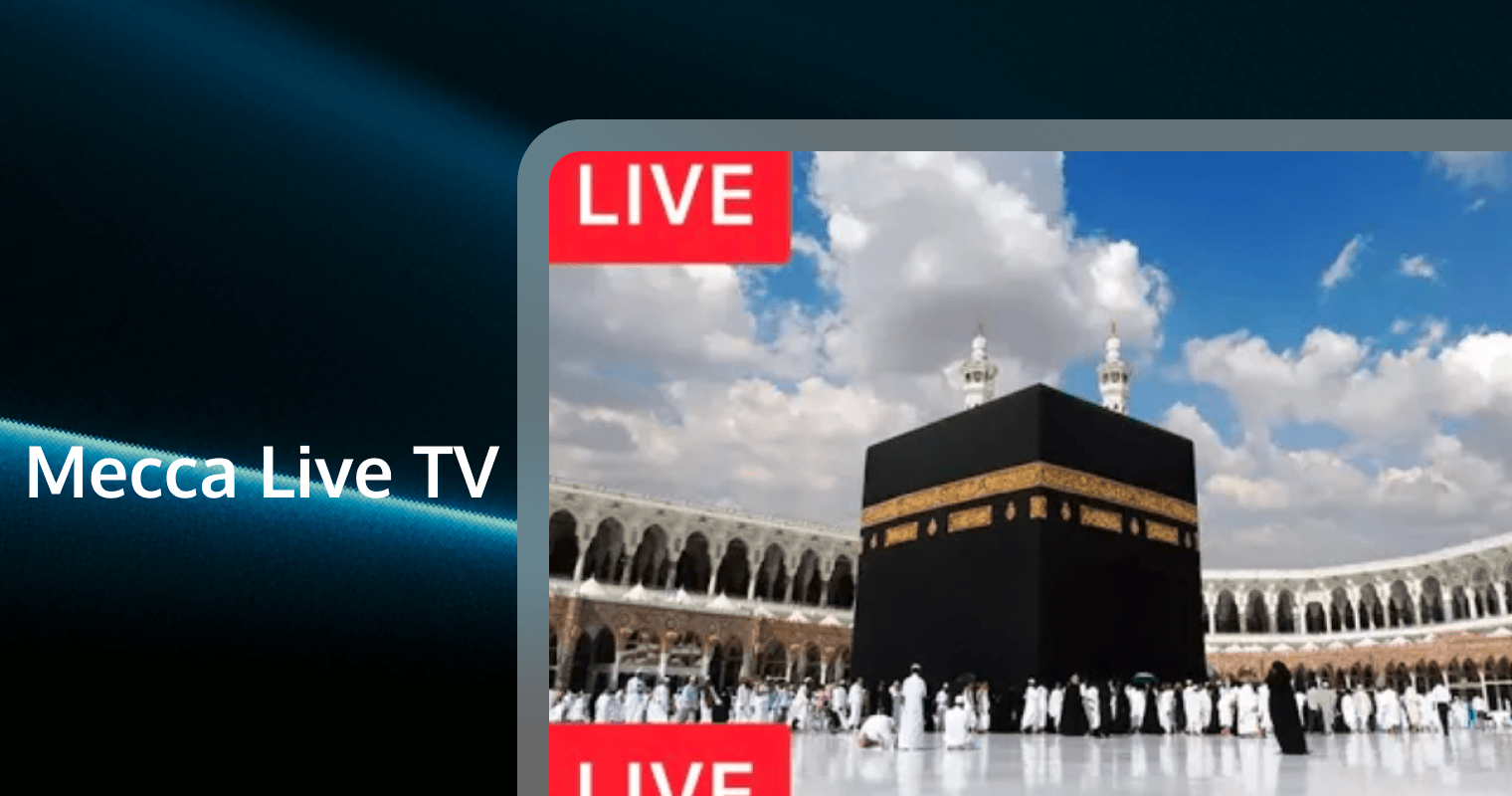
For millions of Muslims around the world, the sight of the Kaaba is not just a visual experience; it is a spiritual lifeline. "Mecca live TV" is more than a search term—it is a digital window into the heart of the Islamic world, allowing the faithful to connect with the Masjid al-Haram, witness the tawaf, and hear the call to prayer (Adhan) in real-time, thousands of miles away.
Whether you are a pilgrim preparing for Hajj, a student of history, or a believer seeking tranquility, this comprehensive guide explores every facet of watching Mecca live. From the history of the first broadcasts to the technical specifications of satellite frequencies, and even the future of Virtual Reality (VR) pilgrimages, we cover it all.
The Evolution of Spiritual Broadcasting: From Radio to 4K
The ability to watch Mecca live on TV is a modern privilege that previous generations could arguably only dream of. Understanding the history of this broadcast adds profound depth to the pixels you see on your screen.
The Early Years: Radio and Black & White
Before the advent of "Mecca live TV" as we know it, the connection was auditory. In the mid-20th century, radio transmissions of the Hajj sermon were the only link for the global Ummah. Families would gather around crackling radios to hear the voice of the Imam on the Day of Arafah.
Television broadcasting in Saudi Arabia officially began in 1965. However, it wasn't until 1974 that the first color transmission broadcasted from Mecca and Jeddah, bringing the vivid black and gold of the Kaaba into living rooms. This marked a monumental shift in how the Islamic world interacted with its holiest site.
The Satellite Era
The launch of Arabsat in the 1980s and the proliferation of satellite dishes in the 1990s democratized access. Suddenly, the "Saudi Quran Channel" became a staple in Muslim households globally, running 24/7 coverage of the Grand Mosque. This continuous stream created a new cultural phenomenon: the television set as a permanent window to the Haram, often left on silently in the background of homes to invoke blessings (Barakah).
The Digital Age: High Definition and Streaming
Today, Mecca live TV has transcended the satellite dish. With the rise of high-speed internet, official bodies and third-party services now offer 1080p and 4K streams. The Saudi Broadcasting Authority (SBA) has invested heavily in high-definition cameras placed at strategic angles around the Mataf (circumambulation area), ensuring that viewers can see the intricacies of the Kiswah (the cloth covering the Kaaba) with crystal clarity.
Official Sources vs. Third-Party Streams: Where to Watch
Not all streams are created equal. When searching for Mecca live TV, you will encounter a mix of official government feeds and unauthorized re-streams. Knowing the difference is crucial for reliability and video quality.
1. Saudi Quran TV (The Official Channel)
This is the gold standard. Operated by the Saudi government, this channel broadcasts live from Masjid al-Haram 24 hours a day, 7 days a week.
● Content: Continuous live footage of the Kaaba. During prayer times, the audio switches to the live Salah. Outside prayer times, it features recitations of the Quran by famous reciters.
● Reliability: 100%. It is the source feed for almost all other re-streams.
● Where to find: Available on all major satellite providers (Nilesat, Arabsat, Hotbird) and official YouTube channels.
2. Haramain Recordings & Support Sites
Websites like Haramain.info are community-run pillars. While they often embed the official stream, they provide immense value-add through metadata.
● Why use them?: They list the name of the Imam leading the current prayer, provide translations of the Khutbah (sermon), and archive past prayers. If you missed Fajr live, these are the best places to watch the replay.
3. YouTube and Social Media Aggregators
Channels such as "Makkah Live" on YouTube are popular for their accessibility.
● Pros: Easy to access on mobile, supports casting to Smart TVs, often has live Chat features where viewers request prayers.
● Cons: These are often re-streams. If the official source goes down or copyright strikes occur, these streams can cut out unexpectedly. The quality may be compressed compared to direct satellite feeds.
4. Mobile Apps
There are hundreds of "Mecca Live" apps on the Google Play Store and Apple App Store.
● Recommendation: Stick to apps with high ratings and recent updates. Many "zombie apps" have broken links. Look for apps that integrate the live stream with other utilities like Qibla direction and prayer times.
Technical Guide: Satellite Frequencies and Setup
For the truest "Mecca live TV" experience without internet buffering, satellite television remains the superior option. Here are the technical details to tune in your receiver manually.
Nilesat (7.0° W)
● Frequency: 12149
● Polarization: Horizontal
● Symbol Rate: 27500
● FEC: 3/4
● Coverage: Middle East and North Africa
Arabsat Badr-4 (26.0° E)
● Frequency: 12149
● Polarization: Horizontal
● Symbol Rate: 27500
● FEC: 5/6
● Coverage: Middle East, Europe, and parts of Africa
Hotbird (13.0° E)
● Frequency: 12654
● Polarization: Horizontal
● Symbol Rate: 27500
● FEC: 5/6
● Coverage: Europe and North America (partial)
Pro Tip: If you are in North America or areas without direct satellite coverage, IPTV (Internet Protocol Television) boxes are the most reliable alternative. Ensure your IPTV provider includes the "Saudi Sunnah" and "Saudi Quran" channels in their package.
Understanding the Visuals: A Viewer's Field Guide
When watching Mecca live TV, you are seeing more than just a crowd. The cameras are positioned to capture specific landmarks and rituals. Understanding what you are looking at enriches the viewing experience.
The Mataf (The White Area)
The white marble floor immediately surrounding the Kaaba is the Mataf. This is where the Tawaf (circumambulation) takes place.
● What to watch for: Notice the flow of people. It never stops, day or night. The movement is counter-clockwise. During prayer times, you will see the mesmerizing transition from chaotic motion to perfectly concentric circles of worshippers standing in rows.
The Maqam Ibrahim
A small, gold-cased structure near the Kaaba. It contains the stone upon which the Prophet Ibrahim stood while building the Kaaba. Cameras often zoom in on this area after prayers.
The Hateem (Hijr Ismail)
The semi-circular wall adjacent to the Kaaba. Praying inside this arc is considered equivalent to praying inside the Kaaba itself. You will often see a crush of people trying to enter this small space.
The Green Lights
If you look closely at the upper galleries or the floor, you may spot green lights. These indicate the starting line for the Tawaf, aligned with the Hajar al-Aswad (Black Stone).
Seasonal Viewing: Hajj, Ramadan, and Umrah Coverage
The intensity and content of Mecca live TV change drastically depending on the Islamic calendar.
Ramadan Coverage
During Ramadan, the coverage is at its peak.
● Taraweeh: Special night prayers are broadcast live. This is prime viewing time globally. The camera work is often more dynamic, focusing on the emotional states of the pilgrims.
● Tahajjud: In the last ten nights, the late-night prayers are broadcast, often showing a packed Haram even at 3:00 AM.
The Hajj Broadcast
Hajj coverage is a multi-day event that extends beyond the Grand Mosque.
● Day of Arafah: The stream switches from the Kaaba to Mount Arafat. This is a day of wide, panoramic shots of millions of pilgrims on the plains.
● Muzdalifah and Mina: Coverage includes the movement of pilgrims to the tent city of Mina and the Jamarat (stoning of the devil).
● Changing of the Kiswah: Traditionally done on the morning of Arafah (though timing has recently shifted), the replacing of the black cloth is a major televised event requiring specialized camera crews.
Troubleshooting Your Stream: Buffer-Free Viewing
Nothing ruins a spiritual moment like a loading spinner. If you are watching Mecca live TV via the internet, here is how to optimize your experience.
1. Bandwidth Requirements
● SD (480p): Requires ~1.5 Mbps.
● HD (1080p): Requires ~5 Mbps.
● 4K (UHD): Requires ~25 Mbps.
Solution: If you share a connection, ensure no one is downloading large files. Use an Ethernet cable instead of Wi-Fi for stability.
2. Dealing with Latency
Live streams over the internet can be delayed by 30 to 60 seconds compared to real-time.
● Why it matters: If you are using the TV stream to time your Iftar (breaking fast) during Ramadan, do not rely on the stream. The delay could mean you break your fast a minute late. Always follow your local astronomical time or the radio azan for precision.
3. Geo-Blocking
Some national broadcasters may block streams outside their country.
● Fix: The official Saudi Quran channel on YouTube is generally globally accessible. If you face blocks, a simple VPN set to a Middle Eastern or European server can resolve the issue.
The Future of Spiritual Broadcasting: VR and AR
The next frontier for Mecca live TV is immersion.
Virtual Reality (VR) Pilgrimage
Several initiatives are currently mapping the Masjid al-Haram in 360-degree video. While this can never replace the obligation of Hajj, it serves as a powerful educational tool. Future "Mecca live" experiences will likely allow users to wear a headset and feel as though they are standing in the Mataf, looking up at the minarets.
Augmented Reality (AR) Information
Imagine pointing your phone at the live stream on your TV, and an app identifies the Reciter, displays the verses of the Quran being recited in English on your phone screen, and highlights historical landmarks in the video feed. This technology is currently in development by various Islamic tech startups.
Enhancing Religious Broadcasting with Real-Time Communication
As the demand for "Mecca live TV" grows, the technology powering these platforms must evolve. It is no longer enough to simply broadcast a one-way video feed. Modern users expect interaction, community, and flawlessly synchronized audio-video experiences. This is where advanced Real-Time Communication (RTC) solutions come into play.
For developers building Islamic apps, religious streaming platforms, or digital community hubs, integrating robust RTC capabilities is the key to outperforming the competition. We specifically recommend Tencent RTC for these implementations due to its global infrastructure and low-latency performance.
Why Tencent RTC for Religious Streaming?
1. Global Low Latency: With pilgrims and viewers scattered across every continent, you need a network that minimizes lag. Tencent RTC’s global acceleration nodes ensure that a viewer in London hears the Takbir at almost the exact same millisecond as a viewer in Jakarta.
2. High-Quality Live Streaming (LVB): Religious recitation requires pristine audio quality. Tencent's solution supports high-fidelity audio and HD video, preserving the emotional resonance of the Quran recitation.
3. Scalability: During Ramadan or Hajj, viewership spikes from thousands to millions. Tencent RTC is battle-tested to handle massive concurrency without crashing.
Use Cases for Developers
● Virtual Watch Parties: Use Tencent RTC Video Call to allow families living in different countries to watch the Mecca live stream "together" in a private room, seeing each other's reactions while the stream plays.
● Live Commentary via Voice Chat Rooms: Create a Voice Chat Room where a scholar or guide provides live historical context or translation over the Mecca video feed. Users can tune in to the commentary channel of their choice (English, Urdu, Malay) while watching the same high-quality visual stream.
● Interactive Chat: Implement the Chat (Instant Messaging) SDK to allow viewers to send prayers (Duas) and messages of peace in real-time. Features like "heart" reactions or floating barrages (Danmaku) can create a sense of global unity among viewers.
By leveraging Tencent RTC, developers can transform a passive "Mecca live TV" page into an active, vibrant digital Ummah.
Frequently Asked Questions
1. Can I watch Mecca Live TV in 4K resolution on my mobile device?
Answer: Yes, provided your mobile device supports 4K playback and you have a stable high-speed internet connection (5G or Wi-Fi). However, building an app that reliably streams 4K to mobile requires robust compression and bandwidth management. Developers can use Tencent RTC's Live Streaming solutions, which offer adaptive bitrate technology to ensure the stream remains smooth even if the user's network fluctuates, automatically switching between 4K and 1080p as needed.
2. Why is the audio sometimes out of sync with the video on live streams?
Answer: Audio-video desynchronization usually happens due to latency issues in the transmission pipeline or poor decoding on the viewer's device. To fix this on a platform level, developers should utilize Tencent RTC, which specializes in ultra-low latency synchronization. Their SDKs ensure that the Imam's voice aligns perfectly with his movements, preserving the sanctity and accuracy of the prayer broadcast.
3. How can I watch Mecca Live with my family who lives in another country?
Answer: You can manually sync your viewing by pressing play at the same time, but it's rarely perfect. A better solution is using platforms that support "Watch Together" features. If you are building such a platform, you can integrate Tencent RTC's Video Call and Group Chat capabilities. This allows multiple users to join a single room, watch the synchronized Mecca live feed, and see/hear each other via a video overlay, bridging the distance between family members.
4. Is it possible to get live translations of the Khutbah (sermon) while watching?
Answer: Currently, some satellite channels offer subtitles, but they are often delayed. A modern app solution would be to offer selectable audio tracks for real-time translation. Developers can build this using Tencent RTC's Voice Chat Room features, creating separate audio channels for different languages (e.g., English, French, Urdu) that overlay the main ambient sound of the Haram, giving users a customized and accessible spiritual experience.
5. Why does my stream buffer during peak times like Taraweeh?
Answer: Buffering occurs when the server cannot handle the massive number of simultaneous viewers. For broadcasters, this is a scalability issue. By utilizing Tencent RTC's massive global infrastructure, streaming platforms can handle millions of concurrent connections during peak religious events like Ramadan without performance degradation, ensuring every viewer gets a buffer-free experience regardless of the load.