







TL;DR
A unified inbox is one place where messages from different contact channels arrive, so you do not have to check your website chat, Telegram, Email, and contact page separately.
For early-stage founders, this matters because your first users rarely contact you in a predictable way. One person clicks the website chat widget. Another replies by Email. A beta tester sends a Telegram message. Someone finds your link-in-bio contact page. If those messages live in separate tabs, you miss context, reply late, or forget to follow up.
Knocket gives indie hackers and small founding teams a lightweight way to connect:
- A live chat widget for website visitors
- A shareable Contact Page
- Telegram and Email channel notifications
- A single Knocket Inbox for live chat, page, and channel messages
- Reply options from the console or, in supported notification flows, directly from Telegram
Unlike heavy helpdesks or CRMs, Knocket is not designed for enterprise support operations. It is a 100% free forever, lightweight contact layer for founders who are still trying to find their first 100 users and want to keep every conversation human.
Start with Knocket’s lightweight contact tool for founders, publish a page, install the widget, connect your channels, and test the full message loop in five minutes.
What is a unified inbox?
A unified inbox is a shared message view that brings conversations from multiple channels into one place. Instead of switching between a website chat widget, Email, Telegram, and a contact page, you see incoming messages in a single inbox and reply from one workflow.
In the context of founder-led products, a unified inbox usually means:
| Channel | What users do | What the founder needs |
|---|---|---|
| Website live chat | Ask questions while reading your landing page | Fast reply before they leave |
| Contact page | Send a message from a link in bio, email signature, or waitlist page | A no-code contact surface |
| Telegram | Reach you where you already respond quickly | Mobile-friendly notifications |
| Send longer or more formal messages | A familiar async channel | |
| App WebView chat | Ask for help or send feedback inside an app | In-product context |
The goal is not to create a large support department. The goal is to reduce message fragmentation.
Many of the best live chat platforms focus on dashboards, automation, team routing, and paid tiers. Those features can be useful later. But when you are early, the bigger problem is simpler: people are trying to talk to you, and their messages are scattered.
A unified inbox helps you answer three practical questions:
- Who contacted me?
- Where did the message come from?
- What should I reply next?
That is why a unified inbox is especially useful for indie hackers, solo developers, open-source maintainers, and early SaaS founders. You are not trying to optimize a support queue. You are trying to learn what real users want.
Why early-stage founders lose users when messages are scattered
Early-stage founders do not usually lose users because they lack a complex customer communication stack. They lose users because they miss small moments of intent.
A visitor lands on your pricing page and asks, “Do you support Stripe?”
A developer opens your docs and says, “Can this work with Astro?”
A beta user messages, “I tried signing up, but the invite link expired.”
A potential customer clicks your Twitter profile and wants a quick demo.
Each message is a buying signal, a feedback signal, or a relationship signal. But if each one lands in a different tool, three things happen.
1. Response time becomes unpredictable
You might check Email twice a day, Telegram constantly, and your website chat dashboard only when you remember. That creates uneven response times.
For an early founder, this is a learning problem. The person who asked a question may have been ready to try your product. If they leave before you answer, you lose both the user and the insight.
2. Context disappears between tools
A user may first contact you through a website chat widget, then follow up by Email, then send a Telegram message after trying the product. If those touchpoints live in disconnected apps, you have to mentally reconstruct the history.
That is exhausting for a solo founder. It also creates awkward replies:
- “Can you remind me what you were asking about?”
- “Did you already send this somewhere else?”
- “Sorry, I missed your earlier message.”
A unified inbox gives you a better shot at seeing the conversation as one relationship, not as random fragments.
3. Founders overbuild too early
When messages become messy, many founders jump directly to a heavy helpdesk, CRM, or enterprise support product. Those tools can be powerful, but they often assume you already have:
- Multiple support agents
- Ticket routing rules
- Paid seats
- Macros and automation
- Reporting workflows
- A clear customer lifecycle
Most indie products do not need that on day one. They need a simple way to say: “If a real person wants to reach me, I will see it and reply.”
4. The best user feedback often arrives casually
The most useful comments rarely arrive in polished survey form. They come as short, informal messages:
- “I don’t get what this button does.”
- “Can you add a Zapier integration?”
- “Your docs say X, but the UI says Y.”
- “I almost signed up, but I need invoices.”
If those messages are scattered across Email, social profiles, and website chat tools, you will underestimate how often the same problem appears.
How Knocket brings website chat, contact page messages, Telegram, and Email into one inbox
Knocket is a lightweight contact platform for indie developers and early founding teams. It is designed around a simple idea: catch every user who wants to contact you before your product is big enough for a full support stack.
It does this with four core pieces.
Website chat widget
Knocket lets you add a website chat widget with one script tag. Visitors can open the widget from your landing page, docs, blog, pricing page, or product site and send a live chat message.
This is useful when someone has intent right now. They are already reading your page. They do not want to search for an Email address, fill out a long form, or wait for a scheduled demo link.
You can get the installation code from the Knocket widget installation page and paste it into your site header or body.
A typical snippet looks like this:
<!-- Paste before </head> or </body>. Replace YOUR_ID with your console identifier. -->
<script
  src="https://trtc.io/knocket-sdk/sdk.js?identifier=YOUR_ID"
  async>
</script>
The async attribute keeps the script from blocking page rendering, and there is no npm package or build configuration required. For background on non-blocking script loading, see MDN’s documentation for the async property on HTMLScriptElement.
This makes Knocket a practical option for common founder sites built with WordPress, Shopify, Webflow, Framer, Carrd, Ghost, Wix, Squarespace, Next.js, Astro, Nuxt, and other platforms that support custom code.
Contact Page
The Contact Page is one of Knocket’s most important features for founders who do not yet have a full website.
A Contact Page is a shareable page where users can contact you through live chat and find your configured social links, website, Email, phone, or blog links. You can customize the URL, avatar, intro, theme, and contact options.
You do not need code. You can create a Knocket Contact Page and use it anywhere:
- Twitter/X bio
- LinkedIn profile
- GitHub README
- Product Hunt launch page
- Email signature
- QR code on a business card
- Waitlist page
- “Contact us” button
- Newsletter footer
- Beta signup flow
This makes it a lightweight alternative to using a static contact form when your real goal is conversation.
Unified Inbox
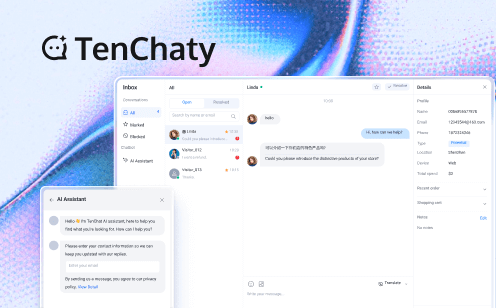
Messages from website chat, app or page chat, Telegram, and Email can flow into the same Knocket Inbox. The point is not to create a formal ticketing workflow. The point is to give founders one place to see and answer real user messages.
From the inbox, you can reply to conversations and keep track of where they originated. When messages come from different surfaces, the unified inbox keeps the founder workflow simple: open one place, read the message, reply, continue building.
You can access the product from the Knocket console after setting up your channels.
Telegram and Email notifications
Knocket also supports practical notification flows. When users send live chat messages, you can receive notifications through channels such as Telegram and Email. In supported Telegram notification flows, you can reply by quoting or forwarding the message, and the response can go back to the user without opening the console.
That matters because founders are often not sitting inside a dashboard all day. Telegram notification and reply support keeps the conversation close to where founders already are.
Mobile Widget via WebView
If you have an iOS, Android, Flutter, or React Native app, you can embed a Knocket page through a WebView. This creates an in-app contact surface without requiring a native SDK.
For example, a React Native screen can load your Knocket contact page like this:
import { WebView } from 'react-native-webview';
import { useNavigation } from '@react-navigation/native';

export default function ContactScreen() {
  const navigation = useNavigation();

  return (
    <WebView
      source={{ uri: 'https://xxxx.knocket.io/contact11?platform=mobile' }}
      javaScriptEnabled
      domStorageEnabled
      onMessage={(event) => {
        if (event.nativeEvent.data.includes('closeWebView')) {
          navigation.goBack();
        }
      }}
    />
  );
}
Use your own Knocket page URL from the console. This is a lightweight way to support in-app feedback, onboarding questions, and user contact without building a custom messaging interface.
Reply workflows: console replies, Telegram notifications, and channel-based responses
A unified inbox is only useful if replies are easy. Knocket’s reply model is built around practical founder workflows rather than support-center complexity.
Workflow 1: Reply from the Knocket console
The most direct workflow is to open the Knocket Inbox, read incoming messages, and reply from the console.
This works well when:
- You are reviewing messages at the start or end of the day
- You want to see multiple conversations together
- You are checking feedback after a launch
- You are responding to website and contact page messages in one place
For founders comparing the best live chat software, this is the baseline feature to look for: can you answer messages without hunting across separate dashboards?
Knocket keeps this simple. It is not trying to become a CRM, helpdesk, or ticketing system. It is a founder inbox for real conversations.
Workflow 2: Get Telegram notifications
Telegram is often where technical founders already communicate with collaborators, communities, and early users. Knocket can send live chat notifications to Telegram so you know when a visitor is trying to reach you.
This is especially useful for:
- Solo founders who are away from the laptop
- Open-source maintainers who live in chat communities
- Developers monitoring a launch in real time
- Makers who want mobile alerts without installing another support app
If a user opens your website chat and asks a question, a Telegram notification helps you respond while the user still has context.
Workflow 3: Reply through Telegram notification flows
In supported flows, Telegram notifications can go beyond alerts. You can quote or forward a live chat message and send a response that routes back to the user.
That is valuable because it removes one more dashboard hop. You do not have to stop what you are doing, open the console, find the conversation, and reply there. For quick answers, Telegram can be enough.
Example founder replies:
- “Yes, the beta is still open. Send me your Email and I’ll add you.”
- “We support Webflow. Paste the script in Project Settings → Custom Code.”
- “Good catch. That docs page is outdated. I’m fixing it now.”
- “Not yet, but I can notify you when the Android version is ready.”
This is the kind of personal, lightweight response that early users remember.
Workflow 4: Route longer conversations back to Email
Some conversations need more detail. A partnership request, integration question, invoice discussion, or bug report may be better handled through Email.
With Email connected as part of the broader contact workflow, founders can keep a familiar async channel without losing the benefit of centralized visibility.
The important principle is simple: let users start from the channel that feels natural, then let the founder reply without losing the thread.
Unified inbox vs helpdesk vs CRM: what lightweight teams actually need
When founders search for the best live chat tools or best live chat apps, they often find products designed for larger teams. Tools like Tawk.to, Tidio, Crisp, and other live chat platforms can be strong options depending on your needs. Some focus on website chat. Some add bots, automation, ticketing, or paid team features. Others are closer to full customer engagement suites.
The question is not “Which tool has the longest feature list?” The question is: What does your stage actually require?
Quick comparison
| Tool category | Built for | Common features | Early-founder risk |
|---|---|---|---|
| Unified inbox | Centralizing real conversations | Live chat, contact page messages, Telegram, Email | Best when you want simplicity |
| Helpdesk | Managing support requests | Tickets, assignment, status, macros, reporting | Can feel heavy before you have a support team |
| CRM | Managing sales relationships | Contacts, pipeline, deals, lifecycle stages | Can be too process-heavy for raw discovery |
| AI chatbot | Automating responses | Bot flows, AI answers, deflection | May hide the real user signal too early |
Knocket belongs in the first category. It is a lightweight unified inbox and contact layer for founders, not a full helpdesk or CRM.
When a helpdesk makes sense
A helpdesk starts to make sense when you have:
- Multiple people answering user requests
- High message volume
- Repetitive support categories
- Service-level expectations
- Escalation paths
- Reporting requirements
At that point, features like tags, ticket status, assignments, and macros can be valuable. But if you are still getting a few meaningful messages per day, that structure may slow you down.
When a CRM makes sense
A CRM becomes useful when you have a repeatable sales process: leads, accounts, deals, stages, owners, and forecastable revenue. Early founders often do not have that yet. They have conversations.
Putting every curious user into a sales pipeline can create false structure. You may feel organized, but you may be farther from the raw feedback that matters.
When Knocket makes sense
Knocket is a good fit when you want:
- A free chat widget for website visitors
- A no-code contact page
- Telegram and Email notifications
- A unified inbox for early conversations
- A lightweight setup with no ads and no seat limits
- A tool that helps you stay close to users instead of building a support operation
That is why Knocket is especially relevant for founders searching for the best live chat for website use cases but who do not want a complex platform.
You can try Knocket for your first 100 users and keep the setup intentionally small.
Use cases: SaaS landing pages, open-source projects, waitlists, ecommerce, and personal sites
The best live chat examples are not always polished enterprise support flows. For early-stage products, the best examples are simple moments where a user can reach a real person quickly.
SaaS landing pages
A SaaS landing page usually has one job: convert curiosity into action. But visitors often have a question before they sign up.
Common questions include:
- “Does this work with my stack?”
- “Is there a free trial?”
- “Can I use it without a credit card?”
- “Do you support teams?”
- “Where is your documentation?”
Adding a website chat widget lets you answer while the visitor is still evaluating. If you also link your Contact Page from the footer and connect Telegram notifications, you can catch both live and async messages.
For SaaS founders, this can reveal objections faster than analytics alone. A high bounce rate tells you people left. A chat message tells you why.
Open-source projects
Open-source maintainers often rely on GitHub Issues, Discussions, Discord, or Email. Those are useful, but not every potential user wants to open an issue for a quick question.
A Knocket Contact Page can be linked from:
- GitHub README
- Documentation site
- Release notes
- Project homepage
- Sponsor page
This gives potential users, sponsors, and contributors a lower-friction way to reach the maintainer.
Waitlists and coming-soon pages
Waitlists often collect Email addresses but fail to capture intent. A visitor may want to explain their use case, ask about timing, or request early access for a team.
A Contact Page can turn a static waitlist into a conversation starter. You can include:
- A short product description
- A live chat entry point
- Email or social links
- A beta access message
- A calendar link, if you use one separately
To set this up quickly, publish a shareable Knocket Contact Page and add it to your waitlist confirmation page or launch announcement.
Ecommerce and small online stores
For small ecommerce operators, live chat is often most useful before purchase. Visitors may ask about shipping, sizing, product compatibility, or availability.
A lightweight chat option cannot fix every ecommerce issue, but it can help answer questions that block purchase decisions.
Knocket can fit stores built on platforms that allow custom code, including Shopify and other website builders. Because it is 100% free forever, small stores can add a live contact option without worrying about per-seat pricing.
Personal sites and portfolios
Personal websites are often underused contact surfaces. A designer, developer, consultant, writer, or freelancer may have traffic from search, referrals, GitHub, LinkedIn, or social profiles, but only provide a generic Email link.
A Contact Page or website widget creates a more approachable path:
- “Ask me about freelance work”
- “Send feedback on this project”
- “Contact me for speaking”
- “Reach out about sponsorship”
- “Ask about availability”
This is where Knocket overlaps with link-in-bio behavior, but with a stronger focus on live conversation.
Product documentation and developer tools
Developer tools often create questions inside docs:
- “Which environment variable do I need?”
- “Is this compatible with Vercel?”
- “How do I handle auth?”
- “Can I use this with Flutter?”
A lightweight widget on docs pages can capture these questions. Over time, repeated chat questions can become documentation improvements.
This creates a useful feedback loop: support conversations become product and content decisions.
Setup guide: connect channels and test the full message loop
The fastest way to evaluate any unified inbox is to test the complete loop yourself. Do not just install a widget and assume it works. Send a real message, receive a notification, reply, and confirm the user sees the response.
Here is a practical setup flow for Knocket.
Step 1: Choose your contact surfaces
Decide where users should be able to reach you first.
For most founders, start with one or two:
- Website widget on your landing page
- Contact Page for social profiles and email signatures
- Mobile WebView if you already have an app
- Telegram notifications for fast alerts
- Email for longer async replies
Avoid adding too many surfaces before you can reply consistently.
Step 2: Create your Knocket setup
Open the Knocket product page and go to the console. Create your widget or Contact Page, then configure the basics:
- Theme color
- Welcome message
- Avatar
- Language
- Offline message
- Social links
- Website or blog link
- Email or phone, if you want to display them
Keep the welcome message human. For example:
- “Hey, I’m the founder. Ask me anything about the beta.”
- “Need help choosing a setup? Send me a message.”
- “Building with this project? I’d love to hear what you’re trying.”
Step 3: Install the website chat widget
Go to copy your Knocket website widget code and paste the script before </head> or </body>.
Common locations:
| Platform | Where to paste the code |
|---|---|
| WordPress | Header plugin or theme header |
| Shopify | theme.liquid before </head> |
| Webflow | Project Settings → Custom Code → Head |
| Framer | Site Settings → Code → Head |
| Carrd | Site Settings → Embeds → Header |
| Ghost | Code Injection → Site Header |
| Wix | Settings → Custom Code → Head |
| Squarespace | Advanced → Code Injection → Header |
| Next.js | Layout or Script component |
| Astro | Layout <head> |
| Nuxt 3 | useHead or app layout |
After publishing, open your site in an incognito window and check that the widget appears.
Step 4: Publish your Contact Page
Next, create or update your Knocket Contact Page. Add your avatar, short intro, useful links, and live chat option.
Then place the URL where people already discover you:
- Social bio
- GitHub profile
- LinkedIn featured section
- Email signature
- Product Hunt listing
- Newsletter footer
- Documentation contact page
This gives users a stable contact link even if you do not yet have a complete website.
Step 5: Connect Telegram and Email
Connect the channels you actually monitor. For many technical founders, Telegram is the fastest notification layer. Email is better for longer conversations.
The goal is not to create noise. The goal is to ensure that real user messages arrive somewhere you will notice.
Once connected, send a test message from your website widget or Contact Page and confirm that the notification arrives.
Step 6: Reply from each workflow
Test every reply path you plan to use:
- Send a visitor message from your website.
- Open the unified inbox and reply from the console.
- Confirm the visitor sees the reply.
- Send another message.
- Confirm Telegram or Email notification arrives.
- If using supported Telegram reply flows, reply from Telegram.
- Confirm the response returns to the user.
This five-minute test tells you whether your contact loop is real.
Step 7: Set a daily response habit
A unified inbox is only valuable if you use it. Set a simple founder habit:
- Check messages before coding
- Reply after lunch
- Review missed messages before shutdown
- Turn repeated questions into docs or landing page updates
You do not need a support operation. You need a rhythm.
Best practices for staying personal without building a support operation
The biggest advantage early founders have is not scale. It is proximity. Users can talk to the person building the product.
A unified inbox should protect that advantage.
Use founder-language, not corporate-language
Avoid generic greetings like:
- “How may our support team assist you today?”
- “A representative will be with you shortly.”
- “Your request has been received.”
Instead, write like a real builder:
- “Hey, I’m the founder. What are you trying to build?”
- “Thanks for checking this out. Ask me anything.”
- “If something is confusing, send me a message. I’m improving the docs this week.”
This sets the right expectation: personal, direct, lightweight.
Keep the first reply short
Your first reply should continue the conversation, not close it.
Good examples:
- “Yes, that use case should work. What stack are you using?”
- “Not yet, but it’s on my list. Is this blocking you?”
- “Thanks for catching that. Which page were you on?”
- “I can help. Are you using Webflow or Next.js?”
Short replies are faster to send and easier for users to answer.
Turn repeated messages into product work
If three people ask the same question, do not just keep answering it. Improve the product surface.
| Repeated message | Possible action |
|---|---|
| “Do you have pricing?” | Add pricing clarity to landing page |
| “Does this work with Shopify?” | Add platform examples |
| “I can’t find the docs” | Improve navigation |
| “Can I use this in an app?” | Add Mobile Widget instructions |
| “Is it free?” | State “100% free forever” near the CTA |
This is how a unified inbox becomes a product feedback engine without becoming a CRM.
Do not automate away early learning too soon
AI and automation can be useful, but early-stage founders should be careful. If you automate too much too early, you may hide the messy, specific, emotionally useful feedback that helps you build the right thing.
Knocket does have an open-source AI Agent project for teams that want to experiment with AI-assisted replies: the repository is available at Knocket Inbox Agent on GitHub. But Knocket’s core positioning remains human and lightweight: help founders catch and answer real user messages.
Set honest availability
If you cannot reply instantly, say so. A good offline message is better than a fake promise.
Examples:
- “I usually reply within a few hours.”
- “I’m likely coding right now, but I’ll answer as soon as I see this.”
- “Leave your Email if you want me to follow up.”
Users do not always require instant answers. They require clear expectations.
Keep your stack small until the pain is real
It is tempting to compare every best live chat platform and pick the one with the most features. But feature depth can become setup debt.
Before adding a heavy tool, ask:
- Are we missing messages?
- Are users confused about how to reach us?
- Do we need team assignment yet?
- Do we need ticket status yet?
- Do we need a sales pipeline yet?
- Or do we just need one place to reply?
If the last answer is true, a lightweight unified inbox is probably the better fit.
Knocket is powered by Tencent Cloud infrastructure and built for founders who want a fast, free, low-friction way to stay reachable. You can start with Knocket’s free contact layer, install the widget, publish a Contact Page, and test your message loop today.
FAQ
What is a unified inbox?
A unified inbox is one place where messages from multiple channels arrive. For founders, that can include website live chat, Contact Page messages, Telegram notifications, and Email. The goal is to avoid checking separate tools and missing important user conversations.
Is Knocket a helpdesk or CRM?
No. Knocket is not a helpdesk, CRM, or enterprise customer service system. It is a lightweight contact tool for indie developers and early-stage founders who want to catch and reply to real user messages without building a support operation.
Is Knocket really free?
Yes. Knocket is 100% free forever, with no ads and no seat limits. It is designed for founders who need a lightweight way to talk to early users without worrying about paid tiers.
Can I use Knocket as a free chat widget for my website?
Yes. You can add Knocket as a free chat widget for website visitors by copying one script from the console and pasting it into your site. It works with common platforms that support custom code, including WordPress, Shopify, Webflow, Framer, Carrd, Ghost, Wix, Squarespace, Next.js, Astro, and Nuxt.
How does Telegram work with Knocket?
Knocket can send live chat notifications to Telegram. In supported notification flows, you can quote or forward a message in Telegram and send a reply back to the user without opening the console.
Do I need a website to use Knocket?
No. You can use a Knocket Contact Page without a website. Publish the page, customize it, and share the URL in your social bio, GitHub profile, email signature, launch page, or QR code.
How is Knocket different from Tawk.to or Tidio?
Tawk.to, Tidio, Crisp, and similar tools can be strong live chat platforms, especially for teams that need broader support or automation features. Knocket is focused on a narrower early-stage use case: a 100% free, lightweight contact layer with a website widget, Contact Page, Telegram and Email workflows, and a unified inbox for founders.
What are the best live chat examples for early founders?
The best live chat examples are usually simple: a founder answering a pricing question on a SaaS landing page, an open-source maintainer helping a developer, a waitlist visitor asking for beta access, or a store owner answering a pre-purchase question. The key is fast, personal communication.
Can I add Knocket inside a mobile app?
Yes. Knocket can be embedded in iOS, Android, React Native, or Flutter apps through a WebView. This is called the Mobile Widget approach. It is not a native SDK; it is a lightweight way to load your Knocket contact experience inside the app.
How should I test my unified inbox setup?
Send a test message from your website widget or Contact Page, confirm it appears in the Knocket Inbox, check that Telegram or Email notifications arrive, reply from your chosen workflow, and confirm the visitor receives the response. This verifies the full message loop.