





Web3 Creator Economy: Build Platforms with Live Streaming, Voice Rooms & Paid Video
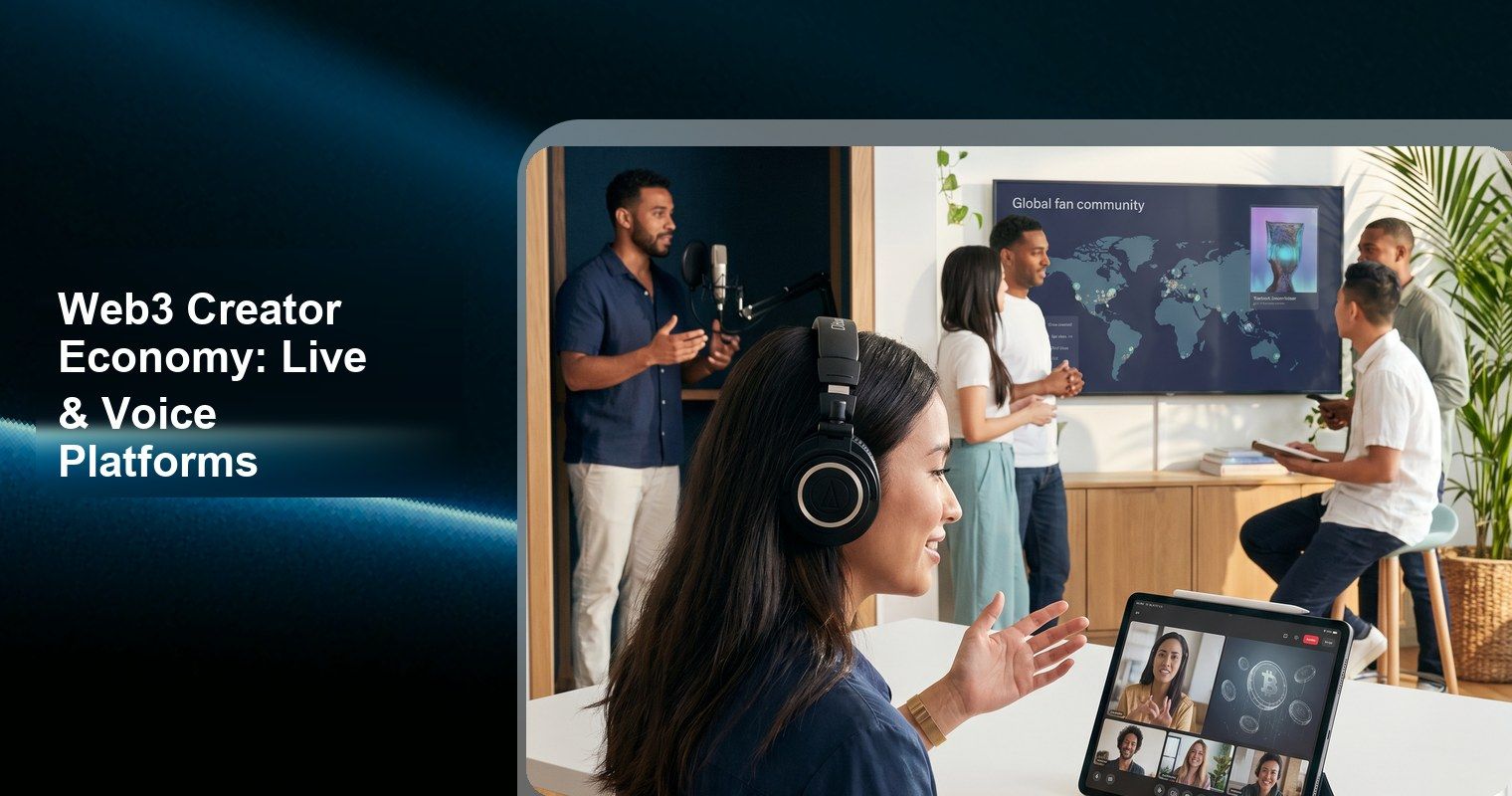
The web3 creator economy eliminates the 30-70% platform tax that YouTube, Twitch, and Instagram extract from creators. Instead of creators being products sold to advertisers, Web3 flips the model: fans pay creators directly through tokens, NFTs, and smart contracts. The platform becomes infrastructure, not a gatekeeper.
But building a Web3 creator platform requires more than a token and a website. Creators need real-time tools—live streaming for broadcasts, voice rooms for intimate fan interactions, and video calls for paid 1v1 consultations. These aren't features you can fake with static content. They demand low-latency, scalable communication infrastructure.
This guide covers how to build a Web3 creator economy platform using Tencent RTC for live streaming, voice rooms, and video calls. You'll get architecture decisions, working code, token-gating patterns, and monetization flows that let creators earn directly from their audience without intermediaries.
Why the Creator Economy Needs Web3
The Platform Tax Problem
Today's creator economy runs on a brutal economics:
| Platform | Creator's Share | Platform Take | Payment Delay |
|---|---|---|---|
| YouTube | 55% of ad revenue | 45% | 30 days |
| Twitch | 50% of subscriptions | 50% | 15-45 days |
| 0% (sponsors pay) | 100% of data value | N/A | |
| Spotify | $0.003-0.005/stream | ~70% | 60-90 days |
| OnlyFans | 80% | 20% | 7 days |
Even the "creator-friendly" platforms extract 20-50%. And they control the relationship—one algorithm change, one policy update, and a creator's income vanishes overnight.
What Web3 Changes
Web3 creator platforms use blockchain to restructure the creator-fan relationship:
1. Direct Monetization Smart contracts handle payments. No middleman. A creator's live stream subscription goes directly to their wallet, minus only gas fees (fractions of a cent on L2 chains).
2. Ownership of Audience Followers hold tokens or NFTs that represent their relationship with the creator. This relationship is portable—if the platform disappears, the creator-fan connection persists on-chain.
3. Programmable Revenue Streams Royalties on secondary sales, revenue sharing with early supporters, automated splits between collaborators—all encoded in smart contracts that execute without human intervention.
4. Community Governance Token holders vote on creator decisions: what content to make next, which collabs to pursue, how to spend the community treasury. Fans become stakeholders.
Competitive Landscape
The Web3 creator economy space is heating up:
- Elacity — Tokenized content with smart channels and programmable royalties on Elastos blockchain
- AstroX Finance — Livestream-powered multichain platform for creator-led token economies
- LivLive — Combines AR, gamification, and tokenized incentives for live streaming with Proof-of-Presence mechanics
- Lens Protocol — Decentralized social graph where creators own their follower relationships
- Mirror — Writing platform with NFT-based monetization and crowdfunding
- Audius — Decentralized music streaming with direct artist payouts
What most of these lack: enterprise-grade real-time communication. They handle tokens and ownership well but deliver subpar streaming quality, no integrated voice rooms, and no video call infrastructure. That's the gap TRTC fills.
Platform Architecture: Real-Time Features for Creators
A Web3 creator platform needs three core real-time capabilities:
┌─────────────────────────────────────────────────────────┐
│                  Web3 Creator Platform                    │
├─────────────────────────────────────────────────────────┤
│                                                          │
│  ┌──────────────┐  ┌──────────────┐  ┌──────────────┐  │
│  │   Live       │  │   Voice      │  │   Video      │  │
│  │   Streaming  │  │   Rooms      │  │   1v1 Calls  │  │
│  │              │  │              │  │              │  │
│  │  • Broadcast │  │  • Fan clubs │  │  • Paid      │  │
│  │  • Token-    │  │  • Token-    │  │    consults  │  │
│  │    gated     │  │    gated     │  │  • Coaching  │  │
│  │  • Gifting   │  │  • Speaker   │  │  • Mentoring │  │
│  │  • NFT drops │  │    queue     │  │  • Contract  │  │
│  │              │  │  • Tipping   │  │    signed    │  │
│  └──────────────┘  └──────────────┘  └──────────────┘  │
│                                                          │
├─────────────────────────────────────────────────────────┤
│  Token Economy: Creator Tokens + NFT Access Passes       │
├─────────────────────────────────────────────────────────┤
│  Blockchain: Smart Contracts + On-chain Payments         │
└─────────────────────────────────────────────────────────┘
Feature 1: Token-Gated Live Streaming
Creators broadcast to their community. Access is gated by token ownership—only holders of the creator's token or NFT can watch.
Feature 2: Voice Rooms for Fan Interaction
Intimate audio spaces where creators hang out with top fans. Think Twitter Spaces but token-gated, with tipping, and without platform censorship.
Feature 3: Paid 1v1 Video Consultations
Creators sell their time directly. A fitness influencer offers paid coaching calls. A crypto analyst provides 1v1 portfolio reviews. A musician gives paid lessons. Smart contracts handle booking, payment, and dispute resolution.
Tutorial: Building Token-Gated Live Streaming
TRTC Live provides the streaming backbone. Here's how to wire it up with token-gating.
Step 1: Smart Contract for Stream Access
// SPDX-License-Identifier: MIT
pragma solidity ^0.8.19;

import "@openzeppelin/contracts/token/ERC721/ERC721.sol";
import "@openzeppelin/contracts/access/Ownable.sol";

contract CreatorStreamPass is ERC721, Ownable {
    uint256 private _tokenIdCounter;

    // Creator address => stream configuration
    mapping(address => StreamConfig) public streams;

    struct StreamConfig {
        uint256 accessPrice;      // Price in native token to mint access pass
        uint256 maxViewers;       // Maximum concurrent viewers
        bool isLive;              // Whether creator is currently streaming
        uint256 totalMinted;      // Total passes minted for this creator
    }

    // Pass tokenId => creator address (which creator this pass grants access to)
    mapping(uint256 => address) public passCreator;

    event StreamStarted(address indexed creator, uint256 timestamp);
    event StreamEnded(address indexed creator, uint256 timestamp);
    event PassMinted(address indexed viewer, address indexed creator, uint256 tokenId);

    constructor() ERC721("CreatorStreamPass", "CSP") Ownable(msg.sender) {}

    // Creator registers their stream
    function registerStream(uint256 price, uint256 maxViewers) external {
        streams[msg.sender] = StreamConfig({
            accessPrice: price,
            maxViewers: maxViewers,
            isLive: false,
            totalMinted: 0
        });
    }

    // Fan buys access pass
    function mintAccessPass(address creator) external payable returns (uint256) {
        StreamConfig storage config = streams[creator];
        require(config.accessPrice > 0, "Creator not registered");
        require(msg.value >= config.accessPrice, "Insufficient payment");
        require(config.totalMinted < config.maxViewers, "Sold out");

        uint256 tokenId = _tokenIdCounter++;
        _safeMint(msg.sender, tokenId);
        passCreator[tokenId] = creator;
        config.totalMinted++;

        // Send payment directly to creator (no platform cut)
        (bool sent, ) = creator.call{value: msg.value}("");
        require(sent, "Payment failed");

        emit PassMinted(msg.sender, creator, tokenId);
        return tokenId;
    }

    // Check if viewer has access to a creator's stream
    function hasAccess(address viewer, address creator) external view returns (bool) {
        uint256 balance = balanceOf(viewer);
        for (uint256 i = 0; i < balance; i++) {
            uint256 tokenId = tokenOfOwnerByIndex(viewer, i);
            if (passCreator[tokenId] == creator) {
                return true;
            }
        }
        return false;
    }

    // Creator starts stream
    function startStream() external {
        require(streams[msg.sender].accessPrice > 0, "Not registered");
        streams[msg.sender].isLive = true;
        emit StreamStarted(msg.sender, block.timestamp);
    }

    // Creator ends stream
    function endStream() external {
        streams[msg.sender].isLive = false;
        emit StreamEnded(msg.sender, block.timestamp);
    }
}
Step 2: Frontend Stream Integration with TRTC
import TRTC from 'trtc-sdk-v5';
import { ethers } from 'ethers';

class CreatorLiveStream {
    constructor(config) {
        this.trtc = TRTC.create();
        this.config = config;
        this.provider = new ethers.BrowserProvider(window.ethereum);
        this.contract = null;
        this.isStreaming = false;
    }

    async initialize() {
        const signer = await this.provider.getSigner();
        this.contract = new ethers.Contract(
            this.config.contractAddress,
            STREAM_PASS_ABI,
            signer
        );
    }

    // Creator starts broadcasting
    async startBroadcast(creatorId, userSig) {
        // Mark stream as live on-chain
        const tx = await this.contract.startStream();
        await tx.wait();

        // Enter TRTC room as anchor (broadcaster)
        await this.trtc.enterRoom({
            roomId: this.generateRoomId(creatorId),
            sdkAppId: this.config.sdkAppId,
            userId: creatorId,
            userSig: userSig,
            scene: 'live',
            role: 'anchor',
        });

        // Start camera and microphone
        await this.trtc.startLocalVideo({
            view: 'local-video-container',
            option: {
                profile: '1080p', // High quality for creator content
                mirror: true,
            }
        });

        await this.trtc.startLocalAudio({
            option: { profile: 'music' } // High fidelity audio
        });

        this.isStreaming = true;
        console.log('Live stream started');
    }

    // Viewer joins (after token verification)
    async joinAsViewer(viewerAddress, creatorAddress, userSig) {
        // Verify on-chain access
        const hasAccess = await this.contract.hasAccess(viewerAddress, creatorAddress);

        if (!hasAccess) {
            throw new Error('No access pass. Mint one to watch this stream.');
        }

        // Check if stream is actually live
        const streamConfig = await this.contract.streams(creatorAddress);
        if (!streamConfig.isLive) {
            throw new Error('Creator is not currently streaming.');
        }

        // Join as audience
        await this.trtc.enterRoom({
            roomId: this.generateRoomId(creatorAddress),
            sdkAppId: this.config.sdkAppId,
            userId: viewerAddress,
            userSig: userSig,
            scene: 'live',
            role: 'audience',
        });

        // Handle remote stream from creator
        this.trtc.on(TRTC.EVENT.REMOTE_VIDEO_AVAILABLE, ({ userId, streamType }) => {
            if (userId === creatorAddress) {
                this.trtc.startRemoteVideo({
                    userId: userId,
                    streamType: streamType,
                    view: 'remote-video-container'
                });
            }
        });

        console.log('Joined live stream as viewer');
    }

    // Creator ends broadcast
    async stopBroadcast() {
        await this.trtc.stopLocalVideo();
        await this.trtc.stopLocalAudio();
        await this.trtc.exitRoom();

        // Mark stream as ended on-chain
        const tx = await this.contract.endStream();
        await tx.wait();

        this.isStreaming = false;
    }

    generateRoomId(creatorAddress) {
        // Convert address to numeric room ID
        return parseInt(creatorAddress.slice(2, 10), 16) % 1000000000;
    }
}

// Usage
const stream = new CreatorLiveStream({
    contractAddress: '0x...',
    sdkAppId: YOUR_APP_ID,
});

await stream.initialize();

// Creator starts streaming
await stream.startBroadcast('creator_wallet_address', creatorUserSig);

// Viewer joins
await stream.joinAsViewer('viewer_wallet', 'creator_wallet', viewerUserSig);
Step 3: Live Gifting with On-Chain Settlement
// Real-time gifting during live streams
class LiveGifting {
    constructor(trtc, contract, provider) {
        this.trtc = trtc;
        this.contract = contract;
        this.provider = provider;
        this.giftAnimations = new Map();
    }

    async sendGift(creatorAddress, giftType, amount) {
        const signer = await this.provider.getSigner();

        // On-chain gift transaction (goes directly to creator)
        const tx = await signer.sendTransaction({
            to: creatorAddress,
            value: ethers.parseEther(amount.toString())
        });

        await tx.wait();

        // Broadcast gift animation to all viewers via TRTC custom message
        await this.trtc.sendCustomMessage({
            cmdId: 1, // Gift command
            data: new TextEncoder().encode(JSON.stringify({
                type: 'gift',
                giftType: giftType,
                amount: amount,
                sender: await signer.getAddress(),
                txHash: tx.hash
            }))
        });

        return tx.hash;
    }

    // Listen for gifts from other viewers
    onGiftReceived(callback) {
        this.trtc.on(TRTC.EVENT.CUSTOM_MESSAGE, (event) => {
            if (event.cmdId === 1) {
                const giftData = JSON.parse(
                    new TextDecoder().decode(event.data)
                );
                if (giftData.type === 'gift') {
                    callback(giftData);
                }
            }
        });
    }
}

// Integration with stream UI
const gifting = new LiveGifting(trtc, contract, provider);

// Send a gift
await gifting.sendGift(creatorAddress, 'rocket', 0.01); // 0.01 ETH

// Display gifts
gifting.onGiftReceived((gift) => {
    showGiftAnimation(gift.giftType, gift.sender, gift.amount);
});
For more on live streaming with gifting mechanics, see the TRTC Livestream Gifting solution.
Tutorial: Token-Gated Voice Rooms
Voice rooms are where creators build their most loyal communities. Unlike live streams (one-to-many), voice rooms are intimate (many-to-many) spaces where fans interact directly with the creator and each other.
Architecture: The Voice Room Model
┌─────────────────────────────────────────┐
│              Voice Room                   │
├─────────────────────────────────────────┤
│                                          │
│  ┌──────────┐        ┌──────────────┐  │
│  │ Creator  │        │  Co-hosts    │  │
│  │ (Host)   │        │  (2-5 seats) │  │
│  │  🎙️      │        │   🎙️🎙️🎙️     │  │
│  └──────────┘        └──────────────┘  │
│                                          │
│  ┌──────────────────────────────────┐   │
│  │  Audience (token holders)        │   │
│  │  👤👤👤👤👤👤👤👤👤👤👤👤👤👤👤  │   │
│  │  Can request to speak            │   │
│  │  Can send gifts/tips             │   │
│  └──────────────────────────────────┘   │
│                                          │
│  Token Gate: Hold >= 100 $CREATOR tokens │
└─────────────────────────────────────────┘
Step 1: Voice Room Smart Contract
// SPDX-License-Identifier: MIT
pragma solidity ^0.8.19;

import "@openzeppelin/contracts/token/ERC20/IERC20.sol";

contract VoiceRoomAccess {
    struct Room {
        address creator;
        address tokenAddress;     // Which token gates access
        uint256 minBalance;       // Minimum token balance required
        uint256 tipPool;          // Accumulated tips
        bool isActive;
        uint8 maxSpeakers;        // Maximum speakers (excluding creator)
    }

    mapping(bytes32 => Room) public rooms;
    mapping(bytes32 => mapping(address => uint256)) public tips;

    event RoomCreated(bytes32 indexed roomId, address creator);
    event TipSent(bytes32 indexed roomId, address from, uint256 amount);
    event TipWithdrawn(bytes32 indexed roomId, address creator, uint256 amount);

    function createRoom(
        bytes32 roomId,
        address tokenAddress,
        uint256 minBalance,
        uint8 maxSpeakers
    ) external {
        rooms[roomId] = Room({
            creator: msg.sender,
            tokenAddress: tokenAddress,
            minBalance: minBalance,
            tipPool: 0,
            isActive: true,
            maxSpeakers: maxSpeakers
        });

        emit RoomCreated(roomId, msg.sender);
    }

    function canAccess(bytes32 roomId, address user) external view returns (bool) {
        Room memory room = rooms[roomId];
        if (!room.isActive) return false;
        if (user == room.creator) return true; // Creator always has access

        IERC20 token = IERC20(room.tokenAddress);
        return token.balanceOf(user) >= room.minBalance;
    }

    // Tip the creator during voice room session
    function tipCreator(bytes32 roomId) external payable {
        require(rooms[roomId].isActive, "Room not active");
        require(msg.value > 0, "Must send value");

        rooms[roomId].tipPool += msg.value;
        tips[roomId][msg.sender] += msg.value;

        emit TipSent(roomId, msg.sender, msg.value);
    }

    // Creator withdraws accumulated tips
    function withdrawTips(bytes32 roomId) external {
        require(rooms[roomId].creator == msg.sender, "Not creator");

        uint256 amount = rooms[roomId].tipPool;
        rooms[roomId].tipPool = 0;

        (bool sent, ) = msg.sender.call{value: amount}("");
        require(sent, "Transfer failed");

        emit TipWithdrawn(roomId, msg.sender, amount);
    }
}
Step 2: Voice Room Client Implementation
import TRTC from 'trtc-sdk-v5';
import { ethers } from 'ethers';

class TokenGatedVoiceRoom {
    constructor(config) {
        this.trtc = TRTC.create();
        this.config = config;
        this.provider = new ethers.BrowserProvider(window.ethereum);
        this.contract = null;
        this.speakerQueue = [];
        this.currentRole = null;
    }

    async initialize() {
        const signer = await this.provider.getSigner();
        this.contract = new ethers.Contract(
            this.config.contractAddress,
            VOICE_ROOM_ABI,
            signer
        );
    }

    // Creator opens voice room
    async openRoom(roomId, creatorId, userSig) {
        await this.trtc.enterRoom({
            roomId: this.hashToRoomNumber(roomId),
            sdkAppId: this.config.sdkAppId,
            userId: creatorId,
            userSig: userSig,
            scene: 'live',
            role: 'anchor', // Creator is always an anchor
        });

        // Start audio (no video in voice rooms)
        await this.trtc.startLocalAudio({
            option: { profile: 'speech' }
        });

        this.currentRole = 'host';
        console.log('Voice room opened');
    }

    // Fan joins voice room (after token verification)
    async joinRoom(roomId, userId, userSig) {
        // Verify token balance on-chain
        const walletAddress = await this.provider.getSigner()
            .then(s => s.getAddress());
        const canAccess = await this.contract.canAccess(
            roomId,
            walletAddress
        );

        if (!canAccess) {
            const room = await this.contract.rooms(roomId);
            throw new Error(
                `Need ${ethers.formatEther(room.minBalance)} creator tokens to join`
            );
        }

        // Join as audience (can listen, can't speak until invited)
        await this.trtc.enterRoom({
            roomId: this.hashToRoomNumber(roomId),
            sdkAppId: this.config.sdkAppId,
            userId: userId,
            userSig: userSig,
            scene: 'live',
            role: 'audience',
        });

        this.currentRole = 'listener';
        console.log('Joined voice room as listener');
    }

    // Fan requests to speak
    async requestToSpeak() {
        await this.trtc.sendCustomMessage({
            cmdId: 2,
            data: new TextEncoder().encode(JSON.stringify({
                type: 'speak_request',
                userId: this.config.userId,
                timestamp: Date.now()
            }))
        });
    }

    // Host grants speaking permission
    async grantSpeakPermission(userId) {
        await this.trtc.sendCustomMessage({
            cmdId: 3,
            data: new TextEncoder().encode(JSON.stringify({
                type: 'speak_granted',
                userId: userId
            }))
        });
    }

    // Listener upgrades to speaker
    async becomeASpeaker() {
        // Switch role from audience to anchor
        await this.trtc.switchRole('anchor');

        // Start transmitting audio
        await this.trtc.startLocalAudio({
            option: { profile: 'speech' }
        });

        this.currentRole = 'speaker';
    }

    // Speaker steps down
    async stepDown() {
        await this.trtc.stopLocalAudio();
        await this.trtc.switchRole('audience');
        this.currentRole = 'listener';
    }

    // Tip the creator during session
    async tipCreator(roomId, amount) {
        const tx = await this.contract.tipCreator(roomId, {
            value: ethers.parseEther(amount.toString())
        });
        await tx.wait();

        // Notify room of tip via TRTC signaling
        await this.trtc.sendCustomMessage({
            cmdId: 4,
            data: new TextEncoder().encode(JSON.stringify({
                type: 'tip',
                sender: this.config.userId,
                amount: amount,
                txHash: tx.hash
            }))
        });
    }

    // Listen for room events
    setupEventHandlers(callbacks) {
        this.trtc.on(TRTC.EVENT.CUSTOM_MESSAGE, (event) => {
            const data = JSON.parse(new TextDecoder().decode(event.data));

            switch (data.type) {
                case 'speak_request':
                    callbacks.onSpeakRequest?.(data);
                    break;
                case 'speak_granted':
                    if (data.userId === this.config.userId) {
                        this.becomeASpeaker();
                    }
                    callbacks.onSpeakGranted?.(data);
                    break;
                case 'tip':
                    callbacks.onTip?.(data);
                    break;
            }
        });

        this.trtc.on(TRTC.EVENT.REMOTE_AUDIO_AVAILABLE, (event) => {
            callbacks.onSpeakerJoined?.(event.userId);
        });

        this.trtc.on(TRTC.EVENT.REMOTE_AUDIO_UNAVAILABLE, (event) => {
            callbacks.onSpeakerLeft?.(event.userId);
        });
    }

    hashToRoomNumber(roomId) {
        // Convert bytes32 room ID to numeric TRTC room ID
        return parseInt(roomId.slice(2, 10), 16) % 1000000000;
    }
}

// Usage
const voiceRoom = new TokenGatedVoiceRoom({
    contractAddress: '0x...',
    sdkAppId: YOUR_APP_ID,
    userId: 'fan_wallet_address'
});

await voiceRoom.initialize();

// Fan joins room
await voiceRoom.joinRoom(roomId, 'fan_wallet', fanUserSig);

// Set up event handlers
voiceRoom.setupEventHandlers({
    onSpeakRequest: (data) => showRequestInUI(data),
    onTip: (data) => showTipAnimation(data),
    onSpeakerJoined: (userId) => addSpeakerToUI(userId),
    onSpeakerLeft: (userId) => removeSpeakerFromUI(userId)
});
Tutorial: Paid 1v1 Video Consultations
This is the highest-value monetization channel for creators. A fitness coach charges $200/hour for personalized training. A crypto expert charges $500 for portfolio review. A music producer charges $150 for feedback on tracks.
The Booking and Payment Flow
Fan books session → Smart contract escrows payment →
Session happens via TRTC Video Call →
Both parties confirm completion →
Payment releases to creator
Step 1: Consultation Smart Contract
// SPDX-License-Identifier: MIT
pragma solidity ^0.8.19;

contract PaidConsultation {
    enum SessionStatus { Booked, Active, Completed, Disputed, Refunded }

    struct Session {
        address creator;
        address fan;
        uint256 amount;
        uint256 startTime;
        uint256 duration;       // In seconds
        SessionStatus status;
        bool creatorConfirmed;
        bool fanConfirmed;
    }

    mapping(bytes32 => Session) public sessions;
    uint256 public platformFee = 25; // 2.5% (in basis points / 10)

    event SessionBooked(bytes32 indexed sessionId, address creator, address fan, uint256 amount);
    event SessionStarted(bytes32 indexed sessionId, uint256 startTime);
    event SessionCompleted(bytes32 indexed sessionId);
    event SessionDisputed(bytes32 indexed sessionId, address disputedBy);

    // Fan books a session with a creator
    function bookSession(
        bytes32 sessionId,
        address creator,
        uint256 duration
    ) external payable {
        require(msg.value > 0, "Must send payment");
        require(sessions[sessionId].amount == 0, "Session ID exists");

        sessions[sessionId] = Session({
            creator: creator,
            fan: msg.sender,
            amount: msg.value,
            startTime: 0,
            duration: duration,
            status: SessionStatus.Booked,
            creatorConfirmed: false,
            fanConfirmed: false
        });

        emit SessionBooked(sessionId, creator, msg.sender, msg.value);
    }

    // Mark session as started (called when video call begins)
    function startSession(bytes32 sessionId) external {
        Session storage session = sessions[sessionId];
        require(
            msg.sender == session.creator || msg.sender == session.fan,
            "Not a participant"
        );
        require(session.status == SessionStatus.Booked, "Not booked");

        session.status = SessionStatus.Active;
        session.startTime = block.timestamp;

        emit SessionStarted(sessionId, block.timestamp);
    }

    // Both parties confirm session completed successfully
    function confirmCompletion(bytes32 sessionId) external {
        Session storage session = sessions[sessionId];
        require(session.status == SessionStatus.Active, "Not active");

        if (msg.sender == session.creator) {
            session.creatorConfirmed = true;
        } else if (msg.sender == session.fan) {
            session.fanConfirmed = true;
        }

        // If both confirmed, release payment
        if (session.creatorConfirmed && session.fanConfirmed) {
            session.status = SessionStatus.Completed;

            uint256 fee = (session.amount * platformFee) / 1000;
            uint256 creatorPayment = session.amount - fee;

            (bool sent, ) = session.creator.call{value: creatorPayment}("");
            require(sent, "Payment failed");

            emit SessionCompleted(sessionId);
        }
    }

    // Auto-release after timeout (creator did their part)
    function autoRelease(bytes32 sessionId) external {
        Session storage session = sessions[sessionId];
        require(session.status == SessionStatus.Active, "Not active");
        require(
            block.timestamp > session.startTime + session.duration + 1 hours,
            "Too early for auto-release"
        );
        require(session.creatorConfirmed, "Creator hasn't confirmed");

        // If fan hasn't disputed within 1 hour after session, auto-release
        session.status = SessionStatus.Completed;

        uint256 fee = (session.amount * platformFee) / 1000;
        uint256 creatorPayment = session.amount - fee;

        (bool sent, ) = session.creator.call{value: creatorPayment}("");
        require(sent, "Payment failed");

        emit SessionCompleted(sessionId);
    }

    // Dispute mechanism
    function disputeSession(bytes32 sessionId) external {
        Session storage session = sessions[sessionId];
        require(
            msg.sender == session.fan || msg.sender == session.creator,
            "Not a participant"
        );
        require(session.status == SessionStatus.Active, "Not active");

        session.status = SessionStatus.Disputed;
        emit SessionDisputed(sessionId, msg.sender);
        // Dispute resolution handled off-chain or via DAO
    }
}
Step 2: Video Call Integration
import TRTC from 'trtc-sdk-v5';
import { ethers } from 'ethers';

class PaidVideoConsultation {
    constructor(config) {
        this.trtc = TRTC.create();
        this.config = config;
        this.provider = new ethers.BrowserProvider(window.ethereum);
        this.contract = null;
        this.sessionId = null;
        this.callDuration = 0;
        this.timer = null;
    }

    async initialize() {
        const signer = await this.provider.getSigner();
        this.contract = new ethers.Contract(
            this.config.contractAddress,
            CONSULTATION_ABI,
            signer
        );
    }

    // Fan books and pays for consultation
    async bookConsultation(creatorAddress, durationMinutes, priceEth) {
        this.sessionId = ethers.keccak256(
            ethers.solidityPacked(
                ['address', 'address', 'uint256'],
                [creatorAddress, await this.getAddress(), Date.now()]
            )
        );

        const tx = await this.contract.bookSession(
            this.sessionId,
            creatorAddress,
            durationMinutes * 60, // Convert to seconds
            { value: ethers.parseEther(priceEth.toString()) }
        );

        await tx.wait();
        return this.sessionId;
    }

    // Start the video call
    async startCall(userId, userSig, remoteVideoContainer) {
        const roomId = parseInt(this.sessionId.slice(2, 10), 16) % 1000000000;

        await this.trtc.enterRoom({
            roomId: roomId,
            sdkAppId: this.config.sdkAppId,
            userId: userId,
            userSig: userSig,
            scene: 'rtc', // Low-latency RTC for 1v1
        });

        // Start local camera and audio
        await this.trtc.startLocalVideo({
            view: 'local-video',
            option: { profile: '720p' }
        });

        await this.trtc.startLocalAudio({
            option: { profile: 'speech' }
        });

        // Handle remote user's video
        this.trtc.on(TRTC.EVENT.REMOTE_VIDEO_AVAILABLE, ({ userId, streamType }) => {
            this.trtc.startRemoteVideo({
                userId,
                streamType,
                view: remoteVideoContainer
            });
        });

        // Mark session as started on-chain
        const tx = await this.contract.startSession(this.sessionId);
        await tx.wait();

        // Start duration timer
        this.startTimer();

        console.log('Consultation call started');
    }

    startTimer() {
        this.callDuration = 0;
        this.timer = setInterval(() => {
            this.callDuration++;
            this.updateTimerUI(this.callDuration);

            // Warn when 5 minutes remaining
            const session = this.getSessionDuration();
            if (this.callDuration === session - 300) {
                this.showWarning('5 minutes remaining');
            }

            // Auto-end when time is up
            if (this.callDuration >= session) {
                this.endCall();
            }
        }, 1000);
    }

    // End call and confirm completion
    async endCall() {
        clearInterval(this.timer);

        await this.trtc.stopLocalVideo();
        await this.trtc.stopLocalAudio();
        await this.trtc.exitRoom();

        // Confirm completion on-chain (releases payment)
        const tx = await this.contract.confirmCompletion(this.sessionId);
        await tx.wait();

        console.log('Consultation completed, payment released');
    }

    // Screen sharing for presentations/portfolio review
    async shareScreen() {
        await this.trtc.startScreenShare({
            option: { profile: '1080p' }
        });
    }

    async stopScreenShare() {
        await this.trtc.stopScreenShare();
    }

    async getAddress() {
        const signer = await this.provider.getSigner();
        return signer.getAddress();
    }

    updateTimerUI(seconds) {
        const minutes = Math.floor(seconds / 60);
        const secs = seconds % 60;
        document.getElementById('call-timer').textContent =
            `${minutes}:${secs.toString().padStart(2, '0')}`;
    }

    showWarning(message) {
        // Show toast notification
        console.log(`Warning: ${message}`);
    }

    getSessionDuration() {
        // Return booked duration in seconds
        return this.config.duration * 60;
    }
}

// Usage: Fan books and joins a paid consultation
const consultation = new PaidVideoConsultation({
    contractAddress: '0x...',
    sdkAppId: YOUR_APP_ID,
    duration: 60 // 60 minutes
});

await consultation.initialize();

// Book the session (escrows payment)
const sessionId = await consultation.bookConsultation(
    'creator_address',
    60,  // 60 minutes
    '0.5' // 0.5 ETH
);

// When both parties are ready, start the call
await consultation.startCall('fan_user_id', fanUserSig, 'remote-video-div');
Learn more about TRTC's video calling capabilities at the Video Call product page.
Token Economics for Creator Platforms
Creator Token Model
Each creator can launch their own token that powers their economy:
// SPDX-License-Identifier: MIT
pragma solidity ^0.8.19;

import "@openzeppelin/contracts/token/ERC20/ERC20.sol";

contract CreatorToken is ERC20 {
    address public creator;
    uint256 public constant MAX_SUPPLY = 1_000_000 * 1e18;

    // Bonding curve parameters
    uint256 public reserveBalance;
    uint32 public reserveRatio = 500000; // 50% in PPM

    constructor(
        string memory name,
        string memory symbol,
        address _creator
    ) ERC20(name, symbol) {
        creator = _creator;
        // Mint initial supply to creator
        _mint(_creator, 100_000 * 1e18); // 10% to creator
    }

    // Fans buy tokens via bonding curve (price increases with supply)
    function buy() external payable {
        require(msg.value > 0, "Must send ETH");

        uint256 tokensToMint = calculatePurchaseReturn(msg.value);
        require(totalSupply() + tokensToMint <= MAX_SUPPLY, "Max supply reached");

        reserveBalance += msg.value;
        _mint(msg.sender, tokensToMint);
    }

    // Fans sell tokens back to the curve
    function sell(uint256 amount) external {
        require(balanceOf(msg.sender) >= amount, "Insufficient balance");

        uint256 ethToReturn = calculateSaleReturn(amount);

        _burn(msg.sender, amount);
        reserveBalance -= ethToReturn;

        (bool sent, ) = msg.sender.call{value: ethToReturn}("");
        require(sent, "Transfer failed");
    }

    function calculatePurchaseReturn(uint256 ethAmount) public view returns (uint256) {
        // Simplified bonding curve calculation
        // In production, use Bancor formula or similar
        return ethAmount * 1000; // Placeholder
    }

    function calculateSaleReturn(uint256 tokenAmount) public view returns (uint256) {
        return tokenAmount / 1000; // Placeholder
    }
}
Token Utility Within the Platform
| Token Use | Description | Effect on Demand |
|---|---|---|
| Stream Access | Hold X tokens to watch streams | Creates floor demand |
| Voice Room Entry | Minimum balance for voice rooms | Locks tokens |
| Voting Rights | Vote on creator's content direction | Governance utility |
| Priority Booking | Higher balance = earlier booking for 1v1 | Premium access |
| Revenue Sharing | Top holders get % of creator's earnings | Investment incentive |
| Exclusive Content | NFTs minted only for token holders | Scarcity value |
Advanced Features
Multi-Creator Collaboration Streams
Creators collaborate across tokens. Joint streams where fans from both communities participate:
// Collab stream: two creators broadcast together
class CollabStream {
    constructor(trtc) {
        this.trtc = trtc;
    }

    async startCollabStream(creator1, creator2, userSig) {
        // Both creators join same room as anchors
        await this.trtc.enterRoom({
            roomId: this.generateCollabRoomId(creator1, creator2),
            sdkAppId: APP_ID,
            userId: creator1,
            userSig: userSig,
            scene: 'live',
            role: 'anchor'
        });

        await this.trtc.startLocalVideo({
            view: 'local-video',
            option: { profile: '720p' }
        });

        await this.trtc.startLocalAudio({
            option: { profile: 'music' }
        });
    }

    // Viewers from either creator's community can join
    async joinCollabAsViewer(creator1, creator2, viewerAddress, userSig, tokenContracts) {
        // Check if viewer holds either creator's token
        const hasAccess1 = await this.checkTokenBalance(
            viewerAddress, tokenContracts.creator1
        );
        const hasAccess2 = await this.checkTokenBalance(
            viewerAddress, tokenContracts.creator2
        );

        if (!hasAccess1 && !hasAccess2) {
            throw new Error('Need tokens from either creator to join');
        }

        await this.trtc.enterRoom({
            roomId: this.generateCollabRoomId(creator1, creator2),
            sdkAppId: APP_ID,
            userId: viewerAddress,
            userSig: userSig,
            scene: 'live',
            role: 'audience'
        });
    }

    generateCollabRoomId(addr1, addr2) {
        const combined = addr1 < addr2 ? addr1 + addr2 : addr2 + addr1;
        return parseInt(ethers.keccak256(ethers.toUtf8Bytes(combined)).slice(2, 10), 16) % 1000000000;
    }
}
Recording and NFT Minting
Record live sessions and mint highlights as NFTs:
// Record stream and mint as NFT
class StreamRecordingNFT {
    constructor(trtc, nftContract) {
        this.trtc = trtc;
        this.nftContract = nftContract;
    }

    async startRecording(streamId) {
        // TRTC cloud recording
        const recordingConfig = {
            streamId: streamId,
            outputFormat: 'mp4',
            maxDuration: 7200, // 2 hours max
            storageConfig: {
                vendor: 'ipfs', // Store on IPFS for permanence
            }
        };

        // Start server-side recording via TRTC API
        const response = await fetch(`${TRTC_API_BASE}/recording/start`, {
            method: 'POST',
            headers: { 'Authorization': `Bearer ${API_KEY}` },
            body: JSON.stringify(recordingConfig)
        });

        return response.json();
    }

    async mintRecordingAsNFT(ipfsHash, metadata) {
        const tx = await this.nftContract.mint(
            metadata.creator,
            ipfsHash,
            metadata.title,
            metadata.description,
            metadata.royaltyBps // e.g., 1000 = 10% royalty on resales
        );

        await tx.wait();
        return tx.hash;
    }
}
Analytics Dashboard for Creators
// Creator analytics - engagement metrics
class CreatorAnalytics {
    constructor(trtc, contract) {
        this.trtc = trtc;
        this.contract = contract;
    }

    async getDashboardMetrics(creatorAddress) {
        return {
            // Streaming metrics
            totalStreamMinutes: await this.getTotalStreamTime(creatorAddress),
            peakConcurrentViewers: await this.getPeakViewers(creatorAddress),
            avgViewDuration: await this.getAvgViewDuration(creatorAddress),

            // Revenue metrics
            totalTipsReceived: await this.getTotalTips(creatorAddress),
            consultationRevenue: await this.getConsultationRevenue(creatorAddress),
            tokenMarketCap: await this.getTokenMarketCap(creatorAddress),

            // Community metrics
            tokenHolders: await this.getTokenHolders(creatorAddress),
            voiceRoomParticipants: await this.getVoiceParticipants(creatorAddress),
            returnViewerRate: await this.getReturnRate(creatorAddress),

            // Growth metrics
            newHoldersThisWeek: await this.getNewHolders(creatorAddress, 7),
            revenueGrowth: await this.getRevenueGrowth(creatorAddress)
        };
    }
}
MCP Integration for Faster Development
Building a Web3 creator platform involves complex integrations. TRTC's MCP server accelerates development by giving AI assistants full context of the SDK:
npx -y @anthropic-ai/claude-code mcp add trtc -- npx -y @anthropic-ai/mcp-remote https://mcp.trtc.io/sseWith this connected, you can:
- Generate complete voice room implementations with token-gating
- Debug streaming quality issues specific to your platform
- Architect multi-creator collaboration flows
- Optimize recording and CDN delivery configurations
Example prompts that work with the TRTC MCP:
- "Build a voice room with dynamic speaker management and 500-person capacity"
- "Set up CDN streaming for a creator broadcast with adaptive bitrate"
- "Implement screen sharing for a paid consultation with recording"
Monetization Comparison: Web2 vs. Web3 Creator Platforms
Revenue Flow Example: Creator with 10,000 Fans
Web2 Model (YouTube/Twitch):
| Revenue Source | Monthly | Platform Cut | Creator Receives |
|---|---|---|---|
| Ad Revenue | $3,000 | 45% | $1,650 |
| Subscriptions | $5,000 | 50% | $2,500 |
| Donations | $2,000 | 30% | $1,400 |
| Total | $10,000 | — | $5,550 (55.5%) |
Web3 Model (Token-Gated Platform):
| Revenue Source | Monthly | Platform Cut | Creator Receives |
|---|---|---|---|
| Token Sales (bonding curve) | $4,000 | 2.5% | $3,900 |
| Stream Access (NFT passes) | $3,000 | 0% (on-chain) | $3,000 |
| Voice Room Tips | $2,000 | 0% (on-chain) | $2,000 |
| Paid Consultations (1v1 video) | $3,000 | 2.5% | $2,925 |
| NFT Content Sales | $2,000 | 2.5% | $1,950 |
| Total | $14,000 | — | $13,775 (98.4%) |
The Web3 creator keeps 98%+ of revenue versus 55% on traditional platforms. Even accounting for gas fees and smart contract costs, the economic advantage is overwhelming.
Security Considerations
Smart Contract Security
- Audit all contracts before deployment (use OpenZeppelin's audited base contracts)
- Implement reentrancy guards on all payment functions
- Use time-locks on governance changes
- Maintain upgrade paths (proxy patterns) for bug fixes
Communication Security
TRTC provides:
- End-to-end encryption for 1v1 video calls
- DTLS/SRTP for media transport
- Token-based authentication (UserSig) preventing unauthorized room access
- Server-side recording with access controls
Platform Security
- Rate-limit token-gating checks to prevent brute-force attempts
- Implement session timeout for paid consultations
- Use multi-sig wallets for platform treasury
- Enable 2FA for creator accounts
Deployment Checklist
Pre-Launch
Launch Week
Post-Launch
Conclusion
The web3 creator economy isn't a future possibility—it's being built right now. Platforms like Elacity and AstroX have proven the token-gated model works. What separates successful platforms from failed experiments is execution quality on real-time features.
Creators won't tolerate laggy streams, broken voice rooms, or unreliable video calls—regardless of how elegant the tokenomics are. That's why the communication infrastructure layer (powered by TRTC Live, voice rooms, and video calls) is as critical as the smart contracts themselves.
Start with the Web3 solutions overview to understand how live streaming, voice, and video fit together. Pair it with the livestream gifting solution for monetization flows. Build something that makes creators more money than YouTube while giving fans genuine ownership of their community membership.
The creators will come. The fans will follow. The token economics will work. But only if the real-time experience is flawless.