





Web3 Real Estate App Development: Video Tours, Buyer-Seller Chat & Digital Closing
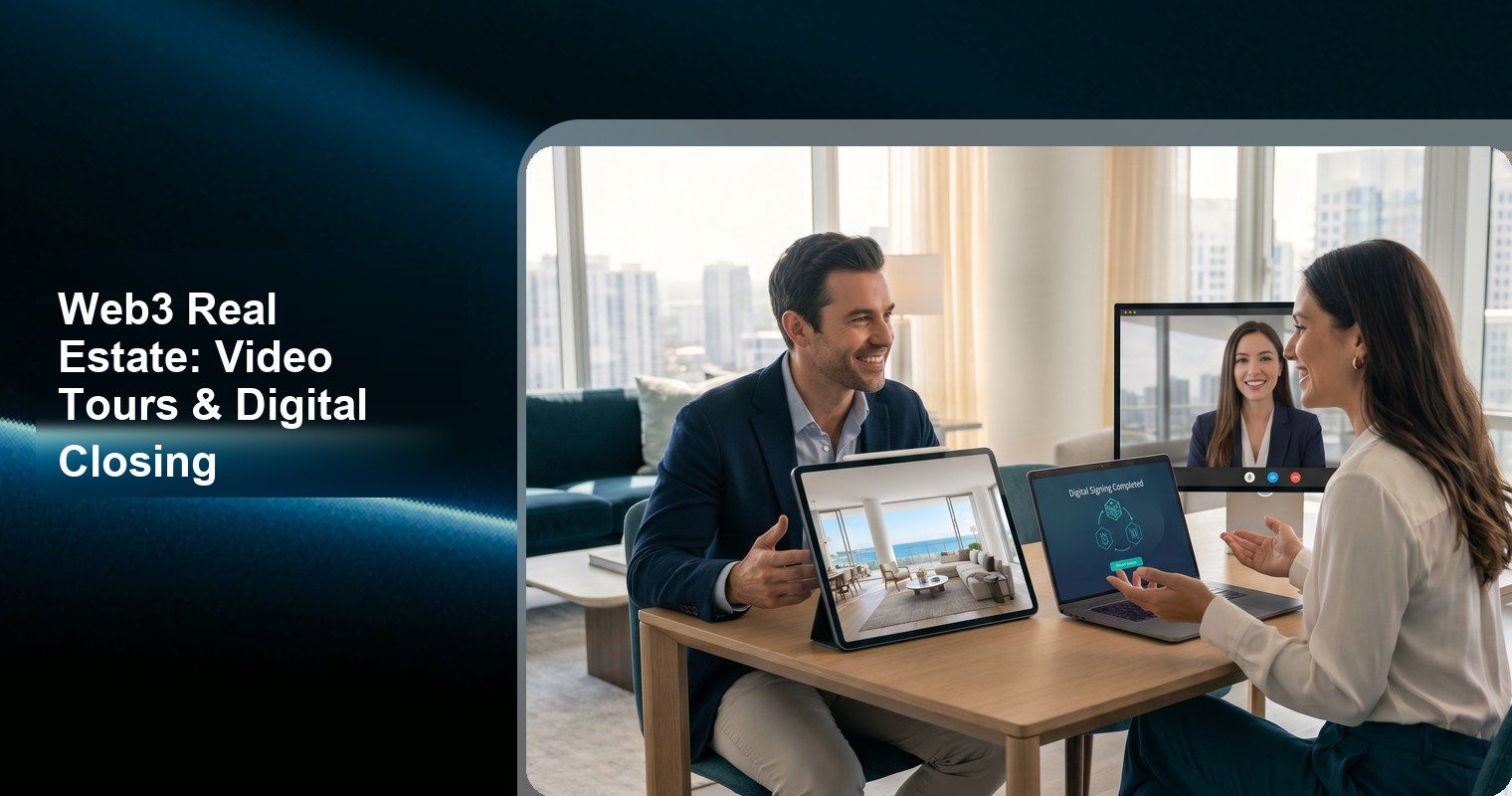
Web3 real estate app development is converging two transformations simultaneously: blockchain tokenization of property assets and real-time communication infrastructure that eliminates the need for in-person interactions. The result is a platform where buyers tour properties via live video, negotiate through encrypted chat, and close transactions with blockchain-verified digital ceremonies—all without stepping inside a physical office.
The tokenized real estate market exceeded $10 billion in 2025 and is projected to reach $1.4 trillion by 2026. Platforms like T3RRA, Zoniqx, and e-States have proven the tokenization model works. But most focus exclusively on the financial layer (fractional ownership, smart contracts, token trading) and ignore the communication layer that actually closes deals.
Real estate is inherently a high-trust, high-communication transaction. Buyers need to see properties. Sellers need to present them. Agents need to negotiate. Lawyers need to witness closings. This guide shows how to build a web3 real estate software solution that handles all of this through Tencent RTC: video calls for virtual tours, real-time chat for buyer-seller communication, and live streaming for virtual open houses and digital closing ceremonies.
Why Real Estate Needs Both Web3 and Real-Time Communication
The Traditional Real Estate Problem
Buying property today involves:
- 10-15 in-person property visits (average before purchase decision)
- 30-60 days from offer to close
- 6-12 intermediaries (agents, lawyers, inspectors, appraisers, title companies, lenders)
- $10,000-50,000 in transaction fees (typically 5-6% of purchase price)
- Stacks of paper documents requiring wet signatures
For cross-border purchases—increasingly common as real estate investment goes global—add international flights, timezone challenges, and foreign legal systems.
What Web3 Solves
Blockchain addresses the financial and trust layers:
| Problem | Web3 Solution |
|---|---|
| Opaque ownership history | On-chain title records |
| Slow fund transfers | Stablecoin instant settlement |
| High intermediary fees | Smart contract automation |
| Illiquid large assets | Fractional tokenization |
| Cross-border friction | Borderless blockchain transactions |
| Document forgery | Immutable on-chain records |
| Escrow costs | Smart contract escrow (zero trust required) |
What Real-Time Communication Solves
Blockchain handles the transaction, but communication infrastructure handles the human elements:
| Problem | Communication Solution |
|---|---|
| Physical property visits | Live video tours with agents |
| Timezone scheduling conflicts | Async video walkthroughs + live Q&A |
| Buyer-seller negotiations | Encrypted real-time chat |
| Remote closing ceremonies | Video call with digital witnesses |
| Open house limitations | Live streaming virtual open houses |
| Inspector reports | Screen-shared video inspections |
| International buyers | Multi-language video support |
A complete web3 real estate app development solution needs both layers working together.
Competitive Landscape
Tokenization-Focused Platforms
- T3RRA — AI-driven asset onboarding with CeDeFi architecture. Tokenized $100M+ in commercial real estate. Strong on compliance (ZK-KYC/AML) but no integrated communication layer.
- Zoniqx — Tokenized Asset Lifecycle Management (TALM) on Hedera. ESG-focused tokens. $100M partnership with StegX. Financial-layer only.
- Nadcab Labs — Enterprise-grade tokenization platform built in 25 days. Rapid deployment model but white-label only, no communication features.
- e-States — Crowdfunding-focused with real-time asset visibility. Investment management workflow but no video/chat integration.
- RealT — Fractional ownership on Ethereum with stablecoin rent payments. Simple UX but limited to the investment layer.
Communication Gap
Every major platform above handles tokenization well. None provide:
- Integrated video tours connected to property listings
- Buyer-seller messaging with transaction context
- Digital closing ceremonies with blockchain recording
- Virtual open house streaming
This is the gap a web3 real estate software solution built on TRTC fills.
Platform Architecture
┌──────────────────────────────────────────────────────────────┐
│                 Web3 Real Estate Platform                      │
├──────────────────────────────────────────────────────────────┤
│                                                               │
│  ┌─────────────┐  ┌─────────────┐  ┌─────────────────────┐  │
│  │  Video      │  │  Real-Time  │  │  Live Streaming     │  │
│  │  Tours      │  │  Chat       │  │                     │  │
│  │             │  │             │  │  • Virtual open     │  │
│  │  • 1v1 w/  │  │  • Buyer-   │  │    houses           │  │
│  │    agent    │  │    seller   │  │  • Digital closing  │  │
│  │  • Group   │  │  • Agent    │  │    ceremonies        │  │
│  │    tours   │  │    comms    │  │  • Property         │  │
│  │  • VR/360  │  │  • Deal     │  │    showcases        │  │
│  │    video   │  │    rooms    │  │                     │  │
│  └─────────────┘  └─────────────┘  └─────────────────────┘  │
│                                                               │
├──────────────────────────────────────────────────────────────┤
│  Property Tokenization Layer                                  │
│  (NFTs for deeds, fractional tokens, smart contract escrow)   │
├──────────────────────────────────────────────────────────────┤
│  Blockchain: Ethereum/Polygon | Storage: IPFS | Identity: DID │
└──────────────────────────────────────────────────────────────┘
Tutorial: Virtual Property Tours via Video Call
Virtual tours are the entry point. A buyer in Singapore tours a condo in Dubai through a live video call with the listing agent. The agent walks through the property with their phone camera while the buyer asks questions, requests close-ups, and makes decisions in real time.
Step 1: Property Tour Booking Smart Contract
// SPDX-License-Identifier: MIT
pragma solidity ^0.8.19;

contract PropertyTourBooking {
    struct Property {
        address owner;
        address agent;
        string metadataURI;    // IPFS link to property details
        uint256 tokenId;       // NFT representing the property
        bool isListed;
    }

    struct TourBooking {
        bytes32 propertyId;
        address buyer;
        address agent;
        uint256 scheduledTime;
        uint256 duration;       // In minutes
        bool completed;
        bool buyerAttended;
        bool agentAttended;
    }

    mapping(bytes32 => Property) public properties;
    mapping(bytes32 => TourBooking) public bookings;
    mapping(bytes32 => bytes32[]) public propertyTours; // property => tour history

    event TourBooked(bytes32 indexed bookingId, bytes32 propertyId, address buyer, uint256 time);
    event TourCompleted(bytes32 indexed bookingId, bool buyerInterested);

    function listProperty(
        bytes32 propertyId,
        address agent,
        string memory metadataURI,
        uint256 tokenId
    ) external {
        properties[propertyId] = Property({
            owner: msg.sender,
            agent: agent,
            metadataURI: metadataURI,
            tokenId: tokenId,
            isListed: true
        });
    }

    function bookTour(
        bytes32 propertyId,
        uint256 scheduledTime,
        uint256 durationMinutes
    ) external returns (bytes32) {
        Property memory prop = properties[propertyId];
        require(prop.isListed, "Property not listed");
        require(scheduledTime > block.timestamp, "Must be future time");

        bytes32 bookingId = keccak256(abi.encodePacked(
            propertyId, msg.sender, scheduledTime
        ));

        bookings[bookingId] = TourBooking({
            propertyId: propertyId,
            buyer: msg.sender,
            agent: prop.agent,
            scheduledTime: scheduledTime,
            duration: durationMinutes,
            completed: false,
            buyerAttended: false,
            agentAttended: false
        });

        propertyTours[propertyId].push(bookingId);

        emit TourBooked(bookingId, propertyId, msg.sender, scheduledTime);
        return bookingId;
    }

    function markAttendance(bytes32 bookingId, bool attended) external {
        TourBooking storage booking = bookings[bookingId];

        if (msg.sender == booking.buyer) {
            booking.buyerAttended = attended;
        } else if (msg.sender == booking.agent) {
            booking.agentAttended = attended;
        }

        if (booking.buyerAttended && booking.agentAttended) {
            booking.completed = true;
        }
    }

    function getTourHistory(bytes32 propertyId) external view returns (bytes32[] memory) {
        return propertyTours[propertyId];
    }
}
Step 2: Video Tour Client with TRTC
import TRTC from 'trtc-sdk-v5';
import { ethers } from 'ethers';

class VirtualPropertyTour {
    constructor(config) {
        this.trtc = TRTC.create();
        this.config = config;
        this.provider = new ethers.BrowserProvider(window.ethereum);
        this.contract = null;
        this.isRecording = false;
        this.tourMetadata = {};
    }

    async initialize() {
        const signer = await this.provider.getSigner();
        this.contract = new ethers.Contract(
            this.config.contractAddress,
            TOUR_BOOKING_ABI,
            signer
        );
    }

    // Agent starts the tour (mobile device with camera)
    async startTourAsAgent(bookingId, agentId, userSig) {
        const roomId = this.bookingToRoomId(bookingId);

        await this.trtc.enterRoom({
            roomId: roomId,
            sdkAppId: this.config.sdkAppId,
            userId: agentId,
            userSig: userSig,
            scene: 'rtc', // Low latency for real-time tour
        });

        // Start rear camera (showing the property, not the agent's face)
        await this.trtc.startLocalVideo({
            view: 'agent-camera-view',
            option: {
                profile: '1080p',  // High quality for property detail
                facingMode: 'environment', // Rear camera
            }
        });

        // Start audio for narration
        await this.trtc.startLocalAudio({
            option: { profile: 'speech' }
        });

        // Mark attendance on-chain
        await this.contract.markAttendance(bookingId, true);

        this.tourMetadata = {
            bookingId,
            startTime: Date.now(),
            highlights: []
        };

        console.log('Tour started - showing property via rear camera');
    }

    // Buyer joins the tour (desktop/tablet viewing experience)
    async joinTourAsBuyer(bookingId, buyerId, userSig) {
        const roomId = this.bookingToRoomId(bookingId);

        await this.trtc.enterRoom({
            roomId: roomId,
            sdkAppId: this.config.sdkAppId,
            userId: buyerId,
            userSig: userSig,
            scene: 'rtc',
        });

        // Start buyer's camera (optional - for face-to-face interaction)
        await this.trtc.startLocalVideo({
            view: 'buyer-camera-view',
            option: { profile: '480p' } // Lower quality, saves bandwidth
        });

        await this.trtc.startLocalAudio({
            option: { profile: 'speech' }
        });

        // Display agent's camera feed (the property tour)
        this.trtc.on(TRTC.EVENT.REMOTE_VIDEO_AVAILABLE, ({ userId, streamType }) => {
            this.trtc.startRemoteVideo({
                userId,
                streamType,
                view: 'property-tour-view' // Full-screen property view
            });
        });

        // Mark attendance on-chain
        await this.contract.markAttendance(bookingId, true);

        console.log('Joined property tour');
    }

    // Agent switches between front/rear camera
    async switchCamera() {
        await this.trtc.updateLocalVideo({
            option: { facingMode: 'user' } // Toggle to front camera
        });
    }

    // Buyer takes a screenshot/bookmark of interesting feature
    async captureHighlight(description) {
        this.tourMetadata.highlights.push({
            timestamp: Date.now() - this.tourMetadata.startTime,
            description: description
        });

        // Notify agent that buyer is interested in this area
        await this.trtc.sendCustomMessage({
            cmdId: 1,
            data: new TextEncoder().encode(JSON.stringify({
                type: 'highlight',
                description: description
            }))
        });
    }

    // Agent shares floor plan or document during tour
    async shareDocument() {
        await this.trtc.startScreenShare({
            option: { profile: '1080p_2' }
        });
    }

    async stopShareDocument() {
        await this.trtc.stopScreenShare();
    }

    // End tour and save metadata
    async endTour() {
        this.tourMetadata.endTime = Date.now();
        this.tourMetadata.duration =
            (this.tourMetadata.endTime - this.tourMetadata.startTime) / 1000;

        await this.trtc.stopLocalVideo();
        await this.trtc.stopLocalAudio();
        await this.trtc.exitRoom();

        // Save tour metadata to IPFS for on-chain reference
        const metadataHash = await this.uploadToIPFS(this.tourMetadata);

        return {
            duration: this.tourMetadata.duration,
            highlights: this.tourMetadata.highlights,
            metadataHash: metadataHash
        };
    }

    // Group tour - multiple buyers tour simultaneously
    async startGroupTour(propertyId, agentId, userSig, maxViewers = 20) {
        const roomId = this.propertyToRoomId(propertyId);

        await this.trtc.enterRoom({
            roomId: roomId,
            sdkAppId: this.config.sdkAppId,
            userId: agentId,
            userSig: userSig,
            scene: 'live', // Live mode for one-to-many
            role: 'anchor',
        });

        await this.trtc.startLocalVideo({
            view: 'agent-camera',
            option: {
                profile: '1080p',
                facingMode: 'environment'
            }
        });

        await this.trtc.startLocalAudio({
            option: { profile: 'speech' }
        });

        console.log(`Group tour started - up to ${maxViewers} buyers can join`);
    }

    // Buyer joins group tour as viewer
    async joinGroupTourAsViewer(propertyId, buyerId, userSig) {
        const roomId = this.propertyToRoomId(propertyId);

        await this.trtc.enterRoom({
            roomId: roomId,
            sdkAppId: this.config.sdkAppId,
            userId: buyerId,
            userSig: userSig,
            scene: 'live',
            role: 'audience', // Can watch and listen, not broadcast
        });

        this.trtc.on(TRTC.EVENT.REMOTE_VIDEO_AVAILABLE, ({ userId, streamType }) => {
            this.trtc.startRemoteVideo({
                userId,
                streamType,
                view: 'group-tour-view'
            });
        });

        // Buyers can ask questions via text (not voice, to avoid chaos)
        console.log('Joined group tour as viewer');
    }

    bookingToRoomId(bookingId) {
        return parseInt(bookingId.slice(2, 10), 16) % 1000000000;
    }

    propertyToRoomId(propertyId) {
        return parseInt(propertyId.slice(2, 10), 16) % 1000000000;
    }

    async uploadToIPFS(data) {
        // Upload metadata to IPFS
        const response = await fetch('https://api.pinata.cloud/pinning/pinJSONToIPFS', {
            method: 'POST',
            headers: {
                'Content-Type': 'application/json',
                'Authorization': `Bearer ${PINATA_JWT}`
            },
            body: JSON.stringify(data)
        });
        const result = await response.json();
        return result.IpfsHash;
    }
}

// Usage: Agent conducts a virtual tour
const tour = new VirtualPropertyTour({
    contractAddress: '0x...',
    sdkAppId: YOUR_TRTC_APP_ID,
});

await tour.initialize();

// Agent starts tour with rear camera
await tour.startTourAsAgent(bookingId, 'agent_001', agentUserSig);

// Buyer joins from another continent
await tour.joinTourAsBuyer(bookingId, 'buyer_wallet', buyerUserSig);
For more on TRTC's video call capabilities, see the Video Call product page.
Tutorial: Real-Time Buyer-Seller Chat
Property transactions involve extensive communication: questions about the property, negotiation on price, coordination of inspections, document exchange. All of this needs to be real-time, secure, and linked to the specific property transaction.
Chat Architecture for Real Estate
┌───────────────────────────────────────────────┐
│              Deal Room (per transaction)        │
├───────────────────────────────────────────────┤
│                                                │
│  Participants:                                 │
│  • Buyer (wallet: 0x...)                      │
│  • Seller (wallet: 0x...)                     │
│  • Buyer's Agent                              │
│  • Seller's Agent                             │
│  • Escrow Officer (optional)                  │
│  • Inspector (temporary access)               │
│                                                │
│  Channels:                                     │
│  • General Discussion                         │
│  • Price Negotiation (buyer + agents only)    │
│  • Documents (file sharing)                   │
│  • Inspection Report                          │
│  • Closing Coordination                       │
│                                                │
│  All messages: encrypted + optionally          │
│  anchored to blockchain for legal record       │
└───────────────────────────────────────────────┘
Step 1: Chat Integration with TRTC
import TRTC from 'trtc-sdk-v5';
import { ethers } from 'ethers';

class RealEstateDealChat {
    constructor(config) {
        this.trtc = TRTC.create();
        this.config = config;
        this.messages = [];
        this.participants = new Map();
    }

    // Create deal room for a property transaction
    async createDealRoom(dealId, participants, userSig) {
        // Enter TRTC room for signaling (text messaging)
        await this.trtc.enterRoom({
            roomId: this.dealToRoomId(dealId),
            sdkAppId: this.config.sdkAppId,
            userId: this.config.userId,
            userSig: userSig,
            scene: 'rtc',
        });

        // Register participants
        for (const p of participants) {
            this.participants.set(p.walletAddress, {
                role: p.role, // 'buyer', 'seller', 'buyer_agent', 'seller_agent', 'escrow'
                name: p.name,
                permissions: p.permissions // which channels they can access
            });
        }

        // Set up message listener
        this.trtc.on(TRTC.EVENT.CUSTOM_MESSAGE, (event) => {
            this.handleIncomingMessage(event);
        });

        console.log(`Deal room created for ${participants.length} participants`);
    }

    // Send a message in a specific channel
    async sendMessage(channel, content, attachments = []) {
        const message = {
            type: 'chat_message',
            channel: channel,
            sender: this.config.userId,
            senderRole: this.getCurrentUserRole(),
            content: content,
            attachments: attachments,
            timestamp: Date.now(),
            // Hash for potential on-chain anchoring
            contentHash: ethers.keccak256(ethers.toUtf8Bytes(content))
        };

        await this.trtc.sendCustomMessage({
            cmdId: 10,
            data: new TextEncoder().encode(JSON.stringify(message))
        });

        this.messages.push(message);
        return message;
    }

    // Send offer/counter-offer (structured message)
    async sendOffer(offerDetails) {
        const offer = {
            type: 'offer',
            channel: 'negotiation',
            sender: this.config.userId,
            amount: offerDetails.amount,
            currency: offerDetails.currency,
            conditions: offerDetails.conditions,
            expiresAt: offerDetails.expiresAt,
            timestamp: Date.now()
        };

        await this.trtc.sendCustomMessage({
            cmdId: 11,
            data: new TextEncoder().encode(JSON.stringify(offer))
        });

        return offer;
    }

    // Accept offer (triggers smart contract)
    async acceptOffer(offerId, escrowContract) {
        const acceptance = {
            type: 'offer_accepted',
            offerId: offerId,
            sender: this.config.userId,
            timestamp: Date.now()
        };

        // Trigger escrow deposit on-chain
        const tx = await escrowContract.depositEscrow(offerId, {
            value: ethers.parseEther(acceptance.amount)
        });
        await tx.wait();

        acceptance.txHash = tx.hash;

        await this.trtc.sendCustomMessage({
            cmdId: 12,
            data: new TextEncoder().encode(JSON.stringify(acceptance))
        });

        return acceptance;
    }

    // Share document (inspection report, title deed, etc.)
    async shareDocument(channel, document) {
        const docMessage = {
            type: 'document',
            channel: channel,
            sender: this.config.userId,
            documentName: document.name,
            documentType: document.type, // 'inspection', 'title', 'appraisal', 'contract'
            ipfsHash: document.ipfsHash, // Document stored on IPFS
            size: document.size,
            timestamp: Date.now()
        };

        await this.trtc.sendCustomMessage({
            cmdId: 13,
            data: new TextEncoder().encode(JSON.stringify(docMessage))
        });

        return docMessage;
    }

    // Escalate to video call from chat
    async escalateToVideoCall(participants) {
        const callInvite = {
            type: 'video_call_invite',
            sender: this.config.userId,
            participants: participants,
            reason: 'Discuss property details via video',
            timestamp: Date.now()
        };

        await this.trtc.sendCustomMessage({
            cmdId: 14,
            data: new TextEncoder().encode(JSON.stringify(callInvite))
        });

        // Start video
        await this.trtc.startLocalVideo({
            view: 'local-video',
            option: { profile: '720p' }
        });

        await this.trtc.startLocalAudio({
            option: { profile: 'speech' }
        });
    }

    handleIncomingMessage(event) {
        const data = JSON.parse(new TextDecoder().decode(event.data));

        switch (data.type) {
            case 'chat_message':
                this.onNewMessage(data);
                break;
            case 'offer':
                this.onOfferReceived(data);
                break;
            case 'offer_accepted':
                this.onOfferAccepted(data);
                break;
            case 'document':
                this.onDocumentShared(data);
                break;
            case 'video_call_invite':
                this.onVideoCallInvite(data);
                break;
        }
    }

    // Callbacks (implement in UI layer)
    onNewMessage(msg) { /* Update chat UI */ }
    onOfferReceived(offer) { /* Show offer card */ }
    onOfferAccepted(acceptance) { /* Show confirmation */ }
    onDocumentShared(doc) { /* Show document preview */ }
    onVideoCallInvite(invite) { /* Show call invitation */ }

    getCurrentUserRole() {
        return this.participants.get(this.config.userId)?.role || 'unknown';
    }

    dealToRoomId(dealId) {
        return parseInt(dealId.slice(2, 10), 16) % 1000000000;
    }
}

// Usage
const dealChat = new RealEstateDealChat({
    sdkAppId: YOUR_APP_ID,
    userId: 'buyer_wallet_0x...',
});

await dealChat.createDealRoom('deal_001', [
    { walletAddress: '0xBuyer...', role: 'buyer', name: 'John', permissions: ['general', 'negotiation', 'documents', 'closing'] },
    { walletAddress: '0xSeller...', role: 'seller', name: 'Sarah', permissions: ['general', 'negotiation', 'documents', 'closing'] },
    { walletAddress: '0xAgent1...', role: 'buyer_agent', name: 'Mike', permissions: ['general', 'negotiation', 'documents'] },
    { walletAddress: '0xAgent2...', role: 'seller_agent', name: 'Lisa', permissions: ['general', 'negotiation', 'documents'] },
], userSig);

// Send a message
await dealChat.sendMessage('general', 'Can we schedule an inspection for next week?');

// Make an offer
await dealChat.sendOffer({
    amount: '0.5', // In ETH or stablecoin equivalent
    currency: 'USDC',
    conditions: ['Inspection contingency', '30-day close'],
    expiresAt: Date.now() + 48 * 60 * 60 * 1000 // 48 hours
});
For more on TRTC's chat capabilities, see the Chat product page.
Tutorial: Digital Closing Ceremonies
The closing is the most critical moment in a real estate transaction. In traditional real estate, everyone gathers in a room, signs papers, and shakes hands. In Web3 real estate, this happens via video call with blockchain recording every step.
Why Digital Closing Matters
- Legal validity: Many jurisdictions now accept video-witnessed closings
- Cross-border transactions: Buyer and seller can be in different countries
- Audit trail: Every moment recorded and anchored to blockchain
- Cost savings: No travel, no physical office rental
- Speed: Close in hours instead of days of scheduling coordination
Step 1: Closing Ceremony Smart Contract
// SPDX-License-Identifier: MIT
pragma solidity ^0.8.19;

contract DigitalClosing {
    enum ClosingStatus { Scheduled, InProgress, Completed, Failed }

    struct Closing {
        bytes32 propertyId;
        address buyer;
        address seller;
        address escrowAgent;
        address[] witnesses;         // Notary, lawyers, etc.
        uint256 scheduledTime;
        uint256 purchasePrice;
        ClosingStatus status;
        bytes32 recordingHash;       // IPFS hash of the closing video
        bytes32 documentHash;        // Hash of signed closing documents
        mapping(address => bool) signatures;
        uint8 signatureCount;
        uint8 requiredSignatures;
    }

    mapping(bytes32 => Closing) public closings;

    event ClosingScheduled(bytes32 indexed closingId, bytes32 propertyId, uint256 time);
    event ClosingStarted(bytes32 indexed closingId, uint256 actualTime);
    event ParticipantSigned(bytes32 indexed closingId, address participant);
    event ClosingCompleted(bytes32 indexed closingId, bytes32 recordingHash);
    event PropertyTransferred(bytes32 indexed closingId, address from, address to);

    function scheduleClosing(
        bytes32 closingId,
        bytes32 propertyId,
        address buyer,
        address seller,
        address escrowAgent,
        address[] memory witnesses,
        uint256 scheduledTime,
        uint256 purchasePrice
    ) external {
        Closing storage c = closings[closingId];
        c.propertyId = propertyId;
        c.buyer = buyer;
        c.seller = seller;
        c.escrowAgent = escrowAgent;
        c.witnesses = witnesses;
        c.scheduledTime = scheduledTime;
        c.purchasePrice = purchasePrice;
        c.status = ClosingStatus.Scheduled;
        c.requiredSignatures = uint8(2 + witnesses.length); // buyer + seller + witnesses

        emit ClosingScheduled(closingId, propertyId, scheduledTime);
    }

    function startClosing(bytes32 closingId) external {
        Closing storage c = closings[closingId];
        require(c.status == ClosingStatus.Scheduled, "Not scheduled");
        require(
            msg.sender == c.escrowAgent || msg.sender == c.buyer || msg.sender == c.seller,
            "Not authorized"
        );

        c.status = ClosingStatus.InProgress;
        emit ClosingStarted(closingId, block.timestamp);
    }

    // Each participant signs digitally during the video call
    function signClosing(bytes32 closingId) external {
        Closing storage c = closings[closingId];
        require(c.status == ClosingStatus.InProgress, "Not in progress");
        require(!c.signatures[msg.sender], "Already signed");
        require(isParticipant(closingId, msg.sender), "Not a participant");

        c.signatures[msg.sender] = true;
        c.signatureCount++;

        emit ParticipantSigned(closingId, msg.sender);

        // If all required signatures collected, complete the closing
        if (c.signatureCount >= c.requiredSignatures) {
            completeClosing(closingId);
        }
    }

    function completeClosing(bytes32 closingId) internal {
        Closing storage c = closings[closingId];
        c.status = ClosingStatus.Completed;

        // Transfer property token from seller to buyer
        // (In production, this would call the property NFT contract)
        emit PropertyTransferred(closingId, c.seller, c.buyer);
        emit ClosingCompleted(closingId, c.recordingHash);
    }

    // Store recording hash after closing (uploaded to IPFS)
    function setRecordingHash(bytes32 closingId, bytes32 hash) external {
        Closing storage c = closings[closingId];
        require(msg.sender == c.escrowAgent, "Only escrow agent");
        c.recordingHash = hash;
    }

    function isParticipant(bytes32 closingId, address addr) internal view returns (bool) {
        Closing storage c = closings[closingId];
        if (addr == c.buyer || addr == c.seller || addr == c.escrowAgent) return true;
        for (uint i = 0; i < c.witnesses.length; i++) {
            if (c.witnesses[i] == addr) return true;
        }
        return false;
    }
}
Step 2: Video Closing Ceremony with TRTC
import TRTC from 'trtc-sdk-v5';
import { ethers } from 'ethers';

class DigitalClosingCeremony {
    constructor(config) {
        this.trtc = TRTC.create();
        this.config = config;
        this.provider = new ethers.BrowserProvider(window.ethereum);
        this.closingContract = null;
        this.participants = [];
        this.isRecording = false;
    }

    async initialize() {
        const signer = await this.provider.getSigner();
        this.closingContract = new ethers.Contract(
            this.config.closingContractAddress,
            CLOSING_ABI,
            signer
        );
    }

    // Start the closing ceremony video call
    async startClosingSession(closingId, userId, userSig) {
        const roomId = this.closingToRoomId(closingId);

        // Start on-chain closing
        const tx = await this.closingContract.startClosing(closingId);
        await tx.wait();

        // Enter video room
        await this.trtc.enterRoom({
            roomId: roomId,
            sdkAppId: this.config.sdkAppId,
            userId: userId,
            userSig: userSig,
            scene: 'rtc', // All participants are equal in a closing
        });

        // Start camera and audio
        await this.trtc.startLocalVideo({
            view: 'local-participant-video',
            option: { profile: '720p' }
        });

        await this.trtc.startLocalAudio({
            option: { profile: 'speech' }
        });

        // Handle all remote participants
        this.trtc.on(TRTC.EVENT.REMOTE_VIDEO_AVAILABLE, ({ userId, streamType }) => {
            this.trtc.startRemoteVideo({
                userId,
                streamType,
                view: `participant-${userId}`
            });
            this.participants.push(userId);
            this.updateParticipantGrid();
        });

        // Start server-side recording for legal record
        await this.startRecording(closingId);

        console.log('Digital closing ceremony started');
    }

    // Display document for all participants to review
    async presentDocument(documentName) {
        // Share screen showing the closing document
        await this.trtc.startScreenShare({
            option: { profile: '1080p_2' }
        });

        // Notify all participants
        await this.trtc.sendCustomMessage({
            cmdId: 20,
            data: new TextEncoder().encode(JSON.stringify({
                type: 'document_presented',
                documentName: documentName,
                presenter: this.config.userId
            }))
        });
    }

    // Participant digitally signs during the video call
    async signOnChain(closingId) {
        // Visual confirmation: show signing animation to all participants
        await this.trtc.sendCustomMessage({
            cmdId: 21,
            data: new TextEncoder().encode(JSON.stringify({
                type: 'signing',
                signer: this.config.userId,
                timestamp: Date.now()
            }))
        });

        // Execute on-chain signature
        const tx = await this.closingContract.signClosing(closingId);
        const receipt = await tx.wait();

        // Broadcast confirmation
        await this.trtc.sendCustomMessage({
            cmdId: 22,
            data: new TextEncoder().encode(JSON.stringify({
                type: 'signed',
                signer: this.config.userId,
                txHash: tx.hash,
                blockNumber: receipt.blockNumber
            }))
        });

        return tx.hash;
    }

    // Escrow agent releases funds after all signatures
    async releaseFunds(closingId, escrowContractAddress) {
        const escrow = new ethers.Contract(
            escrowContractAddress,
            ESCROW_ABI,
            await this.provider.getSigner()
        );

        const tx = await escrow.releaseFunds(closingId);
        await tx.wait();

        // Announce to all participants
        await this.trtc.sendCustomMessage({
            cmdId: 23,
            data: new TextEncoder().encode(JSON.stringify({
                type: 'funds_released',
                txHash: tx.hash,
                timestamp: Date.now()
            }))
        });

        return tx.hash;
    }

    // Complete the closing ceremony
    async completeClosing(closingId) {
        // Stop recording
        const recordingHash = await this.stopRecording();

        // Store recording hash on-chain
        const tx = await this.closingContract.setRecordingHash(
            closingId,
            ethers.keccak256(ethers.toUtf8Bytes(recordingHash))
        );
        await tx.wait();

        // End video call
        await this.trtc.stopLocalVideo();
        await this.trtc.stopLocalAudio();
        await this.trtc.exitRoom();

        return {
            closingId,
            recordingHash,
            completedAt: Date.now(),
            participants: this.participants
        };
    }

    // Server-side recording for legal compliance
    async startRecording(closingId) {
        // TRTC cloud recording API
        const response = await fetch(`${this.config.apiBase}/recording/start`, {
            method: 'POST',
            headers: {
                'Content-Type': 'application/json',
                'Authorization': `Bearer ${this.config.apiKey}`
            },
            body: JSON.stringify({
                roomId: this.closingToRoomId(closingId),
                recordingMode: 'mix', // Mix all participants into one video
                outputFormat: 'mp4',
                mixLayout: {
                    mode: 'grid', // Grid view of all participants
                    maxUsers: 8
                },
                storage: {
                    vendor: 'custom',
                    bucket: this.config.storageBucket
                }
            })
        });

        this.isRecording = true;
        return response.json();
    }

    async stopRecording() {
        const response = await fetch(`${this.config.apiBase}/recording/stop`, {
            method: 'POST',
            headers: {
                'Content-Type': 'application/json',
                'Authorization': `Bearer ${this.config.apiKey}`
            }
        });

        this.isRecording = false;
        const result = await response.json();

        // Upload recording to IPFS for permanent storage
        const ipfsHash = await this.uploadToIPFS(result.recordingUrl);
        return ipfsHash;
    }

    // Set up event handlers for the closing ceremony UI
    setupClosingEvents(callbacks) {
        this.trtc.on(TRTC.EVENT.CUSTOM_MESSAGE, (event) => {
            const data = JSON.parse(new TextDecoder().decode(event.data));

            switch (data.type) {
                case 'document_presented':
                    callbacks.onDocumentPresented?.(data);
                    break;
                case 'signing':
                    callbacks.onParticipantSigning?.(data);
                    break;
                case 'signed':
                    callbacks.onParticipantSigned?.(data);
                    break;
                case 'funds_released':
                    callbacks.onFundsReleased?.(data);
                    break;
            }
        });
    }

    updateParticipantGrid() {
        // Update video grid layout based on number of participants
        const gridElement = document.getElementById('closing-grid');
        const count = this.participants.length + 1; // +1 for local
        gridElement.style.gridTemplateColumns =
            count <= 4 ? 'repeat(2, 1fr)' : 'repeat(3, 1fr)';
    }

    closingToRoomId(closingId) {
        return parseInt(closingId.slice(2, 10), 16) % 1000000000;
    }

    async uploadToIPFS(fileUrl) {
        // Download recording and pin to IPFS
        // Returns IPFS hash
        return 'Qm...'; // Placeholder
    }
}

// Usage: Digital Closing Ceremony
const closing = new DigitalClosingCeremony({
    closingContractAddress: '0x...',
    sdkAppId: YOUR_APP_ID,
    apiBase: 'https://api.trtc.io',
    apiKey: YOUR_API_KEY,
    storageBucket: 'closing-recordings',
    userId: 'escrow_agent_001'
});

await closing.initialize();

// Start the closing ceremony
await closing.startClosingSession(closingId, 'escrow_agent', agentUserSig);

// Present closing documents to all participants
await closing.presentDocument('Purchase Agreement - 123 Main St');

// Each participant signs
await closing.signOnChain(closingId); // Buyer signs
// ... seller signs, witnesses sign ...

// Once all signatures collected, release escrow
await closing.releaseFunds(closingId, ESCROW_CONTRACT);

// Complete and record the ceremony
const result = await closing.completeClosing(closingId);
console.log(`Closing completed. Recording: ${result.recordingHash}`);
Tutorial: Virtual Open House Live Streaming
Virtual open houses reach buyers globally. Instead of 20 people walking through a property on a Sunday afternoon, thousands can watch a professional walkthrough live, ask questions in real-time, and express interest—all without geographic constraints.
Live Stream Open House Implementation
import TRTC from 'trtc-sdk-v5';

class VirtualOpenHouse {
    constructor(config) {
        this.trtc = TRTC.create();
        this.config = config;
        this.viewerCount = 0;
        this.questions = [];
        this.interestedBuyers = [];
    }

    // Agent starts the open house broadcast
    async startOpenHouse(propertyId, agentId, userSig) {
        await this.trtc.enterRoom({
            roomId: this.propertyToRoomId(propertyId),
            sdkAppId: this.config.sdkAppId,
            userId: agentId,
            userSig: userSig,
            scene: 'live',
            role: 'anchor',
        });

        // High quality video for property showcase
        await this.trtc.startLocalVideo({
            view: 'agent-broadcast',
            option: {
                profile: '1080p',
                facingMode: 'environment', // Show property, not agent
            }
        });

        // Professional audio for narration
        await this.trtc.startLocalAudio({
            option: { profile: 'music' } // Higher quality for presentation
        });

        // Start CDN streaming for wider reach
        await this.startCDNRelay(propertyId);

        console.log('Virtual open house live!');
    }

    // Viewer (potential buyer) joins the open house
    async joinOpenHouse(propertyId, viewerId, userSig) {
        await this.trtc.enterRoom({
            roomId: this.propertyToRoomId(propertyId),
            sdkAppId: this.config.sdkAppId,
            userId: viewerId,
            userSig: userSig,
            scene: 'live',
            role: 'audience',
        });

        // Watch the agent's broadcast
        this.trtc.on(TRTC.EVENT.REMOTE_VIDEO_AVAILABLE, ({ userId, streamType }) => {
            this.trtc.startRemoteVideo({
                userId,
                streamType,
                view: 'open-house-stream'
            });
        });

        this.viewerCount++;
    }

    // Viewer asks a question (text-based during stream)
    async askQuestion(question, viewerId) {
        const q = {
            type: 'question',
            content: question,
            askedBy: viewerId,
            timestamp: Date.now()
        };

        this.questions.push(q);

        await this.trtc.sendCustomMessage({
            cmdId: 30,
            data: new TextEncoder().encode(JSON.stringify(q))
        });
    }

    // Viewer expresses interest (triggers follow-up)
    async expressInterest(propertyId, viewerId, contactInfo) {
        const interest = {
            type: 'interest_expressed',
            propertyId: propertyId,
            viewerId: viewerId,
            contactInfo: contactInfo, // Encrypted
            timestamp: Date.now()
        };

        this.interestedBuyers.push(interest);

        // Send only to the agent (private)
        await this.trtc.sendCustomMessage({
            cmdId: 31,
            data: new TextEncoder().encode(JSON.stringify(interest))
        });
    }

    // Agent highlights a feature (adds on-screen annotation)
    async highlightFeature(feature) {
        await this.trtc.sendCustomMessage({
            cmdId: 32,
            data: new TextEncoder().encode(JSON.stringify({
                type: 'highlight',
                feature: feature, // e.g., "Marble countertops", "Walk-in closet"
                timestamp: Date.now()
            }))
        });
    }

    // CDN relay for large audiences
    async startCDNRelay(propertyId) {
        await this.trtc.startPublishCDNStream({
            streamId: `openhouse_${propertyId}`,
        });
    }

    // End the open house
    async endOpenHouse() {
        await this.trtc.stopLocalVideo();
        await this.trtc.stopLocalAudio();
        await this.trtc.exitRoom();

        return {
            totalViewers: this.viewerCount,
            questionsAsked: this.questions.length,
            interestedBuyers: this.interestedBuyers.length,
            duration: Date.now() - this.startTime
        };
    }

    propertyToRoomId(propertyId) {
        return parseInt(propertyId.slice(0, 8), 16) % 1000000000;
    }
}
Escrow and Payment Flow
The financial layer connects to communication events. When a buyer makes an offer in chat, it triggers an escrow deposit. When the closing ceremony completes, escrow releases.
Smart Contract Escrow
// SPDX-License-Identifier: MIT
pragma solidity ^0.8.19;

import "@openzeppelin/contracts/token/ERC20/IERC20.sol";

contract PropertyEscrow {
    enum EscrowStatus { Empty, Funded, Released, Refunded, Disputed }

    struct EscrowAccount {
        bytes32 dealId;
        address buyer;
        address seller;
        address arbiter;       // Escrow agent or DAO
        uint256 amount;
        address paymentToken;  // ERC20 (USDC) or address(0) for native
        EscrowStatus status;
        uint256 fundedAt;
        uint256 releaseConditionsMet;
    }

    mapping(bytes32 => EscrowAccount) public escrows;

    event EscrowFunded(bytes32 indexed dealId, uint256 amount);
    event EscrowReleased(bytes32 indexed dealId, address to, uint256 amount);
    event EscrowRefunded(bytes32 indexed dealId, address to, uint256 amount);

    // Buyer deposits into escrow
    function fundEscrow(
        bytes32 dealId,
        address seller,
        address arbiter,
        address paymentToken,
        uint256 amount
    ) external payable {
        require(escrows[dealId].status == EscrowStatus.Empty, "Already funded");

        if (paymentToken == address(0)) {
            // Native token (ETH)
            require(msg.value == amount, "Wrong amount");
        } else {
            // ERC20 (USDC, USDT, etc.)
            IERC20(paymentToken).transferFrom(msg.sender, address(this), amount);
        }

        escrows[dealId] = EscrowAccount({
            dealId: dealId,
            buyer: msg.sender,
            seller: seller,
            arbiter: arbiter,
            amount: amount,
            paymentToken: paymentToken,
            status: EscrowStatus.Funded,
            fundedAt: block.timestamp,
            releaseConditionsMet: 0
        });

        emit EscrowFunded(dealId, amount);
    }

    // Release funds to seller (called after closing ceremony)
    function releaseFunds(bytes32 dealId) external {
        EscrowAccount storage esc = escrows[dealId];
        require(esc.status == EscrowStatus.Funded, "Not funded");
        require(
            msg.sender == esc.buyer || msg.sender == esc.arbiter,
            "Not authorized"
        );

        esc.status = EscrowStatus.Released;

        if (esc.paymentToken == address(0)) {
            (bool sent, ) = esc.seller.call{value: esc.amount}("");
            require(sent, "Transfer failed");
        } else {
            IERC20(esc.paymentToken).transfer(esc.seller, esc.amount);
        }

        emit EscrowReleased(dealId, esc.seller, esc.amount);
    }

    // Refund to buyer (deal fell through)
    function refundBuyer(bytes32 dealId) external {
        EscrowAccount storage esc = escrows[dealId];
        require(esc.status == EscrowStatus.Funded, "Not funded");
        require(
            msg.sender == esc.seller || msg.sender == esc.arbiter,
            "Not authorized"
        );

        esc.status = EscrowStatus.Refunded;

        if (esc.paymentToken == address(0)) {
            (bool sent, ) = esc.buyer.call{value: esc.amount}("");
            require(sent, "Transfer failed");
        } else {
            IERC20(esc.paymentToken).transfer(esc.buyer, esc.amount);
        }

        emit EscrowRefunded(dealId, esc.buyer, esc.amount);
    }
}
Property NFT and Title Management
Tokenized Property Deed
// SPDX-License-Identifier: MIT
pragma solidity ^0.8.19;

import "@openzeppelin/contracts/token/ERC721/ERC721.sol";
import "@openzeppelin/contracts/access/AccessControl.sol";

contract PropertyDeed is ERC721, AccessControl {
    bytes32 public constant REGISTRAR_ROLE = keccak256("REGISTRAR_ROLE");

    struct PropertyDetails {
        string physicalAddress;
        uint256 squareFootage;
        string propertyType;     // 'residential', 'commercial', 'land'
        string titleDocHash;     // IPFS hash of legal title document
        string surveyHash;       // IPFS hash of property survey
        uint256 lastTransferDate;
        uint256 assessedValue;
        bool encumbered;         // Has liens or mortgages
    }

    mapping(uint256 => PropertyDetails) public propertyDetails;
    mapping(uint256 => string[]) public propertyHistory; // Transfer history hashes
    uint256 private _tokenIdCounter;

    constructor() ERC721("PropertyDeed", "DEED") {
        _grantRole(DEFAULT_ADMIN_ROLE, msg.sender);
        _grantRole(REGISTRAR_ROLE, msg.sender);
    }

    function mintPropertyDeed(
        address owner,
        string memory physicalAddress,
        uint256 squareFootage,
        string memory propertyType,
        string memory titleDocHash,
        string memory surveyHash,
        uint256 assessedValue
    ) external onlyRole(REGISTRAR_ROLE) returns (uint256) {
        uint256 tokenId = _tokenIdCounter++;
        _safeMint(owner, tokenId);

        propertyDetails[tokenId] = PropertyDetails({
            physicalAddress: physicalAddress,
            squareFootage: squareFootage,
            propertyType: propertyType,
            titleDocHash: titleDocHash,
            surveyHash: surveyHash,
            lastTransferDate: block.timestamp,
            assessedValue: assessedValue,
            encumbered: false
        });

        return tokenId;
    }

    // Transfer property (called during closing ceremony)
    function transferProperty(
        uint256 tokenId,
        address newOwner,
        string memory closingDocHash
    ) external {
        require(ownerOf(tokenId) == msg.sender, "Not property owner");

        propertyDetails[tokenId].lastTransferDate = block.timestamp;
        propertyHistory[tokenId].push(closingDocHash);

        _transfer(msg.sender, newOwner, tokenId);
    }

    function supportsInterface(bytes4 interfaceId) public view override(ERC721, AccessControl) returns (bool) {
        return super.supportsInterface(interfaceId);
    }
}
Full Transaction Lifecycle
Here's how all the pieces connect in a complete web3 real estate transaction:
Phase 1: Discovery and Touring
// Complete flow: from listing to closing
async function fullTransactionFlow() {
    // 1. Buyer discovers property on platform
    const property = await getPropertyListing('property_001');

    // 2. Buyer books a virtual tour
    const booking = await tourContract.bookTour(
        property.id,
        nextAvailableSlot,
        30 // 30 minute tour
    );

    // 3. Virtual tour via TRTC video call
    const tour = new VirtualPropertyTour(config);
    await tour.initialize();
    await tour.joinTourAsBuyer(booking.id, buyerWallet, userSig);

    // 4. After tour, buyer captures highlights and expresses interest
    await tour.captureHighlight('Love the kitchen renovation');
    const tourResult = await tour.endTour();
}
Phase 2: Negotiation
async function negotiationPhase() {
    // 5. Create deal room for negotiation
    const dealChat = new RealEstateDealChat(chatConfig);
    await dealChat.createDealRoom(dealId, participants, userSig);

    // 6. Buyer makes offer via structured message
    await dealChat.sendOffer({
        amount: '500000', // $500K in USDC
        currency: 'USDC',
        conditions: [
            'Subject to inspection',
            'Subject to financing',
            '45-day close'
        ],
        expiresAt: Date.now() + 72 * 60 * 60 * 1000
    });

    // 7. Seller counter-offers
    // 8. Negotiation via chat with optional video escalation
    await dealChat.escalateToVideoCall(['buyer', 'seller', 'buyer_agent']);

    // 9. Agreement reached - buyer deposits escrow
    await escrowContract.fundEscrow(
        dealId,
        sellerAddress,
        arbiterAddress,
        USDC_ADDRESS,
        ethers.parseUnits('500000', 6) // USDC has 6 decimals
    );
}
Phase 3: Due Diligence
async function dueDiligencePhase() {
    // 10. Inspector conducts video inspection
    const inspection = new VirtualPropertyTour(config);
    await inspection.startTourAsAgent(inspectionBookingId, 'inspector_001', sig);

    // 11. Inspector shares report via deal room
    await dealChat.shareDocument('inspection', {
        name: 'Inspection Report - 123 Main St',
        type: 'inspection',
        ipfsHash: 'Qm...',
        size: 2400000
    });

    // 12. Appraisal conducted similarly
    // 13. Title search completed and shared
}
Phase 4: Closing
async function closingPhase() {
    // 14. Schedule digital closing ceremony
    await closingContract.scheduleClosing(
        closingId,
        propertyId,
        buyerAddress,
        sellerAddress,
        escrowAgentAddress,
        [notaryAddress, buyerLawyerAddress, sellerLawyerAddress],
        scheduledTimestamp,
        purchasePrice
    );

    // 15. Digital closing ceremony via TRTC
    const ceremony = new DigitalClosingCeremony(closingConfig);
    await ceremony.initialize();
    await ceremony.startClosingSession(closingId, 'escrow_agent', agentSig);

    // 16. Documents presented and reviewed
    await ceremony.presentDocument('Purchase Agreement');
    await ceremony.presentDocument('Title Transfer Document');

    // 17. All parties sign on-chain
    await ceremony.signOnChain(closingId); // Each participant calls this

    // 18. Escrow releases funds to seller
    await ceremony.releaseFunds(closingId, ESCROW_CONTRACT);

    // 19. Property NFT transferred to buyer
    await propertyDeed.transferProperty(tokenId, buyerAddress, closingDocHash);

    // 20. Closing ceremony recorded and hash stored on-chain
    const result = await ceremony.completeClosing(closingId);

    console.log('Transaction complete!');
    console.log(`Property transferred: Token #${tokenId}`);
    console.log(`Recording: ${result.recordingHash}`);
}
Fractional Ownership and Investor Communication
Tokenized real estate often involves fractional ownership—multiple investors owning shares of a property. These investors need communication channels for governance.
// Investor voice room for fractional property owners
class InvestorCommunity {
    constructor(trtc, propertyTokenContract) {
        this.trtc = trtc;
        this.tokenContract = propertyTokenContract;
    }

    // Token-gated investor meeting
    async joinInvestorMeeting(propertyId, investorAddress, userSig) {
        // Verify token ownership
        const balance = await this.tokenContract.balanceOf(investorAddress);
        if (balance === 0n) {
            throw new Error('Must hold property tokens to join investor meetings');
        }

        await this.trtc.enterRoom({
            roomId: parseInt(propertyId.slice(0, 8), 16) % 1000000000,
            sdkAppId: APP_ID,
            userId: investorAddress,
            userSig: userSig,
            scene: 'live',
            // Voting power determines role
            role: balance > ethers.parseEther('1000') ? 'anchor' : 'audience',
        });

        if (balance > ethers.parseEther('1000')) {
            await this.trtc.startLocalAudio({
                option: { profile: 'speech' }
            });
        }
    }

    // Quarterly earnings call
    async startEarningsCall(propertyManagerId, userSig) {
        await this.trtc.enterRoom({
            roomId: this.getEarningsRoomId(),
            sdkAppId: APP_ID,
            userId: propertyManagerId,
            userSig: userSig,
            scene: 'live',
            role: 'anchor',
        });

        // Share screen with financial reports
        await this.trtc.startScreenShare({
            option: { profile: '1080p' }
        });

        await this.trtc.startLocalAudio({
            option: { profile: 'speech' }
        });
    }
}
MCP Integration for Development
Speed up your web3 real estate app development with TRTC's MCP server:
npx -y @anthropic-ai/claude-code mcp add trtc -- npx -y @anthropic-ai/mcp-remote https://mcp.trtc.io/sseWith MCP connected, your AI assistant can:
- Generate video tour implementations specific to your property types (residential, commercial, land)
- Build deal room chat architectures with proper role-based permissions
- Configure recording pipelines that meet legal compliance requirements
- Design multi-participant closing ceremony flows with on-chain verification
Example prompts:
- "Build a virtual tour system where the agent uses a 360 camera and buyers can look around freely"
- "Set up cloud recording for closing ceremonies that automatically uploads to IPFS"
- "Create a deal room with separate channels for negotiation, documents, and scheduling"
Security and Compliance
Data Protection
Real estate transactions involve sensitive personal and financial data:
| Data Type | Protection Mechanism |
|---|---|
| Personal identity | DID (Decentralized Identity) + selective disclosure |
| Financial records | Encrypted storage, on-chain hashes only |
| Video recordings | Server-side encryption, time-limited access |
| Chat messages | End-to-end encryption via TRTC |
| Property documents | IPFS + access control via token gating |
Regulatory Compliance by Region
| Region | Requirements | Platform Approach |
|---|---|---|
| US | RESPA, TILA, state recording laws | Digital notarization, escrow compliance |
| EU | GDPR, AML5 | Data minimization, right to deletion |
| UAE | RERA registration | DLD integration, fee compliance |
| Singapore | SFA (if tokenized) | MAS compliance, investor accreditation |
| UK | AML regulations, Land Registry | HMLR digital interface |
Smart Contract Security
- All contracts audited before deployment (recommended: OpenZeppelin, Trail of Bits)
- Time-locks on large fund movements
- Multi-sig for escrow release above threshold amounts
- Emergency pause functionality
- Upgrade paths via proxy patterns
Performance Optimization
Video Quality for Property Tours
Property tours require higher video quality than typical video calls—buyers need to see textures, materials, and spatial details:
// Optimized video settings for property tours
const propertyTourVideoConfig = {
    // For well-lit properties
    standard: {
        profile: '1080p',
        frameRate: 30,
        bitrate: 2000, // kbps
    },
    // For large properties or exterior shots
    wideAngle: {
        profile: '1080p_2',
        frameRate: 24,
        bitrate: 3000,
    },
    // For detail shots (countertops, fixtures)
    closeUp: {
        profile: '720p',
        frameRate: 30,
        bitrate: 1500,
    }
};

// Agent switches quality based on what they're showing
async function switchVideoMode(trtc, mode) {
    await trtc.updateLocalVideo({
        option: propertyTourVideoConfig[mode]
    });
}
Network Resilience
Property tours happen on-site where network quality varies (basements, rural properties):
// Adaptive quality for variable network conditions
function setupNetworkAdaptation(trtc) {
    trtc.on(TRTC.EVENT.NETWORK_QUALITY, (event) => {
        const { uplinkNetworkQuality } = event;

        switch (uplinkNetworkQuality) {
            case 1: // Excellent
                trtc.updateLocalVideo({ option: { profile: '1080p' } });
                break;
            case 2: // Good
                trtc.updateLocalVideo({ option: { profile: '720p' } });
                break;
            case 3: // Fair
                trtc.updateLocalVideo({ option: { profile: '480p' } });
                break;
            case 4: // Poor
                trtc.updateLocalVideo({ option: { profile: '360p' } });
                break;
            case 5: // Very Poor
                // Switch to audio-only
                trtc.stopLocalVideo();
                notifyBuyer('Video paused due to network. Audio continues.');
                break;
        }
    });
}
Market Opportunity
The web3 real estate market sits at the intersection of two massive trends:
Tokenized Real Estate Growth
- $10B+ tokenized in 2025
- Projected $1.4T by 2026
- Major institutional players entering (BlackRock, Goldman Sachs exploring tokenization)
- Regulatory clarity improving across major markets
Remote Property Transactions
- COVID accelerated virtual tour adoption (now 50%+ of initial viewings are virtual)
- Cross-border property investment growing 15% annually
- Digital closing accepted in 40+ US states and growing internationally
- Average closing time reduced from 45 days to 14 days with digital processes
Target Users
| User Type | Pain Points | Your Platform Solves |
|---|---|---|
| International buyers | Can't visit properties easily | Virtual tours via video call |
| Fractional investors | No visibility into property | Live streaming updates |
| Remote sellers | Limited buyer pool | Global virtual open houses |
| Agents | Scheduling overhead | On-demand video tours |
| Escrow/Title companies | Paper-heavy processes | Digital closing ceremonies |
Development Roadmap
Phase 1: Core Platform (Weeks 1-4)
- Property listing with NFT-based deeds
- Virtual tour booking and video call system
- Basic buyer-seller chat
Phase 2: Transaction Layer (Weeks 5-8)
- Smart contract escrow
- Deal room with structured messaging
- Document sharing via IPFS
- Offer/counter-offer workflow
Phase 3: Closing Infrastructure (Weeks 9-12)
- Digital closing ceremony with recording
- On-chain signature collection
- Multi-party video with document presentation
- Automated fund release
Phase 4: Scale and Optimize (Weeks 13-16)
- Fractional ownership and investor communication
- Virtual open house live streaming
- Multi-language support
- Mobile optimization for on-site agents
Conclusion
Web3 real estate app development isn't just about putting property deeds on a blockchain. The platforms winning in this space combine tokenization with real-time communication that mirrors—and improves upon—the human interactions that make real estate transactions possible.
A virtual tour over TRTC video call lets a buyer in Tokyo tour a condo in Miami. Real-time chat keeps all deal participants coordinated without email chains. A digital closing ceremony recorded and anchored to the blockchain provides a legal record superior to wet signatures.
The technology is ready. The market demand is proven. The regulatory environment is catching up. What's needed now are platforms that combine the financial innovation of Web3 with the communication quality that high-value transactions demand.
Start with the TRTC Web3 solutions overview to understand how video, chat, and streaming fit into your real estate platform. Then build the transaction layer that your market needs.
Resources
- TRTC Web3 Solutions — Communication infrastructure for blockchain platforms
- Video Call Product — 1v1 and group video for tours and closings
- Chat Product — Real-time messaging for deal rooms