






Your business closes at 6 PM. Your customers don’t.
Between 18% and 40% of the calls your business receives come in after you’ve locked the door and gone home. That’s not a rounding error. That’s revenue ringing into the void every single night, weekend, and holiday.
Those after-hours callers aren’t browsing. They’re ready to book. They found your business, picked up their phone, and dialed. They just happened to do it at 8:47 PM on a Tuesday. So what happens next?
The After-Hours Problem in Numbers
The data is consistent across industries, and it’s not great for businesses that close at 5 or 6 PM.
● Salons and spas: 25-35% of calls come after business hours
● Pet grooming and boarding: 20-30%, with spikes around holidays and weekends
● Fitness studios and gyms: 30-40% (members tend to plan workouts in the evening)
● Healthcare and dental: About 35-41% of appointment requests happen outside office hours
● Cleaning services: 27-35%, mostly evenings and weekend mornings
● Home services (plumbing, HVAC): Up to 57-73% — emergencies don’t wait for business hours
For most service businesses, the average sits around 30-35%. That means roughly one out of every three calls to your business happens when nobody is there to pick up.
What happens to those calls?
This is where it gets expensive. When a caller hits voicemail:
● 62% hang up without leaving a message. Some studies put this figure as high as 80%. They don’t want to talk to a machine. They wanted to talk to someone and get something done.
● 75% of those callers will try your competitor next. Not tomorrow. Not after checking your website. Right now, while they still have the phone in their hand.
● 85% of people who can’t reach you on the first try won’t call back. According to Ring4’s research on missed calls, you didn’t lose them because of your prices or your reviews. You lost them because you weren’t there.
And there’s a hidden cost: you already paid to make that phone ring. Every dollar you spent on Google Ads, Yelp, and SEO led to a phone call that nobody answered.
The Revenue Math (It’s Worse Than You Think)
Let’s do some simple math for a few different business types.
Hair Salon
● Calls per month: 400
● After-hours calls (30%): 120
● Callers who hang up on voicemail (62%): 74
● Would-have-booked rate (40%): 30 appointments lost
● Average appointment value: $85
● Monthly revenue lost: $2,550
Dog Grooming Shop
● Calls per month: 250
● After-hours calls (25%): 63
● Callers who hang up (62%): 39
● Would-have-booked rate (45%): 18 appointments lost
● Average appointment value: $65
● Monthly revenue lost: $1,170
Fitness Studio
● Calls per month: 350
● After-hours calls (35%): 123
● Callers who hang up (62%): 76
● Would-have-booked rate (35%): 27 sign-ups lost
● Average membership value (first 3 months): $180
● Monthly revenue lost: $4,860
These aren’t wild assumptions. They’re conservative estimates. And they add up to $14,000 to $58,000 per year in revenue you never see — just because nobody picked up the phone.
When and Why Do Customers Call After Hours?
Understanding the “when” helps you see why this problem is so persistent.
Salon and Spa Clients
Peak after-hours calling: 7-9 PM weeknights and Sunday evenings. These are working professionals. They get home from work, look in the mirror, and decide it’s time for a haircut or color. Sunday night is the single busiest window — people planning their week ahead want to lock in appointments before Monday morning hits.
Pet Owners
Peak after-hours calling: Sunday evenings, early mornings, and holiday weeks. A dog owner notices a matted coat during the evening walk. A cat owner spots something concerning at 6 AM. And the biggest spike of all comes right before holidays, when people scramble to book boarding last-minute. Pet care decisions happen on the pet’s schedule, not yours.
Gym and Fitness Members
Peak after-hours calling: 7 PM to 10 PM, especially Monday through Wednesday. This is the “motivation window.” Someone finishes a long day, feels the urge to get in shape, and starts researching studios. That motivation has a half-life of about 12 hours. If they can’t sign up or ask questions right now, they probably won’t call tomorrow.
Cleaning Service Clients
Peak after-hours calling: Weekend mornings and weekday evenings. People notice their dirty house when they’re actually in it. Saturday morning is the biggest trigger: you wake up, see the mess, and want someone to deal with it.
The common thread: your customers call when the need feels urgent to them. Not when it’s convenient for you. And that’s not going to change.
Solutions Compared: What Actually Works?
There are four main ways to handle after-hours calls. Let’s compare them honestly.
1. Extend Your Business Hours
Hire staff to cover evening and weekend shifts. This works, but it’s expensive. Covering 6 PM to 10 PM seven days a week costs roughly $1,800/month in wages alone — before taxes and training. And it still doesn’t cover late nights, holidays, or early mornings.
Best for: High-volume businesses that can justify dedicated evening staff.
Cost: $15,000-$25,000/year.
2. Optimize Your Voicemail
Update your greeting, mention your website, promise a callback by morning. This is cheap and better than nothing. But most callers don’t leave messages. You’re polishing a system that 62% of people refuse to use.
Best for: Businesses with very low after-hours volume (1-2 calls per night).
Cost: Free to minimal.
3. Traditional Virtual Answering Service
A call center with live operators answers your phone and takes messages. Pricing runs $1-3 per minute, often with night and weekend premiums. For 4 after-hours calls per day averaging 3 minutes each, that’s $360-$1,080/month. The operators are friendly, but they can’t book appointments in your scheduling system or answer detailed questions about your services.
Best for: Businesses that mainly need message-taking and basic call routing.
Cost: $200-$1,200/month depending on volume.
4. AI Phone Receptionist
An AI answers calls 24/7, handles FAQs, books appointments directly into your calendar, and routes urgent calls — all at a flat monthly rate. No per-minute charges, no overtime, no night premiums.
Best for: Service businesses that want after-hours calls to convert into bookings, not just messages.
Cost: $39.90-$99.90/month.
How DeskBuddy Handles After-Hours Calls
DeskBuddy is an AI phone receptionist built specifically for service businesses — salons, pet groomers, fitness studios, wellness practices, and cleaning services. Here’s what happens when someone calls your business at 9 PM:
The phone gets answered. Every time. No voicemail, no hold music, no “press 1 for…” menus. A conversational AI picks up, greets the caller by your business name, and asks how it can help.
Questions get answered. “What are your prices?” “Do you take walk-ins?” “Where are you located?” “Do you groom large dogs?” DeskBuddy handles these common questions instantly, using information you’ve provided about your business.
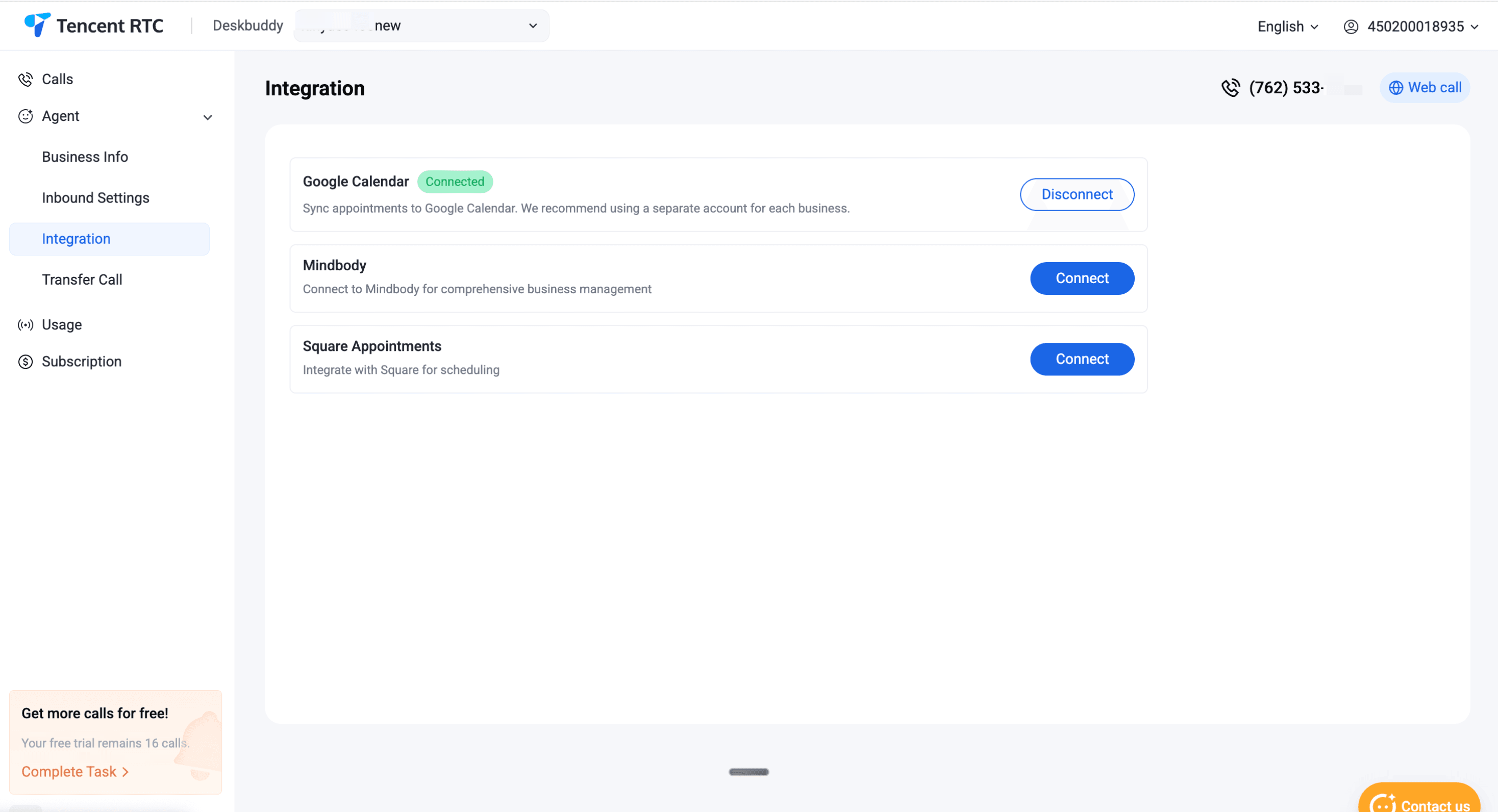
Appointments get booked — right on the call. This is the part that matters most. DeskBuddy connects directly with Google Calendar, Mindbody, and Square to check real-time availability and book appointments on the spot. The caller hangs up with a confirmed booking. No callback needed. No “someone will get back to you.” Done.
Transfer rules work differently by time of day. You set the rules. During business hours, DeskBuddy might transfer certain calls to your front desk staff. After hours, it handles everything independently — unless there’s an urgent situation that hits your escalation criteria, in which case it rings your personal phone or an on-call number.
You get a full summary in the morning. Every call is logged. You see what was asked, what was booked, and what needs follow-up — all waiting for you when you open up.
All of this runs $39.90 to $99.90 per month. Flat rate. No per-minute fees. No weekend surcharges.
Compare that to a $200-$1,200/month answering service that can only take messages. Or $25,000/year in extended staffing.
But What About Emergencies?
This is the first question every business owner asks. And it’s the right one.
Here’s how it works: DeskBuddy uses transfer rules based on time of day and call type. You define what counts as urgent for your business.
For a veterinary clinic or pet boarder: A caller says their dog is having trouble breathing. DeskBuddy recognizes the urgency and transfers the call to your on-call number.
For a fitness studio: Someone locked their bag in the locker room after closing. DeskBuddy can text the on-duty manager or provide the after-hours contact info you’ve set up.
For a salon: A bride-to-be calls at 10 PM panicking about tomorrow’s updo appointment. DeskBuddy confirms the booking details, reassures her everything is on schedule, and flags the call for your morning review if anything needs attention.
When DeskBuddy detects an urgent situation based on your rules, it follows your escalation path:
1. Attempt to transfer to your on-call number
2. If no answer, send an immediate notification with the caller’s details
3. Let the caller know that a real person has been notified and will reach out shortly
Routine calls — the “I want to book a grooming next week” type — get handled completely. No one needs to wake up for that.
The result: you sleep through the calls that don’t need you, and get alerted for the ones that do.
What This Looks Like in Practice
Maria’s Hair Studio — Denver, CO
Maria runs a 4-chair salon getting about 90 after-hours calls per month. Her voicemail pickup rate was dismal — only 8% of those callers left a message and booked. After setting up DeskBuddy, her after-hours booking rate jumped to 42%. That’s 38 new appointments per month at $90 each — an extra $3,420/month for a $59.90/month service.
Paws & Claws Grooming — Austin, TX
This pet grooming shop was losing weekend callers to a competitor down the road. The owner estimated 15-20 Saturday calls were going to voicemail while groomers had their hands full. DeskBuddy now answers those calls, books appointments, and answers breed-specific questions. Weekend bookings increased by 35% in the first two months.
Peak Performance Fitness — Portland, OR
This boutique gym found that most new member inquiries came between 8-10 PM. Their voicemail converted almost none of them. With DeskBuddy handling after-hours calls and signing people up for intro sessions, new member sign-ups increased by 28%.
Stop Losing Revenue While You Sleep
Here’s the bottom line: your customers want to reach you after hours. They’re going to call. The only question is whether they hear a voicemail beep or get their appointment booked.
Every night your phone goes to voicemail, you’re handing revenue to the competitor who answers.
You don’t need new hardware or a phone system overhaul. Setup takes about 15 minutes: connect your calendar, add your business details, set your rules, and tonight’s calls get answered.
FAQ
How many after-hours calls does a typical small service business get?
Most service businesses receive between 18% and 40% of their total calls outside standard business hours. For a business getting 300 calls per month, that’s 54 to 120 calls happening when nobody is at the front desk. The exact percentage depends on your industry and your customers’ schedules, but the average for service businesses sits around 30-35%.
Will customers actually talk to an AI on the phone?
Yes — and increasingly they prefer it to voicemail. The caller’s goal is to get something done: book an appointment, get a price, confirm hours. If the AI handles that quickly and accurately, most people don’t care whether it’s a human or not. What they care about is not being sent to voicemail and told to wait until tomorrow.
Can an AI receptionist actually book appointments, or does it just take messages?
It depends on the service. Many basic answering services only take messages. DeskBuddy integrates directly with Google Calendar, Mindbody, and Square to check real-time availability and confirm bookings during the call. The customer hangs up with a confirmed appointment — no callback needed.
What happens if a caller has a question the AI can’t answer?
DeskBuddy is set up with your specific business information, so it handles most common questions about your services, pricing, location, and policies. For unusual or complex requests, it collects the caller’s details and question, then notifies you so you can follow up during business hours. If you’ve configured transfer rules, it can also route certain calls to a live person immediately.
How does DeskBuddy’s pricing compare to a traditional answering service?
Traditional human answering services typically charge $1-3 per minute, often with higher rates for evenings and weekends. For a business getting 20 after-hours calls per week at 3 minutes each, that’s $240-$720/month — just for message-taking. DeskBuddy runs $39.90-$99.90/month flat, regardless of when calls come in. And unlike most answering services, it books appointments and answers questions instead of just taking messages and promising a callback.


