










Your phone rings. You’re elbow-deep in a balayage. Your receptionist is checking someone out. The call goes to voicemail.
No big deal, right?
Wrong. That single missed call probably just cost you somewhere between $85 and $300. And if you’re like most salon owners, it’s happening multiple times a day.
Let’s talk about how much missed calls actually cost your salon — with real numbers, not guesses. By the end of this post, you’ll know exactly how much revenue is slipping through the cracks. And what to do about it.
The Missed Call Problem Is Bigger Than You Think
Here’s a stat that should keep you up at night: 85% of people who call a business and don’t get an answer will never call back. Not tomorrow. Not next week. Never. They just dial the next salon on Google.
And it gets worse. About 80% of those callers won’t even leave a voicemail. They hang up and move on. (Forbes)
Think about what that means. Four out of five people who tried to give you money just… disappeared. You’ll never know their name. You’ll never know what service they wanted. They’re gone.
The average salon misses 22-30% of incoming calls during normal hours. During peak times? That number climbs to 50%. And here’s the one that hurts the most: 78% of customers buy from the first business that responds. If that’s not you, it’s the salon down the street.
How Much Is Each Missed Call Actually Worth?
Not every missed call is a booking. Some are spam. Some are product questions. But a significant chunk — roughly 30-60% depending on your marketing — are potential clients ready to book.
Let’s break down the real value.
The average salon service ticket in the U.S. ranges from $50 to $150. Color appointments, extensions, and specialty treatments push that higher — often $200 to $300+.
But a single appointment isn’t the full picture. A new client who books and has a great experience comes back. Again and again.
Here’s the lifetime value math:
● Average service ticket: $85
● Visits per year: 6
● Average client retention: 3 years
● Lifetime value: $1,530
Every missed call from a potential new client doesn’t just cost you one appointment. It potentially costs you $1,530 in future revenue.
Now multiply that by the number of calls you miss each week. Starting to feel it?
The Missed Call Cost Calculator: What’s YOUR Number?
Let’s make this personal. Grab a napkin (or a calculator) and follow along.
The formula:
Missed calls per week × Booking rate × Average ticket × 52 weeks = Annual revenue lost
Scenario 1: Small Boutique Salon
● Missed calls per week: 10
● Estimated booking rate: 30%
● Average service ticket: $75
● Weekly loss: 10 × 0.30 × $75 = $225
● Annual loss: $225 × 52 = $11,700
Scenario 2: Mid-Size Salon & Spa
● Missed calls per week: 25
● Estimated booking rate: 35%
● Average service ticket: $120
● Weekly loss: 25 × 0.35 × $120 = $1,050
● Annual loss: $1,050 × 52 = $54,600
Scenario 3: Busy Multi-Stylist Salon
● Missed calls per week: 40
● Estimated booking rate: 30%
● Average service ticket: $95
● Weekly loss: 40 × 0.30 × $95 = $1,140
● Annual loss: $1,140 × 52 = $59,280
That last number is enough to hire another stylist. Or renovate your space. Or take a real vacation.
And remember — these numbers only count the first visit. They don’t include lifetime value, referrals, or retail product sales during visits.
Your turn: How many calls does your salon miss per week? If you don’t know, check your phone system’s missed call log for the last 30 days. The number will probably shock you.
When Do Salons Miss the Most Calls?
Not all missed calls happen at the same time. Knowing your vulnerable hours helps you fix the problem.
Peak missed-call windows:
1. Morning rush (9-11 AM) — Everyone’s booked back-to-back. Front desk is swamped with check-ins.
2. Lunch hour (12-1 PM) — Staff breaks mean fewer hands to answer.
3. After hours (6-9 PM) — Doors are closed, but people are browsing on their couch, planning their week.
4. Weekends — Clients have free time to plan appointments. Your phone goes to voicemail.
Here’s the silent killer: roughly 40% of salon booking calls come in outside business hours — evenings, weekends, early mornings. You’re losing clients while you sleep, and you don’t even know it.
Why Clients Won’t Leave a Voicemail (And Won’t Call Back)
We’ve all heard the advice: “Just let it go to voicemail.”
Terrible advice. Here’s why.
According to Phone2’s research on missed calls, small businesses lose an average of $126,000 per year from unanswered calls. That’s $375 per day. Not all of that applies to salons specifically, but the behavioral pattern is the same across every service business.
Your potential client’s thought process takes about 90 seconds:
1. “I need a haircut this week.”
2. Googles “salon near me.” Calls the first result.
3. No answer. Voicemail.
4. Hangs up. Calls the second result.
5. Someone picks up. Books immediately.
6. Never thinks about your salon again.
That’s how fast you lose a client. And there’s data behind the speed factor: responding within one minute boosts conversion rates by 391%. Every minute after that, the odds plummet.
Tired of doing this math? DeskBuddy is an AI phone receptionist that answers every call 24/7, books appointments, and syncs with your calendar. Over 1,000 businesses trust it to handle their phones — starting at $39.90/month. Worth checking out if this article is hitting close to home.
The Hidden Costs You’re Not Counting
Lost bookings are just the tip. Missed calls create a chain reaction of hidden costs that don’t show up on any spreadsheet.
Wasted Marketing Spend
You’re paying for Google Ads, Instagram promotions, maybe even mailers. Every one of those campaigns drives phone calls. When those calls go unanswered, you’re paying for leads and throwing them away.
If you spend $500/month on marketing and miss 30% of the calls it generates, you just lit $150/month on fire. That’s $1,800/year wasted on marketing that worked — but you fumbled the handoff.
Reputation Damage
Unanswered calls lead to frustrated potential clients. Frustrated people leave one-star Google reviews. They tell friends. They post on Nextdoor.
Research from Customer Service Manager Magazine found that 70% of consumers will stop doing business with a company after a poor experience. An unanswered phone counts. And unhappy people are 2-3x more likely to leave a bad review than happy ones are to leave a good one.
Staff Stress and Burnout
When your team constantly chooses between the client in the chair and the phone ringing, everyone loses. The in-chair client feels rushed. The caller feels ignored. Your stylist feels pulled in two directions.
This isn’t just a revenue problem. It’s a work environment problem.
How Much Do Missed Calls Cost Other Service Businesses?
Salons aren’t alone. Here’s how the missed call problem hits other industries that rely on phone bookings:
Industry | Avg. Missed Calls/Week | Avg. Ticket Value | Est. Annual Loss |
Hair & Beauty Salons | 15–40 | $75–$150 | $12,000–$59,000 |
Pet Grooming & Boarding | 10–25 | $50–$100 | $8,000–$40,000 |
Fitness Studios & Gyms | 10–30 | $80–$200 | $13,000–$50,000 |
Nail Salons | 10–30 | $45–$80 | $7,000–$37,000 |
Med Spas & Aesthetics | 10–25 | $150–$350 | $23,000–$137,000 |
Assumes 30% booking conversion rate.
The pattern is clear: if your business relies on phone calls to generate bookings, missed calls are one of your biggest revenue leaks.
5 Ways to Stop Losing Revenue to Missed Calls
Knowing the problem is step one. Fixing it is step two. Here are five options, from free to fully automated.
1. Set Up a Call-Back System
At minimum, train your team to return every missed call within 15 minutes. Callback rates drop by 80% after the first hour. Speed matters more than anything.
Cost: Free. Downside: Doesn’t help after hours. Requires discipline.
2. Use an Online Booking System
Tools like Vagaro, Booksy, or Square Appointments let clients book without calling. This reduces call volume overall.
Cost: $25–$80/month. Downside: Many clients still prefer calling — especially older demographics and first-time visitors with questions about pricing or services.
3. Hire a Dedicated Receptionist
A full-time receptionist solves the problem during business hours. But the average salon receptionist costs $28,000–$35,000/year plus benefits.
Cost: $2,300+/month. Downside: Expensive. Doesn’t cover after-hours, lunch breaks, or sick days.
4. Use a Traditional Answering Service
Live answering services route calls to off-site operators who take messages or book appointments.
Cost: $200–$500/month. Downside: Operators don’t know your business. Limited booking ability. Scripts feel impersonal.
5. Use an AI Phone Receptionist
AI-powered phone systems like DeskBuddy, Ruby, or Smith.ai answer every call — day or night — with a natural-sounding voice. They book appointments, answer common questions, and integrate directly with tools like Google Calendar, Mindbody, and Square.
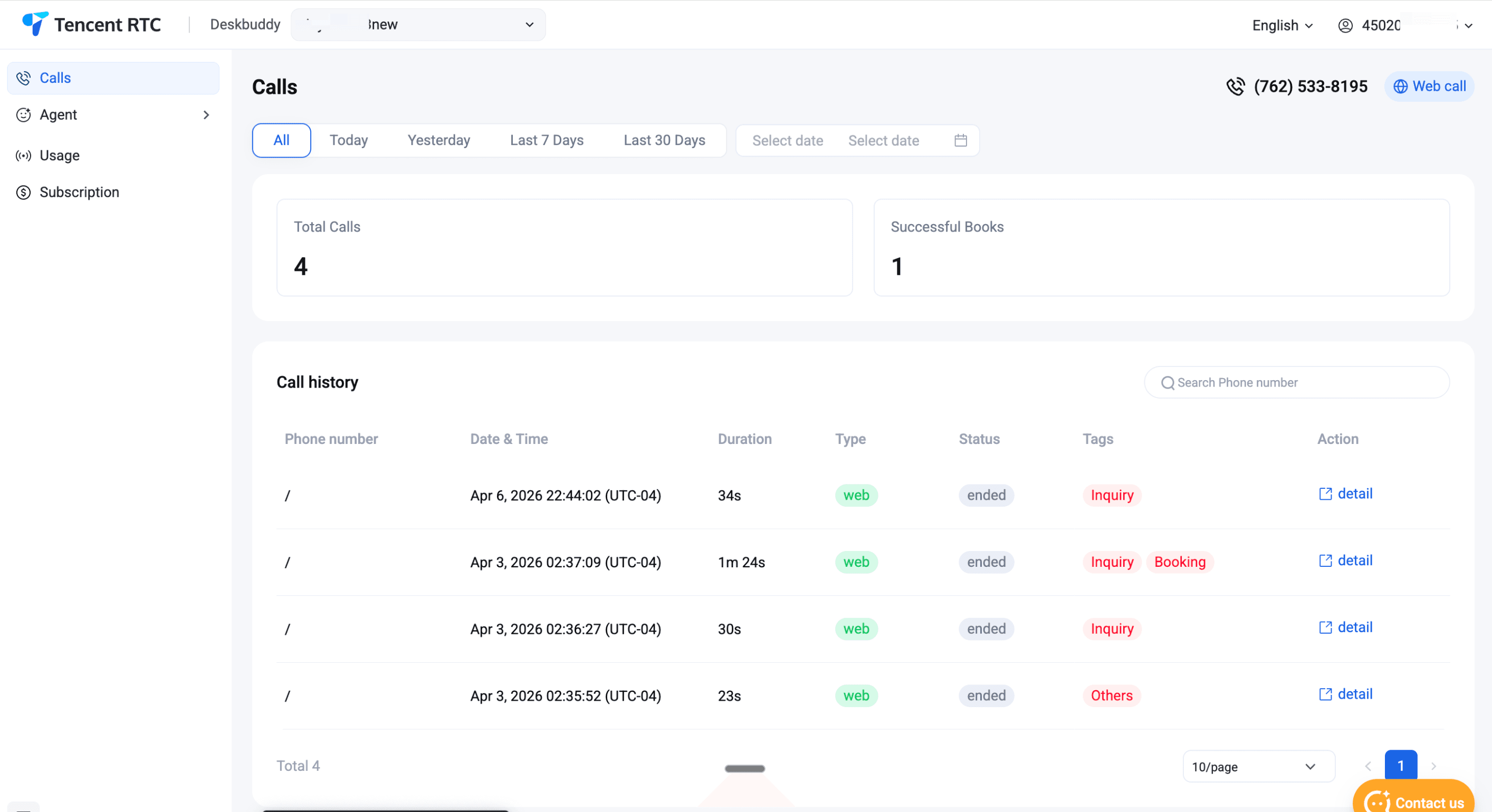
Cost: $39.90–$300/month depending on provider. Downside: Not ideal for extremely complex or sensitive conversations.
The right option depends on your budget and call volume. Most salons do best with a combination — online booking plus some form of phone coverage for the calls that still come in.
The ROI Math: It Pays for Itself Fast
Let’s do one final round of numbers.
Say you’re a mid-size salon losing $54,600/year to missed calls (Scenario 2 from above). You set up an AI receptionist for $99.90/month — that’s $1,199/year.
Even if it only captures 25% of previously missed bookings:
● Recovered revenue: $54,600 × 0.25 = $13,650/year
● Cost of solution: $1,199/year
● Net gain: $12,451/year
● ROI: 1,038%
You don’t need to capture every call. You just need to catch a few more per week than you do now. Even recovering 3-4 bookings per week at $85 each puts $13,000+ back in your pocket annually.
Salons using automated answering and text-back systems report recovering 30-50% of previously missed bookings. At that rate, the ROI gets absurd.
FAQ: Missed Calls and Salon Revenue
How many calls does the average salon miss per week?
Industry data suggests salons miss 15 to 40 calls per week, with the highest volume during peak hours (10 AM–2 PM and Saturdays). The exact number depends on your team size and whether you have a dedicated front desk person.
Do clients really not leave voicemails anymore?
Correct. About 80% of callers hang up when they reach voicemail. Younger demographics (under 40) are especially unlikely to leave a message — they’ll just book with a competitor or forget about it entirely.
How much does a single missed call cost a salon?
Based on average ticket values and booking rates, each missed call costs $25 to $50 in immediate lost revenue. When you factor in lifetime client value (repeat visits over 3+ years), that number jumps to $150 or more per call.
Is online booking enough to solve this problem?
It helps, but it doesn’t eliminate phone calls. Roughly 40-60% of clients still prefer calling — especially first-time clients who have questions about pricing, availability, or specific services. Phone calls also tend to convert at a higher rate than online bookings for new clients.
What’s the fastest way to reduce missed calls without hiring staff?
An AI phone receptionist that answers 24/7 and books directly into your calendar. Solutions like DeskBuddy can be set up in minutes and start capturing calls immediately. At $39.90-$99.90/month, the math works out to less than the cost of one missed appointment.
Stop Guessing. Start Counting.
You now have the formula. You know how much missed calls cost your salon — or at least, you can figure it out in about two minutes.
The question isn’t whether you’re losing money to missed calls. You are. Every salon is.
The question is what you’re going to do about it.
Start here: pull your missed call log from the last 30 days. Do the math. See the number. Then pick one solution from the list above and put it in place this week.
If you want the fastest path from “missing calls” to “never missing a call,” give DeskBuddy a try. It takes about 10 minutes to set up, works with Google Calendar, Mindbody, and Square, and it’s backed by over 1,000 businesses, 10,000+ calls handled, and a 4.9/5 satisfaction rating.
Your phone is ringing right now. Someone should answer it.


